
Product Info
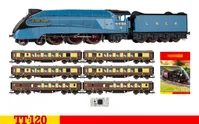
Recreate a premier dining experience with this luxury TT:120 DCC Pullman bundle deal, including an impressive LNER Garter Blue Class A4 and rake of six Pullman cars.
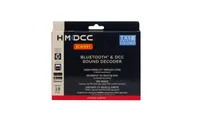
Reminiscent of both the early days of luxury trains in the 1930s, and services on heritage railways offering paying customers a first-rate dining experience, this discounted bundle allows you to purchase a complete train, and also contains a HM7000 Next-18 DCC Sound Decoder to upgrade the Class A4 to DCC operation, as well as our latest 2026 TT:120 catalogue.
What's Included
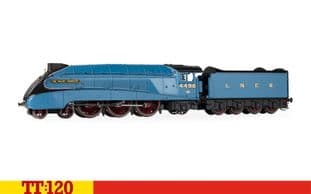
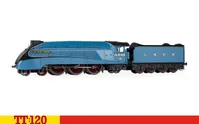
LNER - Class A4 - 'Sir Nigel Gresley' 4498
Product code: TT3043M
Built at the Doncaster works in 1937, 4498 Sir Nigel Gresley entered service in October 1937 on the London and Northeast Railway.
This model represents the locomotive in 1930’s condition with full valances and in its classic Garter blue paint scheme. A HM7000-Next18 sound decoder can be fitted for digital control and realistic A4 Class sound effects using the free-to-download A4 sound profile.
Specific to TT3043:
- A4 locomotive 4498 in Garter blue with ‘Sir Nigel Gresley’ nameplates
- Full valances
- 1928 corridor tender
Common TT A4 Class features:
- High detail TT scale model based on extensive research and original works drawings
- Heavy die-cast chassis. Model weight is 150g
- High precision coreless motor
- Brass axle bearings
- Locomotive and tender wheel electrical pickups
- Kinematic rear coupling system
- Pre-fitted acoustic speaker chamber and Sugarcube speaker
- Next-18 decoder socket
- Metal buffers
- Separately fitted brass safety valves and whistle
- Separately fitted metal handrails
- Accessory bag contains optional fit flanged trailing track wheelset, vacuum pipes and couplings.
Individual price: £179.99
- Item Length - Without Packaging (cm)
- 19.1
- Item Height - Without Packaging (cm)
- 3.7
- Item Width - Without Packaging (cm)
- 2.5
- Item Weight - Without Packaging (kg)
- 0.16
- Item Scale
- 1:120 Scale
- DCC Status
- DCC Ready Next 18 pin socket
- Operator
- LNER
- Designer
- Sir Nigel Gresley
- Minimum Curve (mm)
- Radius 2
- Class
- Class A4
- Hornby Decoder Compatibility Primary
- HM7000-N18: Bluetooth® & DCC Decoder (Next18-pin)
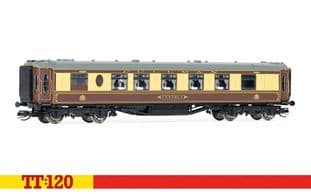
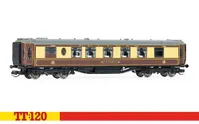
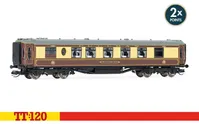
Pullman - 1st Class 'Cynthia' Kitchen Parlour Car
Product code: TT4003E
Evoking the golden age of Pullman travel, this finely crafted coach exudes sophistication, making it a standout addition to any TT:120 collection.
Finished in the iconic Pullman livery with exquisite lining and finely rendered lettering, ‘Cynthia’ embodies the refinement and comfort that made Pullman dining cars legendary. The interior is intricately detailed with working table lamps, reflecting the opulent surroundings that passengers once enjoyed, while the accurately modelled kitchen section adds another layer of authenticity. Each dining table in the car has a working table light offering ambient lighting within the car.
History
Pullman carriages were first seen on Britain’s railways in 1874, operated by the Midland Railway between Bradford Forster Square and London St Pancras. Initially, the coaching stock was imported from America, but the British ‘Pullman Car Company’ was formed in 1882, named after American pioneer George Pullman. The company entered into contracts with the various railway companies of the day to offer opulent first-class seating, complete with at-table steward service.
The Pullman Car Company had its own workshops at Brighton, and the manufacture of Pullman Cars was also carried out by the Birmingham Railway Carriage & Wagon Company and the Metropolitan Cammell Carriage & Wagon Company. Pullman cars provided a superior standard of first-class travel, with kitchen cars introduced that could serve cooked meals, served at the passenger’s table, which would be dressed with clean white linen and the finest crockery and tableware.
Before long, Pullman trains were operating on all of the principal long-distance routes in Britain. Pullman services were operated by all of the ‘Big Four’ companies, even the Great Western, which was initially reluctant to have them as it believed its coaches were already luxurious enough. All first-class cars had names in a Greek naming convention, though when Third Class vehicles were included in trains, these instead had the car number emblazoned on each side.
All vehicles had a distinctive umber and cream livery, with the Pullman coat of arms proudly displayed. After Nationalisation, the Pullman Car Company was bought by the British Transport Commission in 1954, by which point, apart from ten recently built cars, the fleet had become somewhat elderly. It was decided to modernise Pullman services as part of the British Railways 1955 Modernisation Plan, with new coaching stock and diesel or electric haulage.
Although moderately successful, services declined, and the last Pullman trains operated under BR in 1972. All Pullman trains had First Class Kitchen Cars in which passengers were served hot meals at their tables. ‘Cynthia’ was introduced in 1925.
Individual price: £59.99
- Item Length - Without Packaging (cm)
- 16.7
- Item Height - Without Packaging (cm)
- 3.2
- Item Width - Without Packaging (cm)
- 2.3
- Item Weight - Without Packaging (kg)
- 0.04
- Item Scale
- 1:120 Scale
- Operator
- Pullman
- Minimum Curve (mm)
- Radius 2
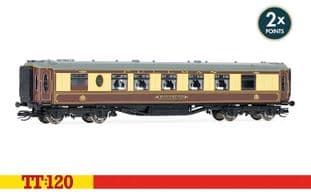
Pullman - 1st Class 'Rosamund' Kitchen Parlour Car
Product code: TT4003G
Capturing the elegance of luxury rail travel, the TT:120 Pullman First Class Kitchen Car ‘Rosamund’ is finished in the classic Pullman livery with exquisite detailing and interior lit table lamps. This finely crafted coach reflects the sophistication and comfort of first-class dining on Britain’s railways.
Perfect for pairing with other Pullman stock, ‘Rosamund’ brings timeless style and authenticity to any TT:120 layout.
History
Pullman carriages were first seen on Britain’s railways in 1874, operated by the Midland Railway between Bradford Forster Square and London St Pancras. Initially, the coaching stock was imported from America, but the British ‘Pullman Car Company’ was formed in 1882, named after American pioneer George Pullman. The company entered into contracts with the various railway companies of the day to offer opulent first-class seating, complete with at-table steward service.
The Pullman Car Company had its own workshops at Brighton, and the manufacture of Pullman Cars was also carried out by the Birmingham Railway Carriage & Wagon Company and the Metropolitan Cammell Carriage & Wagon Company. Pullman cars provided a superior standard of first-class travel, with kitchen cars introduced that could serve cooked meals, served at the passenger’s table, which would be dressed with clean white linen and the finest crockery and tableware.
Before long, Pullman trains were operating on all of the principal long-distance routes in Britain. Pullman services were operated by all of the ‘Big Four’ companies, even the Great Western, which was initially reluctant to have them as it believed its coaches were already luxurious enough. All First Class Cars had names, in a Greek naming convention, though when Third Class vehicles were included in trains, these instead had the car number emblazoned on each side.
All vehicles had a distinctive umber and cream livery, with the Pullman coat of arms proudly displayed. After Nationalisation, the Pullman Car Company was bought by the British Transport Commission in 1954, by which point, apart from ten recently built cars, the fleet had become somewhat elderly. It was decided to modernise Pullman services as part of the British Railways 1955 Modernisation Plan, with new coaching stock and diesel or electric haulage.
Although moderately successful, services declined, and the last Pullman trains operated under BR in 1972. ‘Rosamund’ is another of the luxurious First Class Kitchen Cars which offered dining facilities in opulent wood-panelled surroundings; this one was introduced in 1924.
Individual price: £59.99
- Item Length - Without Packaging (cm)
- 16.7
- Item Height - Without Packaging (cm)
- 3.2
- Item Width - Without Packaging (cm)
- 2.3
- Item Weight - Without Packaging (kg)
- 0.04
- Item Scale
- 1:120 Scale
- Operator
- Pullman
- Minimum Curve (mm)
- Radius 2
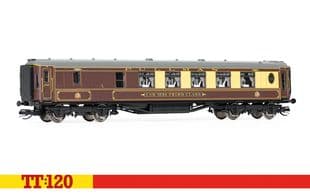
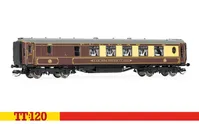
Pullman - 3rd Class 'No.54' Brake Parlour Car
Product code: TT4004B
Bringing the elegance and prestige of luxury rail travel to TT:120 scale, Hornby proudly presents the Pullman Third Class Brake Car No. 54.
This finely detailed coach reflects the timeless sophistication of Britain’s premier passenger services, where comfort and style were paramount. Richly decorated in the iconic Pullman livery, complete with exquisite lining and crisp lettering to the interior with working table lamp interior lighting, the coach embodies the golden age of railway luxury.
History
Pullman carriages were first seen on Britain’s railways in 1874, operated by the Midland Railway between Bradford Forster Square and London St Pancras. Initially, the coaching stock was imported from America, but the British Pullman Car Company, named after American pioneer George Pullman, was formed in 1882. The company entered into contracts with the various railway companies of the day to offer opulent first-class seating complete with at-table steward service.
The Pullman Car Company had its own workshops at Brighton, and the manufacture of Pullman Cars was also carried out by the Birmingham Railway Carriage & Wagon Company and the Metropolitan Cammell Carriage & Wagon Company. Pullman cars provided a superior standard of first-class travel, with kitchen cars introduced that could serve cooked meals, served at the passenger’s table, which would be dressed with clean white linen and the finest crockery and tableware.
Before long, Pullman trains were operating on all of the principal long-distance routes in Britain. Pullman services were operated by all of the ‘Big Four’ companies, even the Great Western, which was initially reluctant to have them as it believed its coaches were already luxurious enough. All First Class Cars had names, in a Greek naming convention, though when Third Class vehicles were included in trains, these instead had the car number emblazoned on each side.
All vehicles had a distinctive umber and cream livery, with the Pullman coat of arms proudly displayed. After Nationalisation, the Pullman Car Company was bought by the British Transport Commission in 1954, by which point, apart from ten recently built cars, the fleet had become somewhat elderly. It was decided to modernise Pullman services as part of the British Railways 1955 Modernisation Plan, with new coaching stock and diesel or electric haulage.
Although moderately successful, services declined, and the last Pullman trains operated under BR in 1972. This Brake Parlour Third Class Car was built in 1923 and operated on the East Coast Main Line. Today it is preserved at the Bluebell Railway.
Individual price: £59.99
- Item Length - Without Packaging (cm)
- 16.7
- Item Height - Without Packaging (cm)
- 3.2
- Item Width - Without Packaging (cm)
- 2.3
- Item Weight - Without Packaging (kg)
- 0.04
- Item Scale
- 1:120 Scale
- Operator
- Pullman
- Minimum Curve (mm)
- Radius 2
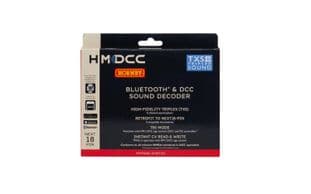
HM7000-N18TXS: Bluetooth® & DCC Sound Decoder (Next18-pin)
Product code: R7345
Part of the innovative HM7000 range, the Next18-pin Bluetooth® and DCC sound decoder is ready to plug into locomotives featuring a Next18 (NEM662*) socket. The Next18 socket is found in modern Hornby locos, many other locomotives in 00, H0 and some smaller scale locomotives.
The decoder is designed to supply 500mA continuous load to the main motor and a peak demand of 1,000mA, making it highly suitable for most 00 and H0 scale locos.
The decoder also has sound capabilities and comes with a high quality 'sugar-cube' miniature speaker. This is quickly and easily plugged into a socket on the decoder. Download the free HM|DCC app for access to the range of free to download sound profiles.
Also included are assorted speaker enclosures. When installing the speaker inside the locomotive, picking the largest enclosure which will fit inside the loco body will give the best sound reproduction from the speaker.
*please note, this decoder does not meet NEM662 space requirements. Please check the locomotive has sufficient space prior to purchasing.
Individual price: £69.99
- Item Length - Without Packaging (cm)
- 2.85
- Item Height - Without Packaging (cm)
- 1.4
- Item Width - Without Packaging (cm)
- 0.5
- Item Weight - Without Packaging (kg)
- 0.002
- DCC Status
- DCC Sound Decoder - Next 18 Pin
- Number of Parts
- 3
Pullman - 1st Class 'Cynthia' Kitchen Parlour Car
Product code: TT4003E
Evoking the golden age of Pullman travel, this finely crafted coach exudes sophistication, making it a standout addition to any TT:120 collection.
Finished in the iconic Pullman livery with exquisite lining and finely rendered lettering, ‘Cynthia’ embodies the refinement and comfort that made Pullman dining cars legendary. The interior is intricately detailed with working table lamps, reflecting the opulent surroundings that passengers once enjoyed, while the accurately modelled kitchen section adds another layer of authenticity. Each dining table in the car has a working table light offering ambient lighting within the car.
History
Pullman carriages were first seen on Britain’s railways in 1874, operated by the Midland Railway between Bradford Forster Square and London St Pancras. Initially, the coaching stock was imported from America, but the British ‘Pullman Car Company’ was formed in 1882, named after American pioneer George Pullman. The company entered into contracts with the various railway companies of the day to offer opulent first-class seating, complete with at-table steward service.
The Pullman Car Company had its own workshops at Brighton, and the manufacture of Pullman Cars was also carried out by the Birmingham Railway Carriage & Wagon Company and the Metropolitan Cammell Carriage & Wagon Company. Pullman cars provided a superior standard of first-class travel, with kitchen cars introduced that could serve cooked meals, served at the passenger’s table, which would be dressed with clean white linen and the finest crockery and tableware.
Before long, Pullman trains were operating on all of the principal long-distance routes in Britain. Pullman services were operated by all of the ‘Big Four’ companies, even the Great Western, which was initially reluctant to have them as it believed its coaches were already luxurious enough. All first-class cars had names in a Greek naming convention, though when Third Class vehicles were included in trains, these instead had the car number emblazoned on each side.
All vehicles had a distinctive umber and cream livery, with the Pullman coat of arms proudly displayed. After Nationalisation, the Pullman Car Company was bought by the British Transport Commission in 1954, by which point, apart from ten recently built cars, the fleet had become somewhat elderly. It was decided to modernise Pullman services as part of the British Railways 1955 Modernisation Plan, with new coaching stock and diesel or electric haulage.
Although moderately successful, services declined, and the last Pullman trains operated under BR in 1972. All Pullman trains had First Class Kitchen Cars in which passengers were served hot meals at their tables. ‘Cynthia’ was introduced in 1925.
Individual price: £59.99
- Item Length - Without Packaging (cm)
- 16.7
- Item Height - Without Packaging (cm)
- 3.2
- Item Width - Without Packaging (cm)
- 2.3
- Item Weight - Without Packaging (kg)
- 0.04
- Item Scale
- 1:120 Scale
- Operator
- Pullman
- Minimum Curve (mm)
- Radius 2
Pullman - 1st Class 'Rosamund' Kitchen Parlour Car
Product code: TT4003G
Capturing the elegance of luxury rail travel, the TT:120 Pullman First Class Kitchen Car ‘Rosamund’ is finished in the classic Pullman livery with exquisite detailing and interior lit table lamps. This finely crafted coach reflects the sophistication and comfort of first-class dining on Britain’s railways.
Perfect for pairing with other Pullman stock, ‘Rosamund’ brings timeless style and authenticity to any TT:120 layout.
History
Pullman carriages were first seen on Britain’s railways in 1874, operated by the Midland Railway between Bradford Forster Square and London St Pancras. Initially, the coaching stock was imported from America, but the British ‘Pullman Car Company’ was formed in 1882, named after American pioneer George Pullman. The company entered into contracts with the various railway companies of the day to offer opulent first-class seating, complete with at-table steward service.
The Pullman Car Company had its own workshops at Brighton, and the manufacture of Pullman Cars was also carried out by the Birmingham Railway Carriage & Wagon Company and the Metropolitan Cammell Carriage & Wagon Company. Pullman cars provided a superior standard of first-class travel, with kitchen cars introduced that could serve cooked meals, served at the passenger’s table, which would be dressed with clean white linen and the finest crockery and tableware.
Before long, Pullman trains were operating on all of the principal long-distance routes in Britain. Pullman services were operated by all of the ‘Big Four’ companies, even the Great Western, which was initially reluctant to have them as it believed its coaches were already luxurious enough. All First Class Cars had names, in a Greek naming convention, though when Third Class vehicles were included in trains, these instead had the car number emblazoned on each side.
All vehicles had a distinctive umber and cream livery, with the Pullman coat of arms proudly displayed. After Nationalisation, the Pullman Car Company was bought by the British Transport Commission in 1954, by which point, apart from ten recently built cars, the fleet had become somewhat elderly. It was decided to modernise Pullman services as part of the British Railways 1955 Modernisation Plan, with new coaching stock and diesel or electric haulage.
Although moderately successful, services declined, and the last Pullman trains operated under BR in 1972. ‘Rosamund’ is another of the luxurious First Class Kitchen Cars which offered dining facilities in opulent wood-panelled surroundings; this one was introduced in 1924.
Individual price: £59.99
- Item Length - Without Packaging (cm)
- 16.7
- Item Height - Without Packaging (cm)
- 3.2
- Item Width - Without Packaging (cm)
- 2.3
- Item Weight - Without Packaging (kg)
- 0.04
- Item Scale
- 1:120 Scale
- Operator
- Pullman
- Minimum Curve (mm)
- Radius 2
Pullman - 3rd Class 'No.54' Brake Parlour Car
Product code: TT4004B
Bringing the elegance and prestige of luxury rail travel to TT:120 scale, Hornby proudly presents the Pullman Third Class Brake Car No. 54.
This finely detailed coach reflects the timeless sophistication of Britain’s premier passenger services, where comfort and style were paramount. Richly decorated in the iconic Pullman livery, complete with exquisite lining and crisp lettering to the interior with working table lamp interior lighting, the coach embodies the golden age of railway luxury.
History
Pullman carriages were first seen on Britain’s railways in 1874, operated by the Midland Railway between Bradford Forster Square and London St Pancras. Initially, the coaching stock was imported from America, but the British Pullman Car Company, named after American pioneer George Pullman, was formed in 1882. The company entered into contracts with the various railway companies of the day to offer opulent first-class seating complete with at-table steward service.
The Pullman Car Company had its own workshops at Brighton, and the manufacture of Pullman Cars was also carried out by the Birmingham Railway Carriage & Wagon Company and the Metropolitan Cammell Carriage & Wagon Company. Pullman cars provided a superior standard of first-class travel, with kitchen cars introduced that could serve cooked meals, served at the passenger’s table, which would be dressed with clean white linen and the finest crockery and tableware.
Before long, Pullman trains were operating on all of the principal long-distance routes in Britain. Pullman services were operated by all of the ‘Big Four’ companies, even the Great Western, which was initially reluctant to have them as it believed its coaches were already luxurious enough. All First Class Cars had names, in a Greek naming convention, though when Third Class vehicles were included in trains, these instead had the car number emblazoned on each side.
All vehicles had a distinctive umber and cream livery, with the Pullman coat of arms proudly displayed. After Nationalisation, the Pullman Car Company was bought by the British Transport Commission in 1954, by which point, apart from ten recently built cars, the fleet had become somewhat elderly. It was decided to modernise Pullman services as part of the British Railways 1955 Modernisation Plan, with new coaching stock and diesel or electric haulage.
Although moderately successful, services declined, and the last Pullman trains operated under BR in 1972. This Brake Parlour Third Class Car was built in 1923 and operated on the East Coast Main Line. Today it is preserved at the Bluebell Railway.
Individual price: £59.99
- Item Length - Without Packaging (cm)
- 16.7
- Item Height - Without Packaging (cm)
- 3.2
- Item Width - Without Packaging (cm)
- 2.3
- Item Weight - Without Packaging (kg)
- 0.04
- Item Scale
- 1:120 Scale
- Operator
- Pullman
- Minimum Curve (mm)
- Radius 2
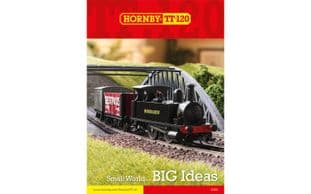
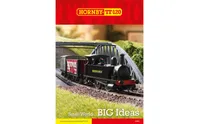
Hornby TT:120 Catalogue 2026
Product code: TT700
The Hornby TT:120 Catalogue presents the full annual range of Hornby products in vibrant full colour, complete with detailed specifications and premium photography. This comprehensive edition highlights new releases, key technical details, and the latest additions to the collection. A must-have reference for enthusiasts and catalogue collectors alike!
Individual price: £4.99
- Item Scale
- A4
Recommended For You
Tech Specs
- Item Scale
- 1:120 Scale