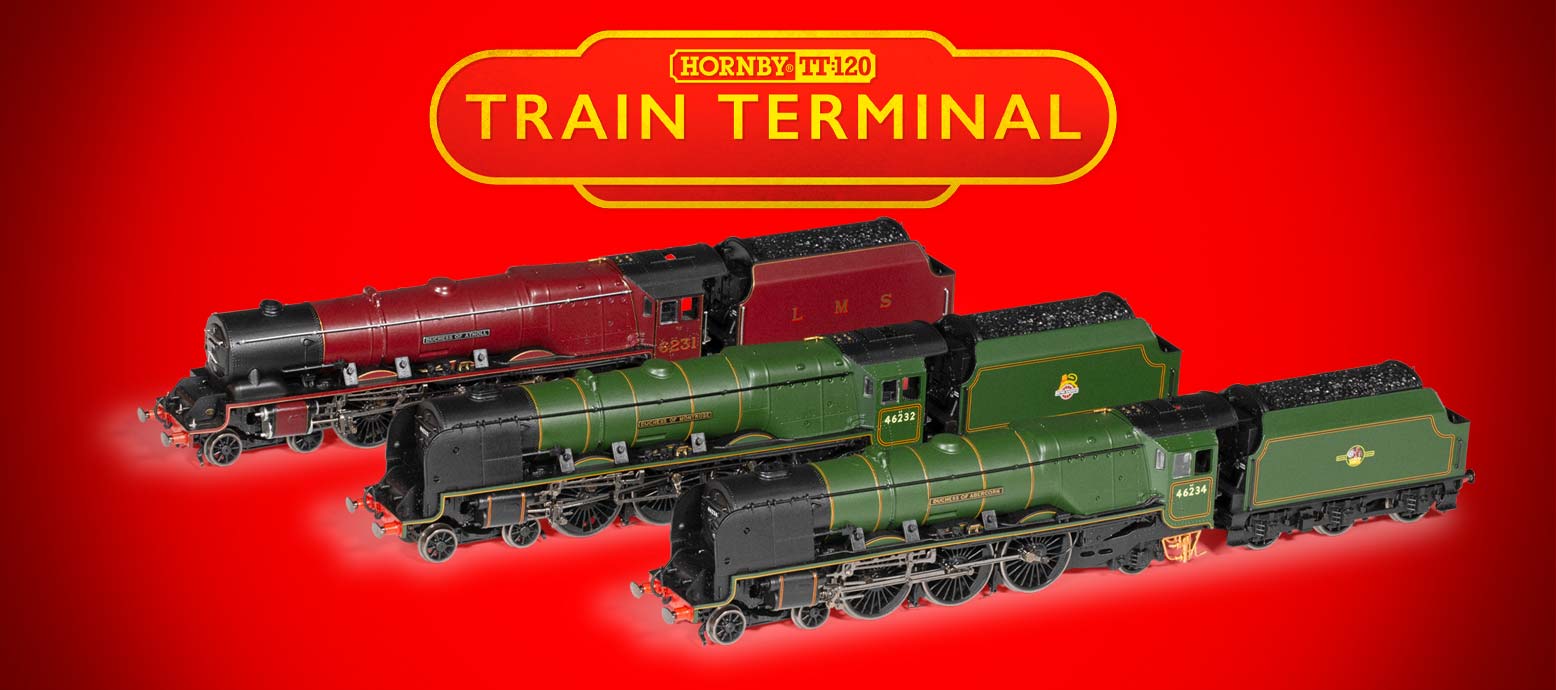
Welcome to another edition of Train Terminal, the only Hornby TT:120 update from within the Hornby development team.
In this edition, we focus on the highly anticipated final samples of the ‘Duchesses’, the LMS and BR Princess Coronation Class locomotives, and their accompanying coaches, the LMS and BR 57’ variants, all of which are now in stock and available for you to add to your layout.
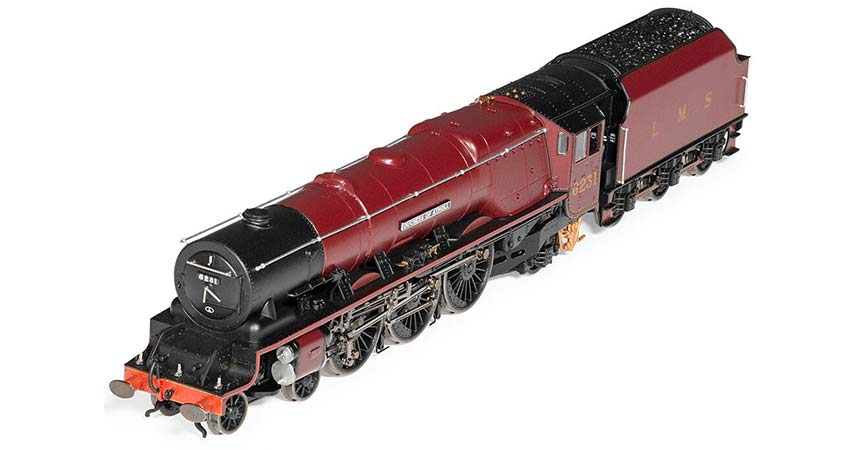
The Hornby TT:120 ‘Duchess’ project has reached a successful end with two of the final production models on the verge of being released. ‘Duchess of Atholl’ is now available for you to use on your layout. It has been a joy for us to see these locomotives come to life in a 1:120 scale model.
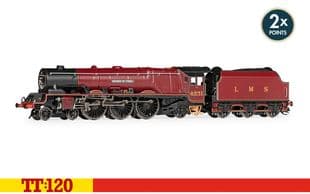
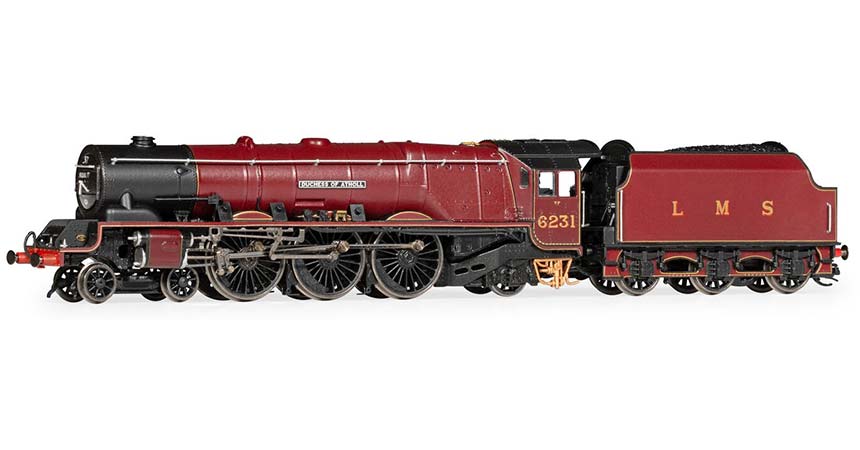
TT3010M LMS, Princess Coronation, 4-6-2, 6231, 'Duchess of Atholl' - Era 3
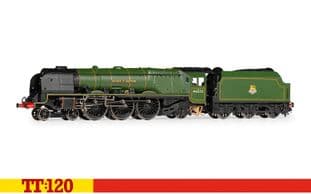
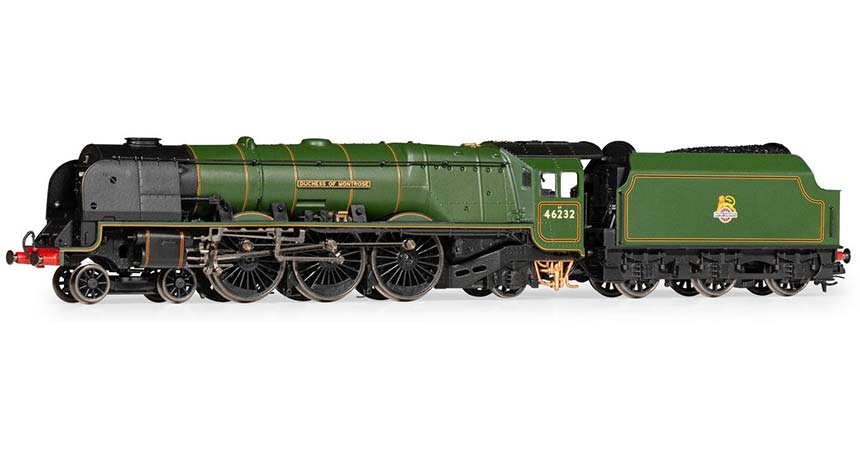
TT3011M BR, Princess Coronation, 4-6-2, 46232, 'Duchess of Montrose' - Era 4
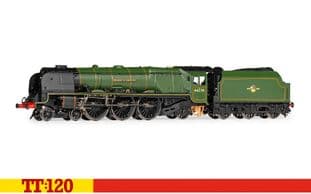
TT3012M BR(Late), Princess Coronation, 4-6-2, 46234, 'Duchess of Abercorn' - Era 5
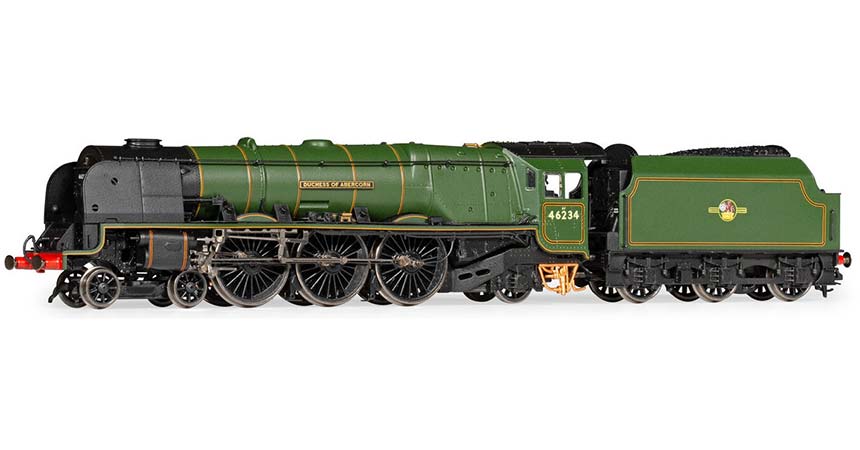
With the three ‘Duchesses’ on offer, there is one LMS and two BR variants, available both as DCC ready and with sound. The LMS ‘Duchess of Atholl’ stands out in the classic and rich LMS Crimson Lake livery. Both the BR ‘Duchess of Montrose’ and ‘Duchess of Abercorn’ locomotives have a vibrant BR Green livery as their exterior. ‘Duchess of Montrose’ has an early BR lion on wheel crest emblazoned on the side of the tender, whereas the ‘Duchess of Abercorn’ tender has a late BR crest which denotes the eras that they are depicting. Smoke deflectors are also featured on the BR variants.
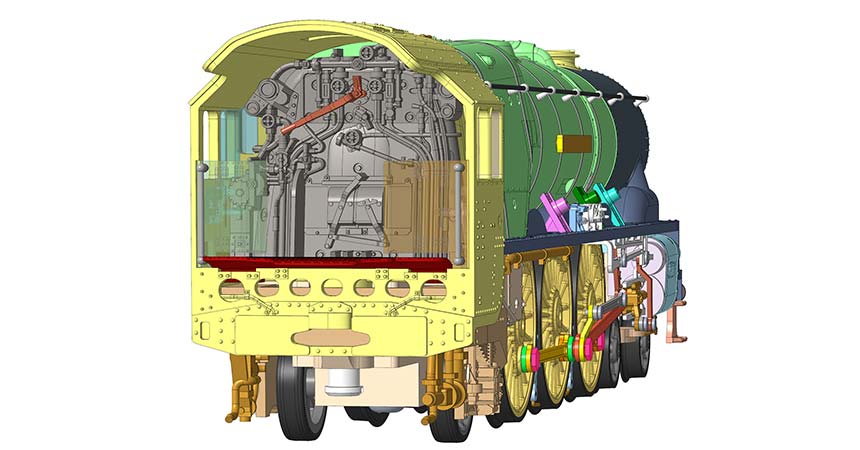
We will take the time to examine the design of the three ‘Duchesses’ and demonstrate the sheer amount of detail incorporated into these tiny models. The designer, Louis, did not use the original CAD from the ‘00’ versions of the ‘Duchesses’. He made the decision to design them from the ground up. Louis has incorporated an impressive amount of detailing into the cab interior, complete with all the switches and dials. You can see the initial details on the CAD below.
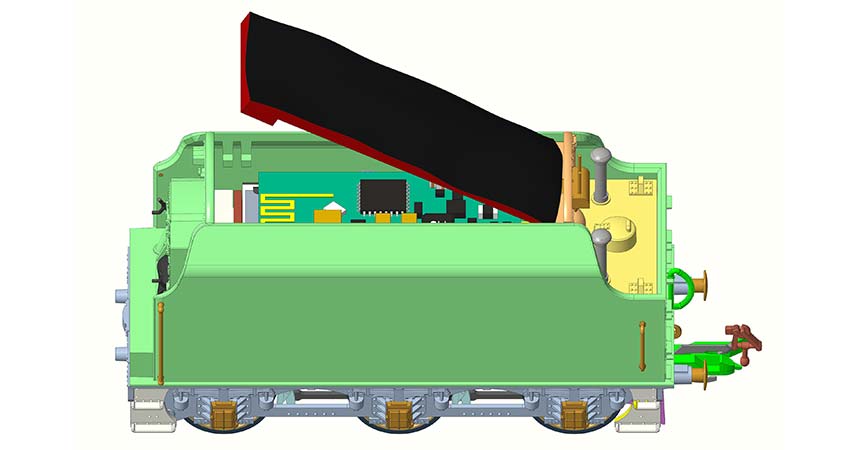
The tender in all three ‘Duchesses’ contains a larger acoustic chamber for sound, with extra walls to extend the wavelengths for a deeper and richer sound, particularly with the bass.
The coal detail in the tender is easily removeable for access to the decoder.
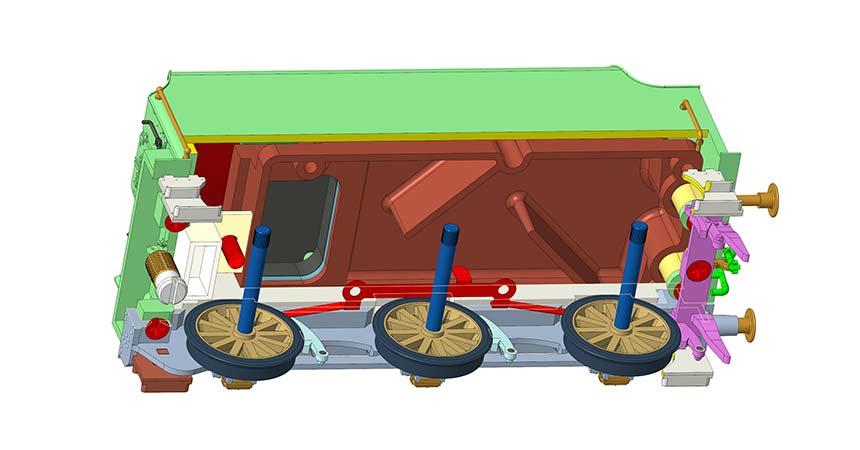
Each model has an effortless pulling power due to its five-pole skew wound motor and diecast boiler and chassis. This allows for great tractive power. The valve gear and motion allow for further smooth running on your layouts.
An optional accessory bag is available with the models which includes:
We hope you enjoy seeing these highly detailed ‘Duchess’ models running around on your layout!
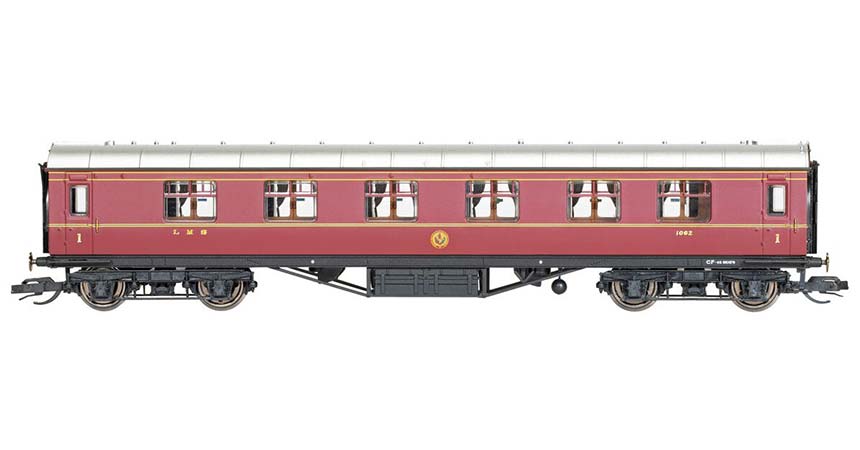
The LMS 57’ coaches that form a full rake with the ‘Duchess of Atholl’ locomotive are under the guise of an LMS Maroon livery with LMS insignia adorning the bodysides. Curtains are printed on the inside of the windows. A sleek metallic finish roof has been incorporated.
An image of the Corridor First No. 1062 coach can be seen below.
The LMS abandoned its ‘Small Engine’ policy that was inherited by their predecessor, the Midland Railway. For this new shift, it was decided that new coaches should be built at the start of the 1930s. The prototypical 57’ coaches were designed by Sir William Stanier and were referred to as ‘Stanier stock’. Each coach was steel clad which was a first for the LMS company. They contained seating for 56 passengers and 300 examples were built in the early 1930s. Later, the style culminated in a short lived 'Porthole' final form which helped to pave the way for the BR standard stock.
There are three established periods of builds for the coaches and Period III is our focus for these models. They featured wooden framed bodies with flush steel panels, rounded window corners and a style of ribbed roof. Large windows had a sliding ventilator incorporated in the upper part of the window. The first design was shallow and only one section was moveable. This was removed in 1934 with the second design being of a deeper ventilator with two wide sliding sections.
Between 1933 and 1934, the coaches featured a metallic roof finish, red corridor connections, a final insignia placing and unshaded sans-serif running numbers. From 1940 to 1949, the coaches had been amended slightly. They featured a simple livery with straw lining from 1946 onwards, black corridor connections, a grey roof finish, a final insignia placing and small scroll numbers with a flat topped 3 on the outside doors and 1 on the first-class windows.
After the Second World War, LMS adopted a darker colour than pre-war Crimson Lake and this was maroon. The lining was chrome yellow with a shaded yellow insignia and serif numerals on a vast majority of the coaches. As detailed earlier, the flat top ‘3’ was a characteristic of post war repaints. Some coaches received a 1946 livery which carried straw lining and unshaded straw insignia. Coaches which were outshopped following nationalisation incorporated a post war yellow lining and M prefix numbers in LMS shaded insignia until BR Gil Sans was adopted.
Our BR coach models come under two BR liveries. For an early BR period, there are the BR carmine and cream liveried coaches. For the later BR period, there are BR Maroon liveried coaches.
We have based our models on the following information. After BR nationalisation in 1948, the LMS lettering and circular emblems were omitted from the prototypical coaches. An ‘M’ prefix was often added to the running number in a matching style. Coaches that were constructed just before nationalisation were in a full LMS 1946 livery. You could often find cases of some coaches having had the LMS branding removed, and an M prefix added to the coach number. There were no LMS letters, no LMS coat of arms, two lining bands above the windows and a washed-out cream/black line at waist level.
Be sure to follow Hornby on Facebook, Twitter, TikTok and Instagram to be kept up to date on all the latest news and product updates. Don’t forget to subscribe to the Hornby YouTube channel and tune in to our Beyond the Buffers Podcast.
Happy Modelling!
The Train Terminal Team
© Hornby Hobbies Ltd. All rights reserved.