
First announced during our April 2026 TT:120 range launch, our all-new Class 30 and Class 31 diesel locomotive models have proven hugely popular with customers, as we have seen healthy pre-order numbers across the entire initial range of ‘Peds’. It’s no surprise either, the 263-strong class was – and still is – a venerable mixed traffic workhorse and is well suited for layouts set from Era 5 right through to 11. So, for the benefit of those eagerly awaiting the arrival of your Type 2, here is an in-depth look at our upcoming model and an overview of their history.
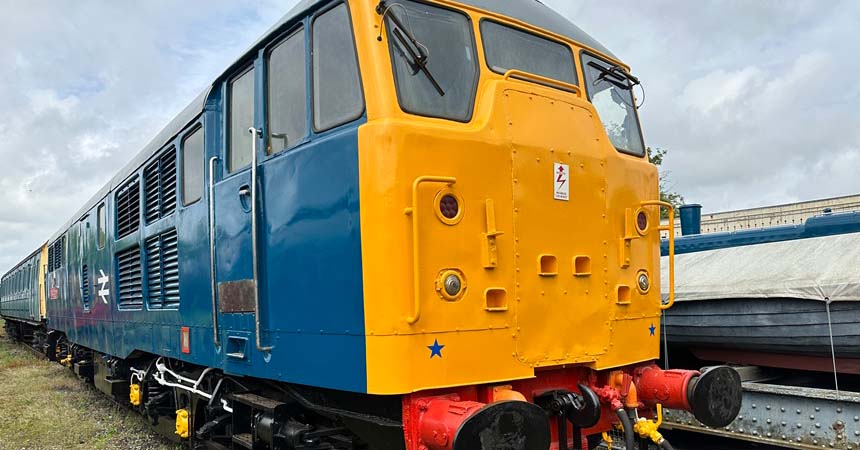 31105 at Mangapps Railway Museum.
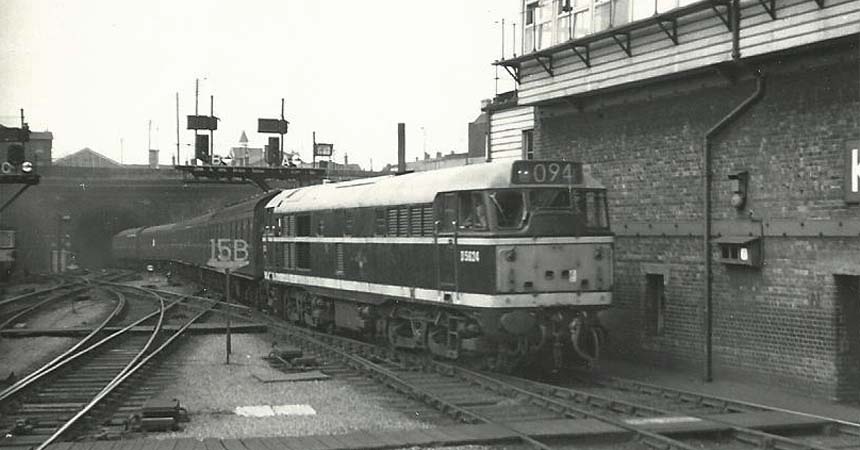 Brush Type 2 (Later Class 30) D5624, Hugh Llewelyn, Wikipedia Commons, CC BY 2.0
Like many early BR diesels, the Brush Type 2 story began with the British Transport Commission’s ‘Modernisation Plan’, which aimed to renew rail and signalling infrastructure, revive freight with automated yards, and replace ageing steam locomotives with new diesels. As part of the plan, the BTC devised the ‘Pilot Scheme’, whereby small prototype batches were ordered from manufacturers to test viability before larger production runs. Brush Traction of Loughborough responded with an A1A-A1A, 1250HP diesel-electric design for mainline use, with steam heating and vacuum braking.
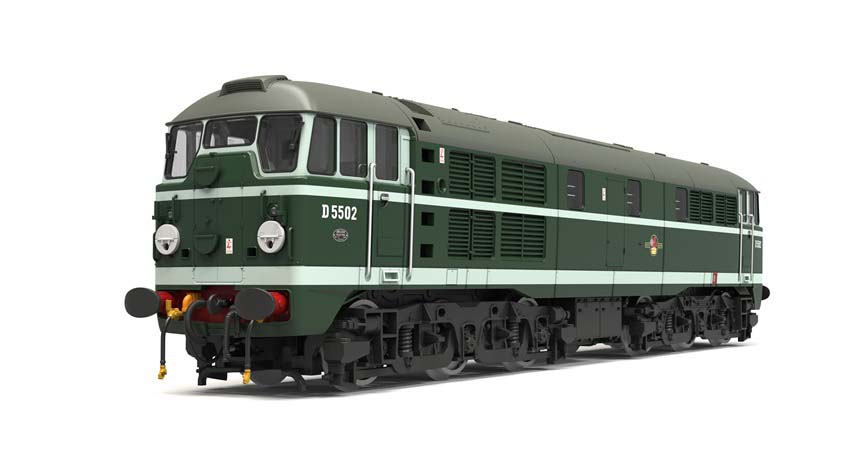 D5502: One of the 20 pilot scheme Type 2’s and features in our first run
The 20 Pilot Scheme Type 2s, numbered D5500-D5519, entered traffic between 1957 and 1958 and proved popular on the Eastern Region from Stratford Depot. They were so successful that a follow-up order for 40 more was placed before all of the first 20 had entered service, reflecting the BTC’s urgency to remove steam from the network.
Production Type 2s differed from the Pilot Scheme locomotives both visually and mechanically. Starting with D5530, steam-era headcode discs were replaced by roof-mounted boxes, the ‘Toffee Apple’ power controller switched to a more conventional pedestal, the Mirrlees engine was uprated, and multiple control changed from electro-magnetic to electro-pneumatic.
By 1962, all 263 Type 2s had been delivered, mainly to the Eastern and Midland Regions, and at the time were widely regarded as successful. However, after around 500,000 miles of running, the Mirrlees engines developed serious fatigue issues affecting the engine housing and cylinder columns. With more than 250 locomotives suffering from daily failures and no clear repair timescale offered by Mirrlees, BR chose to replace the engines.
BR selected a proven English Electric engine producing 1470HP, successfully trialled in D5677 at Doncaster Works. The fleet was re-engined between 1965 and 1969, restoring them to being reliable locomotives.
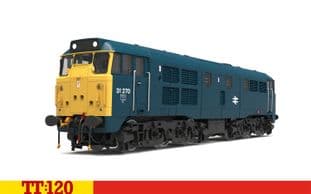
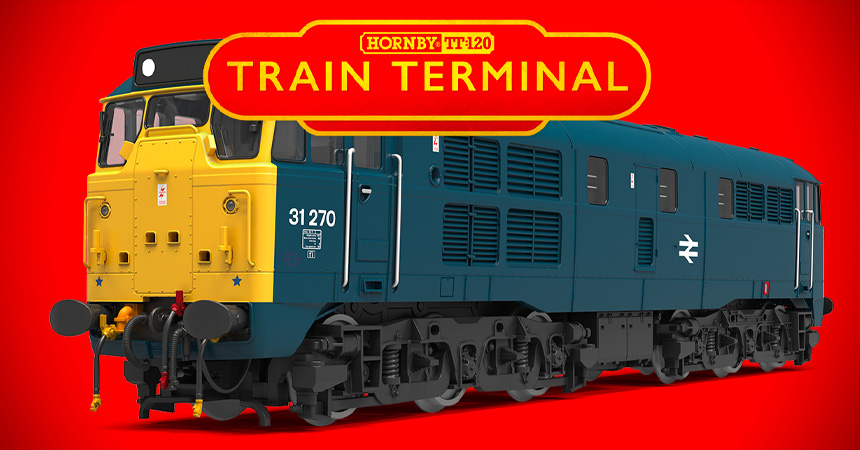
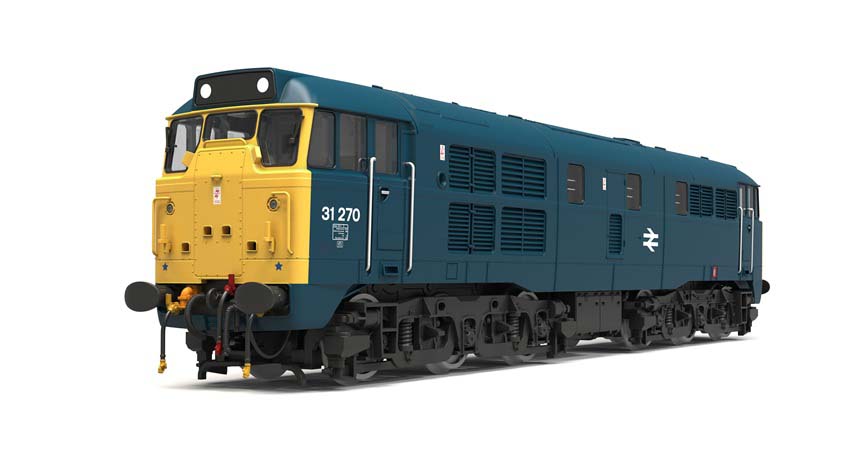 31270 in 1980's BR Blue
The class saw continued use across Great Britian, with only Scotland being relatively unchartered territory. Class 31’s were part of the replacement fleet for the diesel-hydraulics on the Western Region during the 1970s, where they could be seen hauling expresses out of Paddington. The London Midland and Eastern Regions were particularly busy areas of operation for the ‘Peds’ too, on both passenger and freight services – Bescot yard and March TMD being hotspots.
Later modifications to the class, now known as the Class 31 under the TOPS system (Class 30 was reserved for the Mirrlees engined Type 2’s, despite never lasting long enough to enter TOPS), saw the steam heating removed (replaced with Electric Train Supply on some examples), front gangway doors and headcode boxes plated over, high intensity lights installed, and NRN roof ariels added.
Withdrawals began in 1975 and by the 1990’s the majority of the class had been disposed of, but a healthy contingent survived into the 2000’s with Network Rail and some smaller passenger operators. Many now survive in preservation, with the first of the class No.31018 part of the NRM collection.
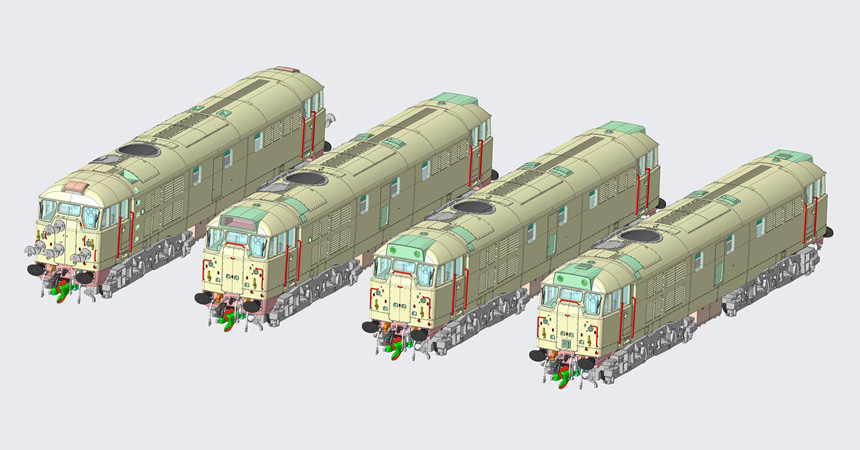 An overview of the CAD for the four initial releases
Designed entirely from scratch for the TT:120 market, the Hornby Class 30/31 will be produced to the same high quality as our recent Class 37. The model features a precision moulded bodyshell, detailed cab interior, and a myriad of separately fitted parts. Each wheel has an electrical pick up, and power is supplied by a five-pole motor, delivering drive to all axles. Crucially, the tooling suite covers the class’s distinctive detail variations, enabling us to represent Type 2s at different stages of their working lives. Let’s take a tour through our tooling suite to whet your appetite for which Class 30/31s we can make!
Naturally, we will start with the as-delivered examples from the late 1950’s, which includes the initial batch of 20 ordered as part of the aforementioned Pilot Scheme. Our tooling will cover these prototype machines, distinct from the rest of the class by their ‘skinhead’ roof, headcode discs, missing centre bodyside door louvres, and Mirrlees roof exhaust. One such early type 2, D5502, features in our initial release and is depicted in overall BR Green with duck egg blue body stripes. Future ‘skinheads’ could include BR Green examples with yellow warning panels, or BR Blue versions. Perhaps more interestingly would be the pair of Stratford Depot pet 31’s that wore the attractive silver-roof variation in the 1970’s…
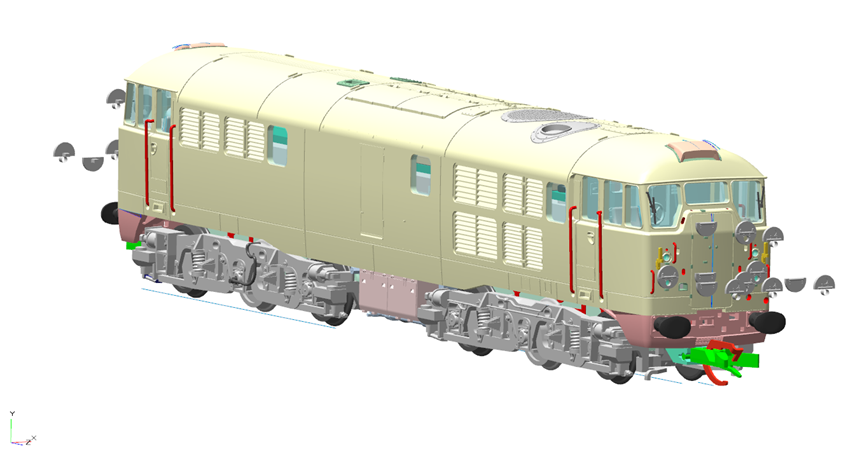 'Skinhead' Class 31 CAD with optional headcode discs. These will be pre-fitted to the model, with extra discs available in the accessory bag
Outside of the Pilot Scheme, the vast majority of the production Type 2’s bore a roof-mounted headcode box to display a four-digit train reporting number. On our model this will come in its original glazed form or later refurbished plated form – in both instances backlighting will be present. The cab fronts exhibited a great deal of changes throughout their lifetime, and we can cater for most of these, such as optional washer fluid jets, plated front door, high intensity lights, various lamp bracket positions, and with or without a lower valence.
The sides and roof are areas of significant change too: the roof exhaust design switched when the English Electric engines were installed, and the boiler exhaust port was plated over when steam heating was removed. Along the sides now, and by the time the production Type 2’s entered service an extra ventilation louvre was added to the central door. Originally the water filler port, boiler water gauge, and bodyside steps behind the No.1 cab end were open, but these were plated over later on in their lives.
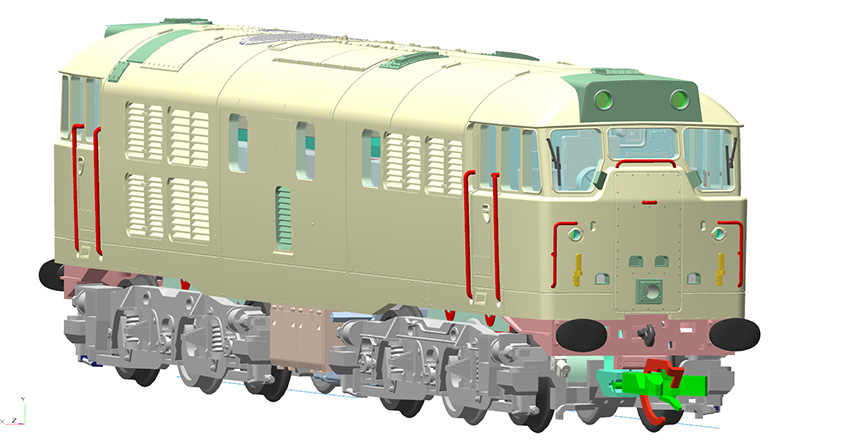
The final iteration of the Class 31 design, sporting high intensity lights and NRN roof pods
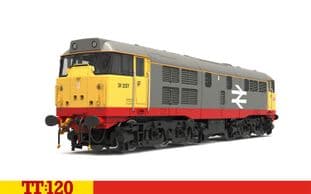
For our first run, 31270 in BR Blue, 31237 in BR Railfreight Grey with red stripe, and 31219 in BR Engineers Grey & Yellow are our headcode box fitted examples, with 31270 retaining a glazed panel and the other two having a plated headcode. These three locos comfortably cover operations across the 1980’s and 90’s – 31270 survived into the mid 1980’s in BR Blue, 31237 received its Railfreight livery in 1986, and 31219 was painted in BR Engineers Grey & Yellow in 1991.
Future headcode box fitted Class 31 models could be offered in a wide range of livery options, from the distinctive 1960s ‘Golden Ochre’ to Trainload Freight sector schemes, and examples operating in later years by EWS, Regional Railways, and Network Rail. Of course, BR Green with yellow warning panels will be released at some point too.
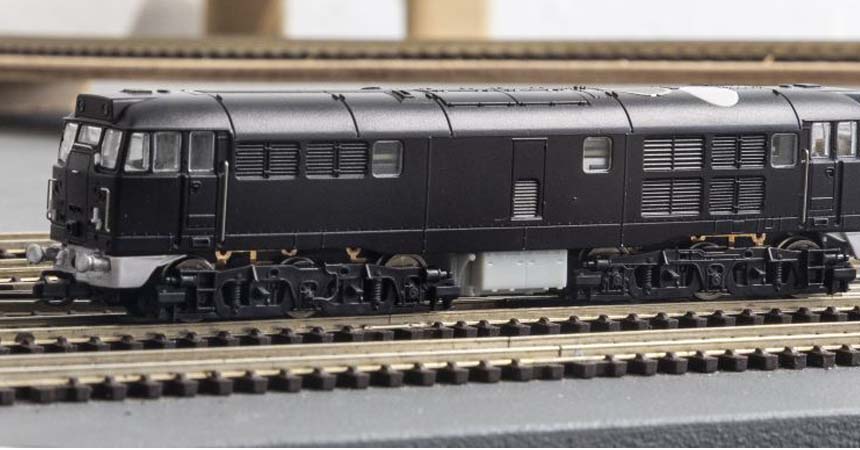
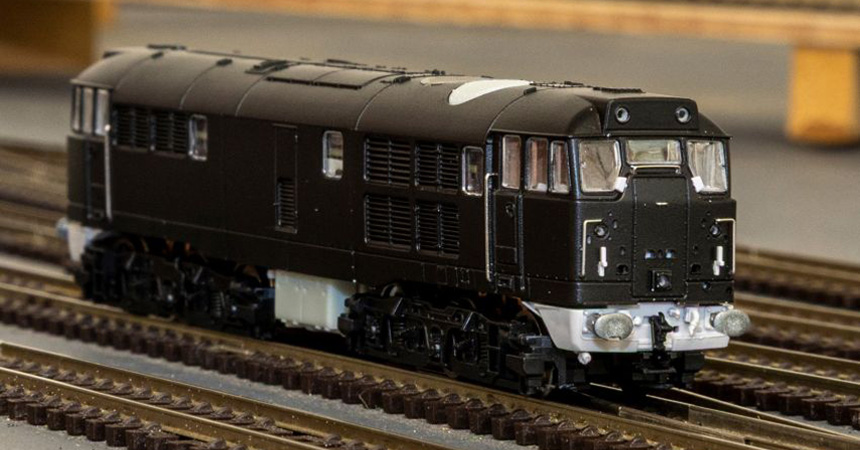
Our first working sample on our TT test layout. This combination of parts is not reflective of a real Class 31.
Now that we have received engineering samples of the Class 31 and offered our feedback, the next stage of the project will be checking livery samples which are due in the Autumn. We are mostly happy with the first sample, but as you can imagine the extra second-operation assembly holes will not be present on the finished product. Delivery is still scheduled for early next year. If you want to see the model in action, check out our recent YouTube video, linked below:
Thank you for taking the time to read through this Train Terminal Blog, we hope it has given you a deeper insight into this fascinating class and our future plans for releases. Happy modelling and see you next time!

