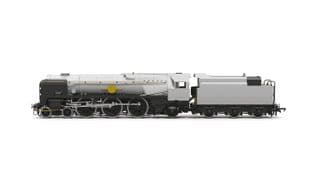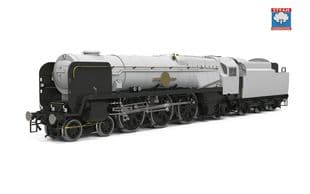

Hello and welcome back to the relaunched Engine Shed blog! We have spent some time renovating a few things ‘on shed’, and we’re excited to once again offer a sneak peek behind the workshop doors at Hornby.
Where better to start than with the flagship announcement from our January 2026 product launch: the ground-up retool of the iconic Rebuilt SR Merchant Navy class. This locomotive has played a pivotal role in the company’s history, as the original Hornby Merchant Navy released at the turn of the century ushered in a whole new era of highly accurate, high-fidelity models.
It is a testament to the design that many modellers consider it the turning point in what could be achieved on an OO gauge product, as it offered levels of detail that were thought not possible at the time. Twenty-five years later, Hornby is taking the OO gauge Merchant Navy class locomotive to even greater heights by developing a model to meet the demands of the modern-day customer, including all the latest technology and design techniques which you have come to expect from recent Hornby steam locomotives.
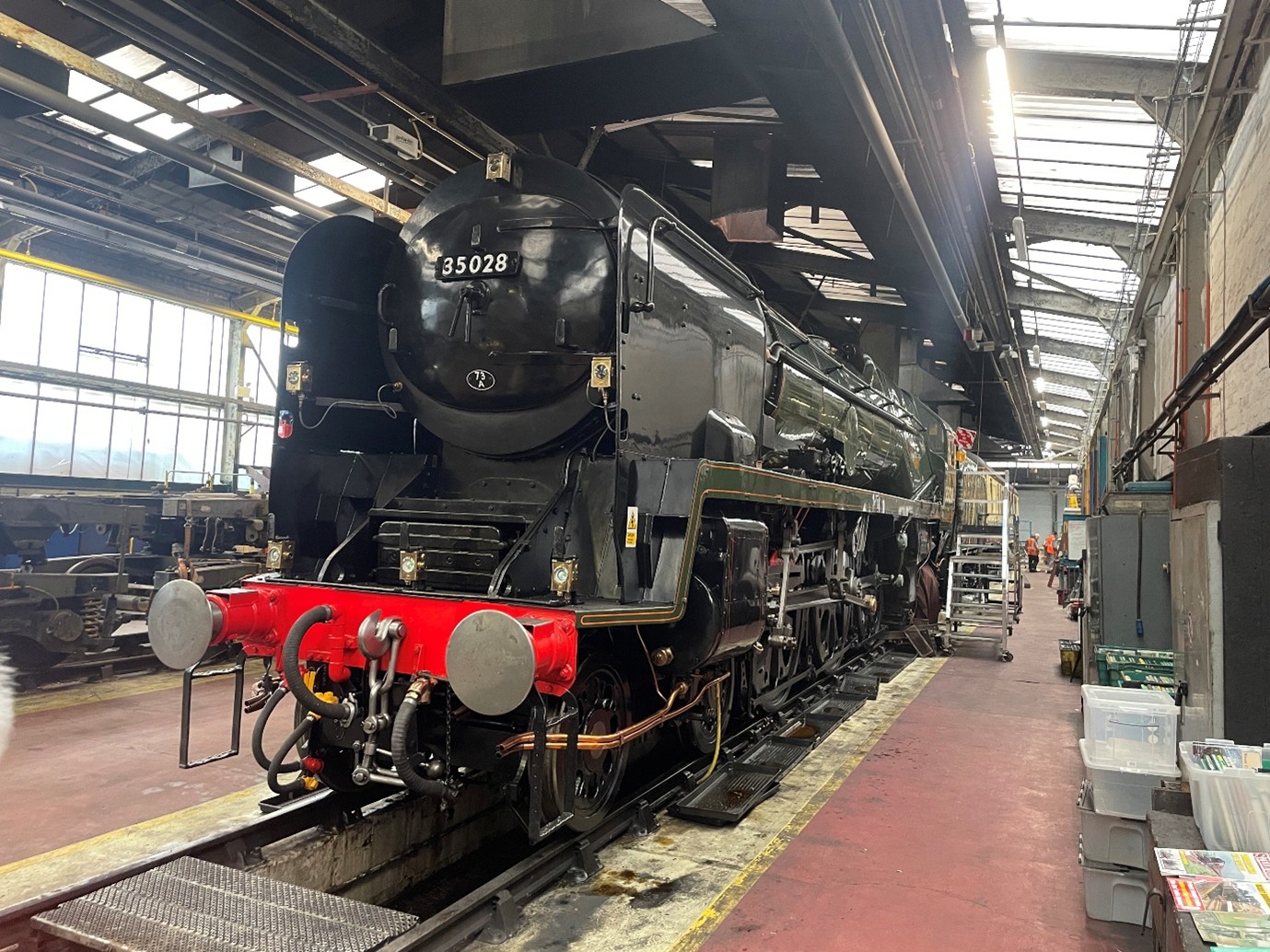
Clan Line on shed at Stewarts Lane in late 2025.
Before delving into the impressive specifications of the new model, let’s briefly mention the history of this Southern region express engine.
The Merchant Navy class designed by Oliver Bulleid, the Chief Mechanical Engineer of the Southern, was introduced in 1941 to provide the southern region with a modern, powerful passenger express locomotive. Although based on a conventional Pacific-style 4-6-2 wheelbase, Bulleid incorporated several imaginative design choices, most notably the ‘air-smoothed’ body casing. Other novel design choices included an exceptionally high boiler pressure of 280lb/in² (PSI) with thermic syphons, chain-driven valve gear and steam-operated fire doors.
There was a total of 30 Merchant Navy locomotives built between 1941 and 1949, with the final 10 being constructed during nationalisation and therefore never carried an SR livery.
In their day, the members of the Merchant Navy class, irreverently referred to as ‘Spam Cans’ owing to their smooth exterior, were excellent performers, but the issues caused by Bulleid’s design choices eventually resulted in the entire class being rebuilt during the mid-1950s. The most obvious physical change was that the air-smoothed casing was removed and replaced with conventional boiler cladding, akin to the BR Standard locomotive classes introduced in the 1950s, but a long list of other design changes was made.
Some of the changes and additions include:
These changes proved highly successful, and the class survived right up until the end of steam in 1967. From the class of 30, an impressive 11 members still exist today in preservation, in various states of operability.
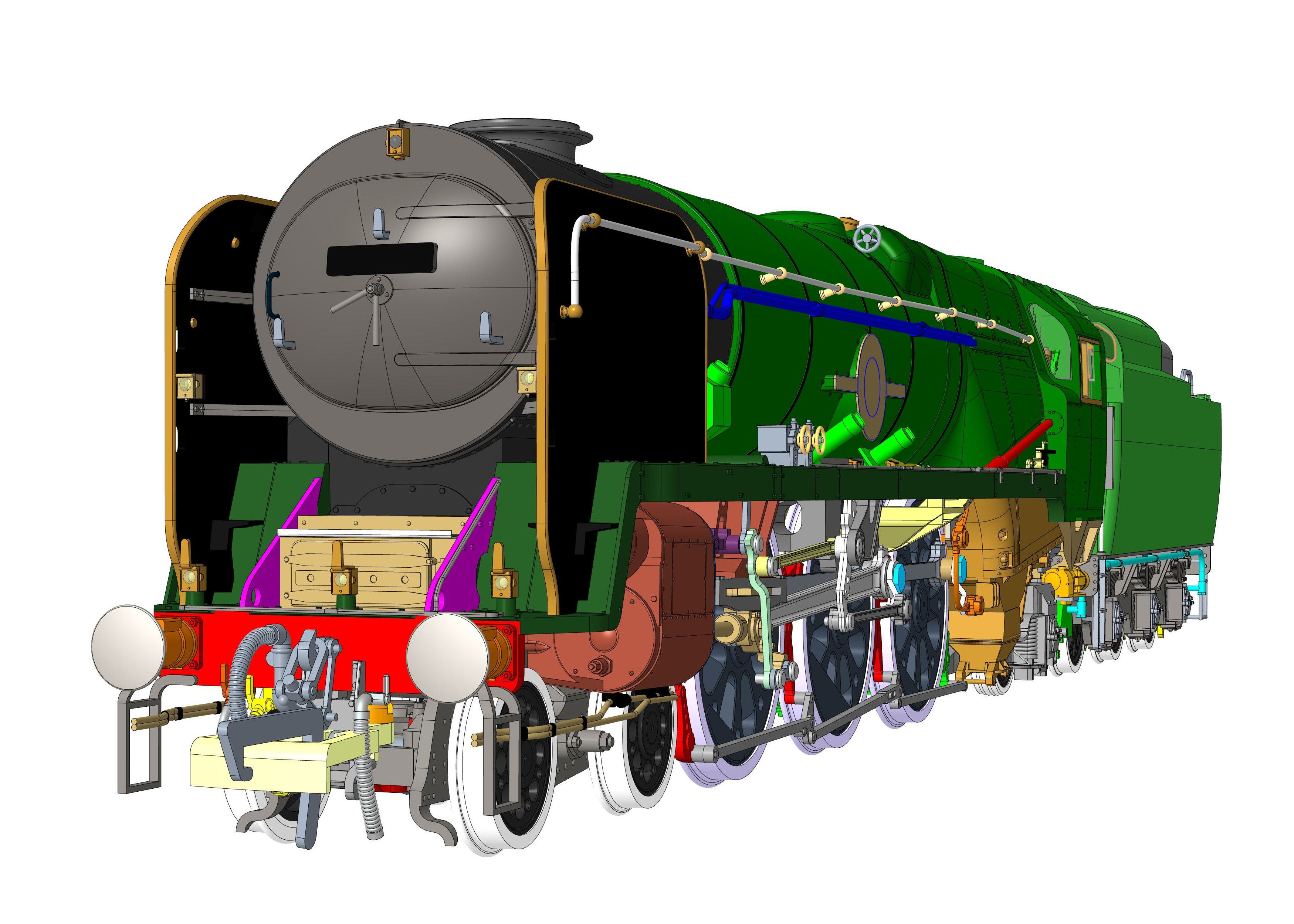
This newly tooled model from Hornby has been based on extensive research, including the use of 3D scanning, original drawings, and consultation with the Merchant Navy Locomotive Preservation Society Ltd, all culminating in an impressive specification. And of course, the Merchant Navy will be offered with a Steam Generator system to add even further realism to this authentic model.
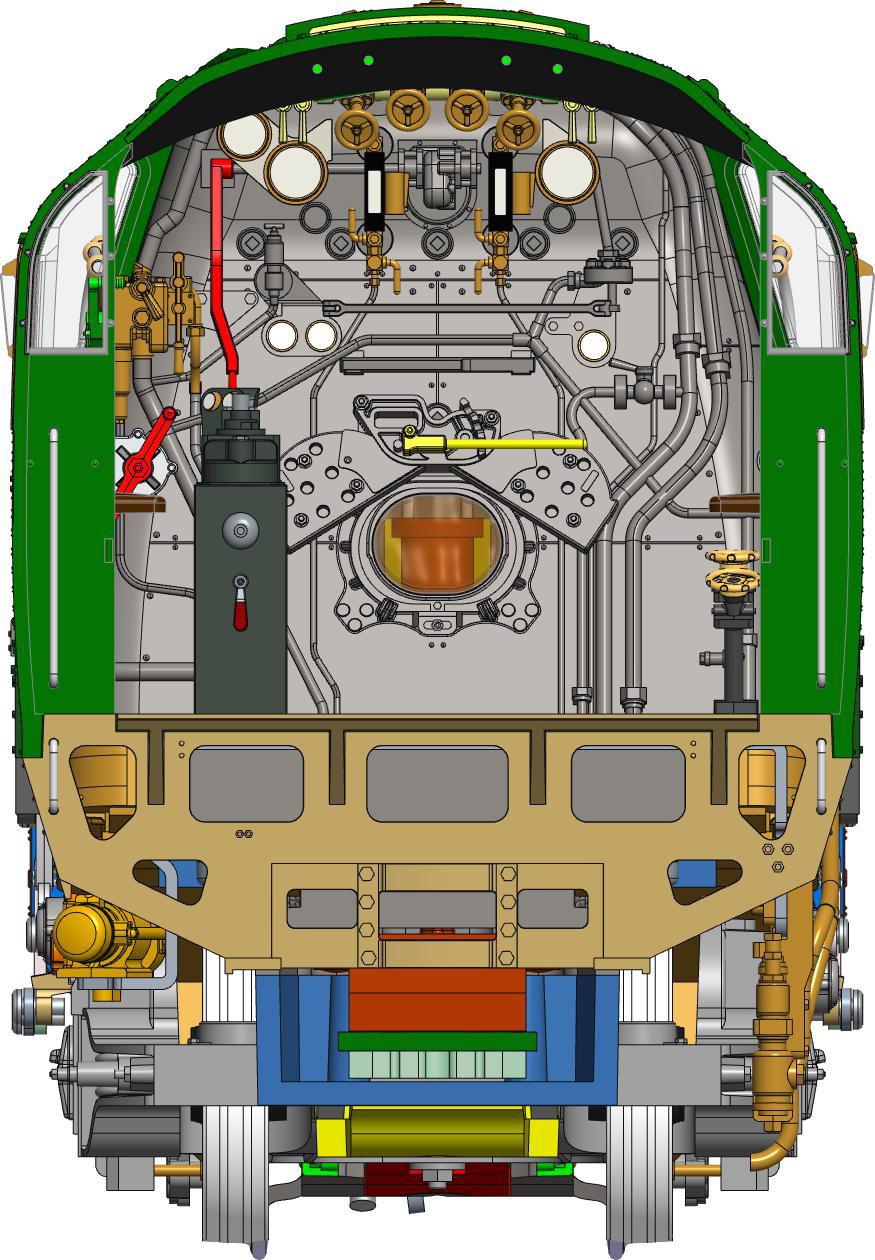
A sneak peak at the impressive detail in the cab interior. This will include an overhead cab light and firebox flicker.
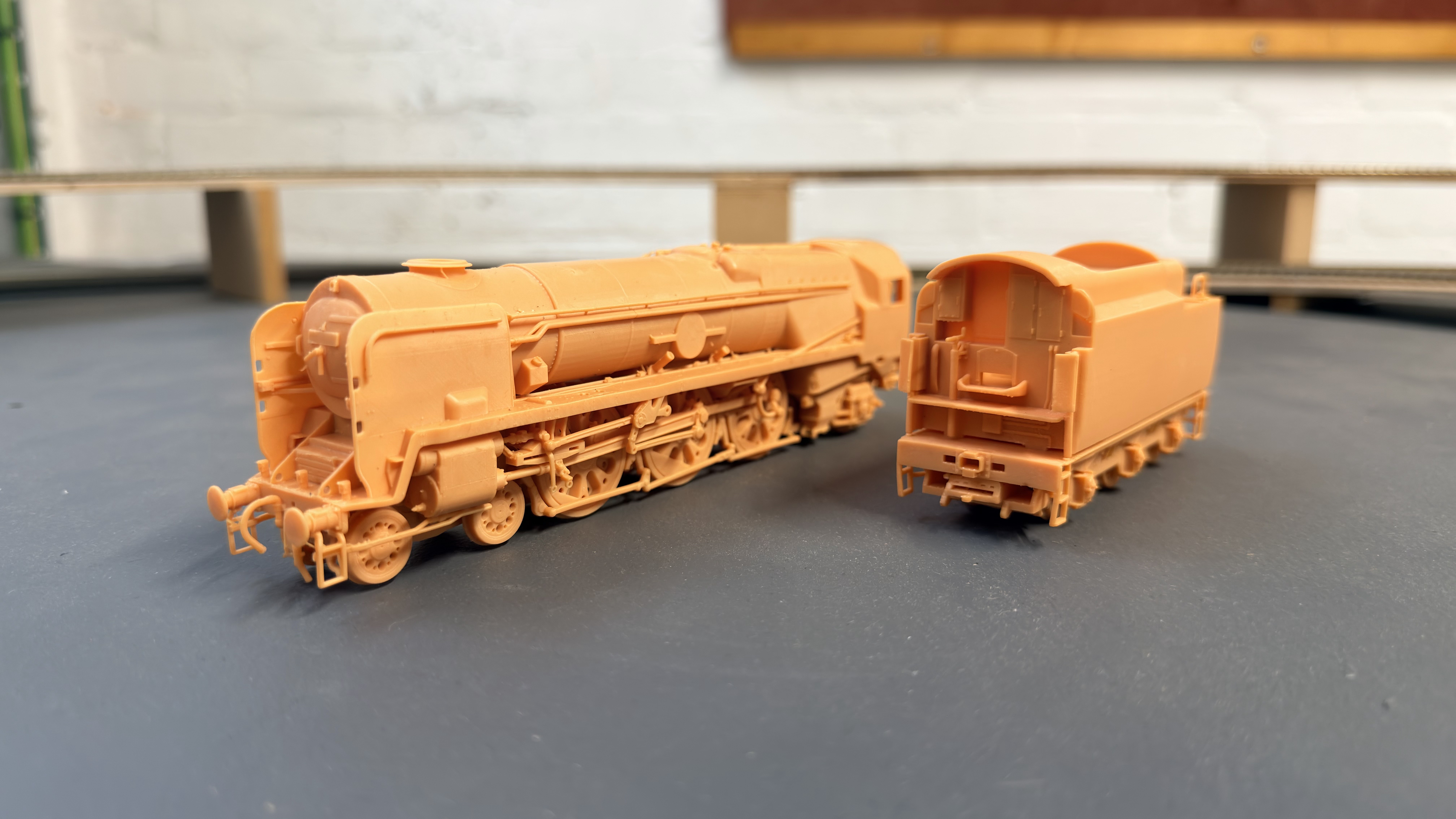
When the original Hornby Merchant Navy was announced in 2000, the first identity revealed was No. 35028 ‘Clan Line’ at a press event at its home in Stewarts Lane depot, South London. It seems only fitting then that to relaunch the newly tooled model, it starts with that same venerable locomotive. This initial release will depict Clan Line in its current preservation condition, with a number of tooling options specific to Clan Line, such as the 6000-gallon tender with additional pump, air tanks, and battery arrangement for main line running.
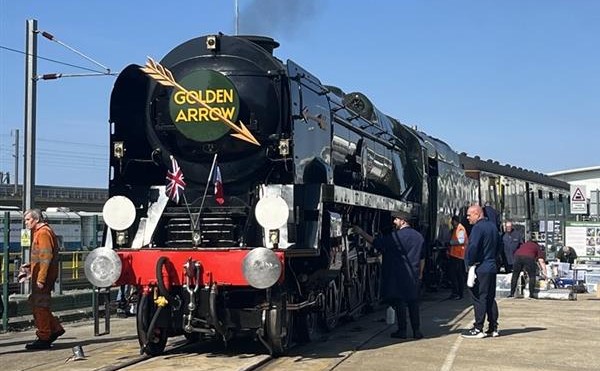
Clan Line at the Railway 200 event in Ashford, August 2025. The Golden Arrow smokebox headboard will be catered for on the new Merchant Navy model.
The rebuilt Merchant Navy, although only a class of 30, had numerous detail differences over its lifetime, which our tooling suite covers comprehensively. This includes:
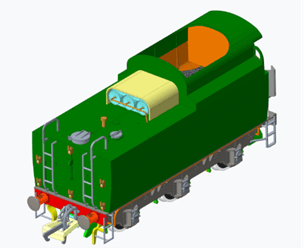
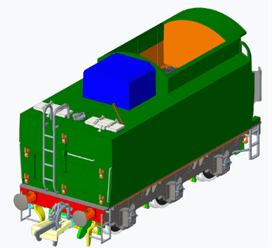
A sample of the tender options available. On the left is a 6000 gallon tender with Briquette water filler. On the right is a 5250 gallon tender with two water fillers.
This tooling bank allows us to extensively cover a large number of the Merchant Navy fleet, so make sure to look out for future announcements to see which ones we have picked. And of course, if you have any suggestions for running numbers or liveries you’d like to see, comment below.
That’s all for this Engine Shed. We hope you’ve enjoyed this in-depth look at the new rebuilt Merchant Navy. Our research and marketing teams have put a monumental amount of effort and time into releasing this Hornby icon back into the range, so it is heartwarming to see so many positive comments filter back to us.
We will be posting more Engine Sheds throughout the year to keep you updated with the latest developments. Don’t forget to subscribe to our YouTube channel for the latest videos.
My name's Nick, and I'll be your regular Engine Shed contributor from now on.
Until next time, happy modelling!