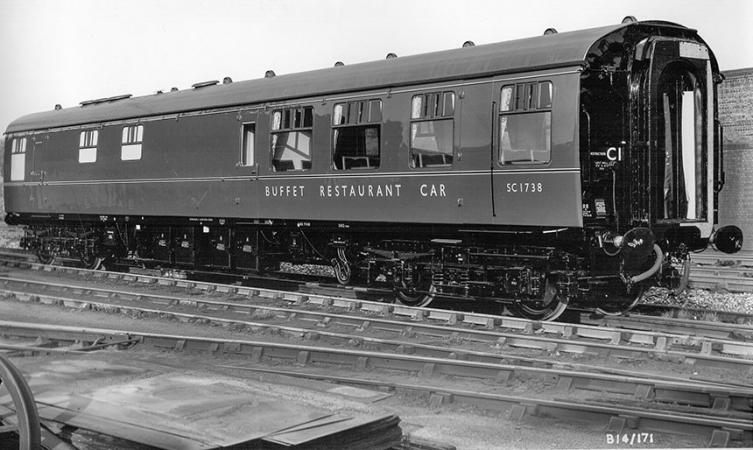
Sc1738 was the last vehicle to be built under Lot No. 30512 at BRC&W during July 1961 and is shown here in pristine ex-works condition for a British Railways publicity photograph. © British Rail
Good afternoon to you all and welcome to this May edition of Engine Shed.
Another Bank Holiday weekend is with us and while we might, in more normal times, be preparing to venture out to visit heritage railways or museums across the country, we must be patient a little while longer for our ‘fix’ of railway life. When the time comes to lift the restrictions on visiting these sites, many will be in dire need of our support in so many ways, so if you are in a position to be able to visit your local heritage line or museum, even if just for a cup of tea and a piece of cake, then please do so, as every small contribution will be helping them out.
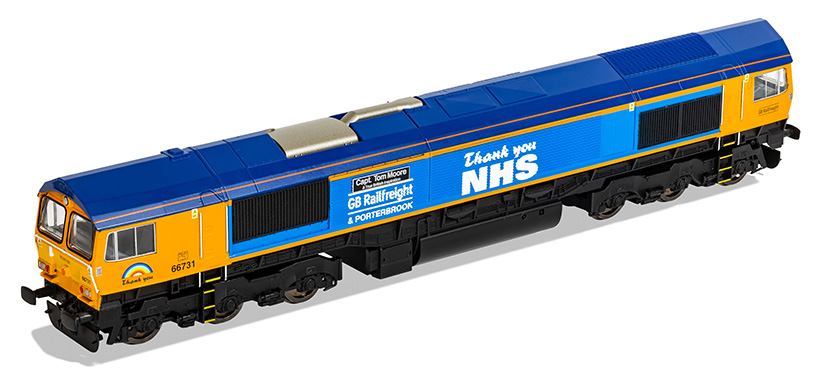
At Hornby, we are fortunate that we are in a position to make a telling contribution towards NHS Charities Together through the sales of R30069, 66731 Captain Tom Moore – A True British Inspiration. 3,500 units of this model were eventually allocated for production, raising a total of £140,000 towards the charity. Following the selling out of all 3,500 models on pre-order, we opened a waiting list for customers to join should an order be cancelled, and this was very well received, but we have since had to sadly close this opportunity to avoid disappointment. In the event, the waiting list became nearly as long as the pre-order total, no doubt having been helped by the marvellous coverage we have received from local, national and trade press outlets.
Our manufacturing partners in China have made a magnificent effort to bring the production of R30069 forward, the decoration sample having already been prepared and shipped to Margate this week, just in time to coincide with the announcement that Captain Tom Moore is to be knighted for his fundraising efforts.
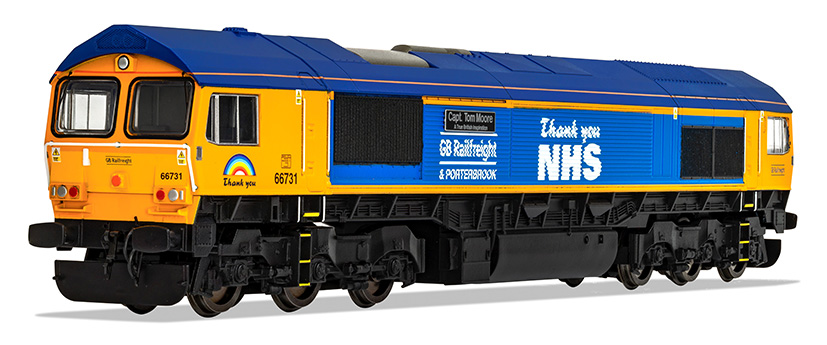
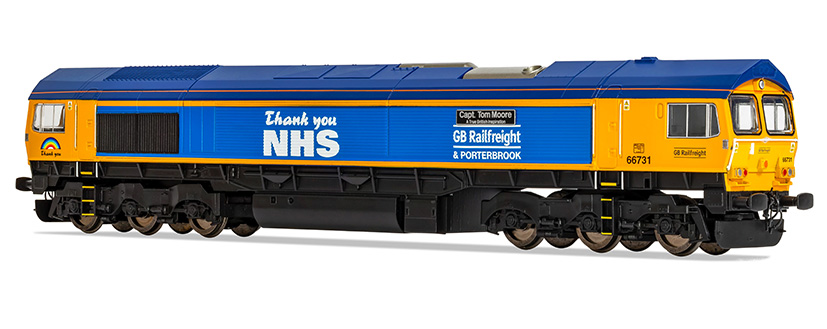
Thanks to some concerted teamwork, we have managed to overcome some logistical and geographic obstacles to share these first images with you and we can now look forward to the shipping of R30069, anticipated to be arriving in August 2020. Our marketing team are currently in contact with NHS Charities Together regarding the handover of the raised monies and we hope to bring you further news on this in a forthcoming Engine Shed.
Both the BR Mk.1 RB coaches and APT-P have been mentioned in passing during previous Engine Shed blogs this year, so prompted by the arrival of the engineering samples for the RB and the completion of testing on the APT, we thought that this month would be a good opportunity to bring you up to speed on these two projects.
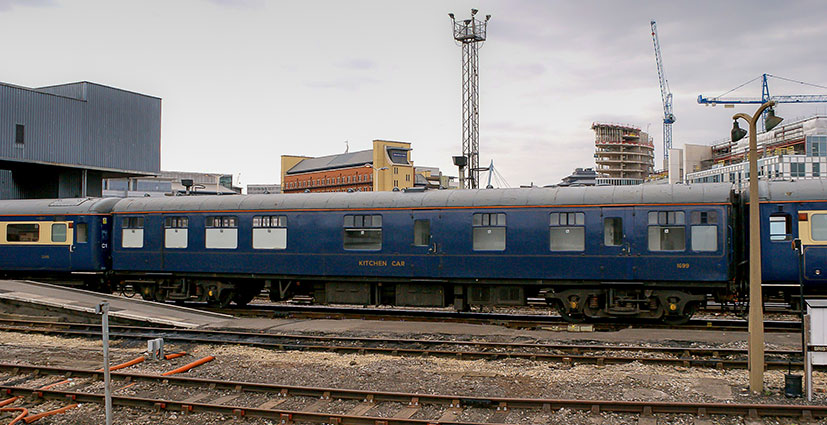
Upon nationalisation, and for some years afterwards, British Railways retained the catering stock that had been built by the ‘Big Four’ for inclusion in long haul and excursion trains, even to the extent that the first building phase of the new BR standard Mk.1 stock did not include any catering vehicles. It was also becoming apparent to the management of British Railways that the nature of catering required for rail travel was changing, a direct consequence of post-war attitudes towards dining. The catering department of British Railways was experiencing a demand from travellers for cheaper and lighter meals and was also seeing an increase in social drinking that was not related to dining which meant that the use of a Buffet vehicle, rather than a full Kitchen Car/Dining Car combination, was sometimes a better option in traffic.
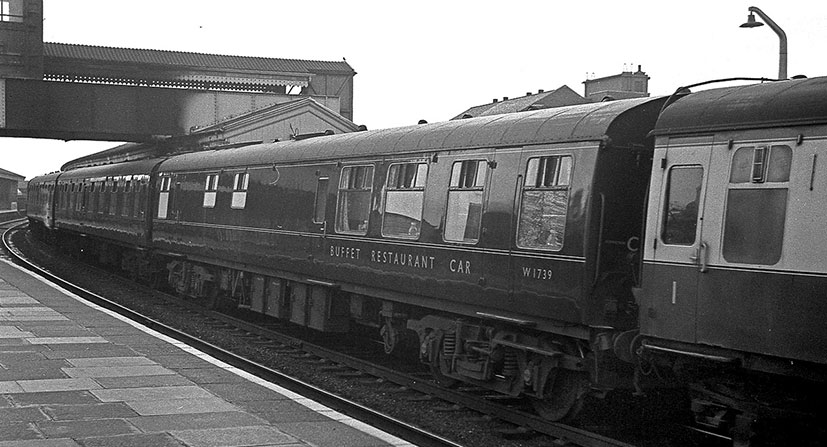
Mk.1 RB W1739 (Diag. 24, Lot 30527) at Worcester Foregate Street (saloon end, kitchen side) on 14/4/61. © RCTS
It was not until the third phase of the Mk.1 construction programme from 1957 that three prototype catering vehicles were built by BREL at Eastleigh to a basic requirement set out by the Hotels and Catering Services Department of British Railways, with each stage of construction incorporating feedback from restaurant car staff. The three prototypes were M1546 Kitchen-Buffet (RKB), W1900 Unclassed Restaurant (RU) and E1700 Buffet-Restaurant (RB). All of the prototypes were a success and 128 Mk.1 RBs were ordered, built in four lots to Diagram 24 between 1960 and 1962 by Pressed Steel and Birmingham RC&W.
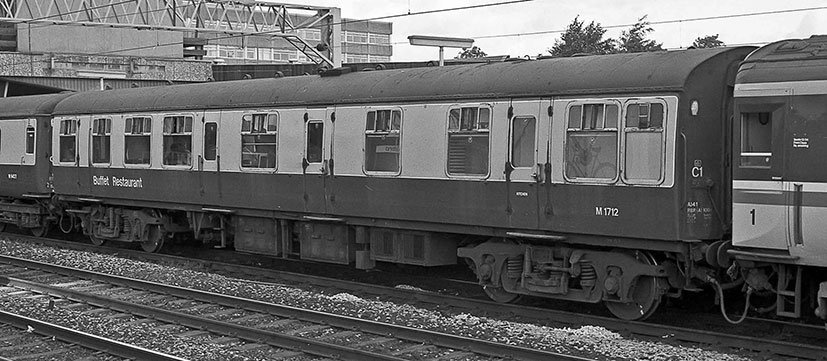
Mk.1 RB(R) M1712 at Stafford Station 16/8/86. © Dennis Taylor
By 1977, British Rail had come to realise that the existing Mk.1 catering stock would have to be retained for a longer period on long haul services than had been originally anticipated, especially as the APT and HST programmes were behind schedule. The catering fleet was suffering as vehicle availability decreased and services increased, leading to a lack of morale among catering staff and an increase in public dissatisfaction with on-train catering. As an example of this, in 1960 850 catering vehicles covered 794 daily booked services, but by 1977 this had dropped to 460 vehicles covering over a thousand daily services. Following a high-profile public opinion survey, BR realised that catering needed to become part of the corporate InterCity image and an accelerated programme of refurbishment ensued, resulting in the creation of the Diagram 33 RB(R), a designation that was applied to all catering stock and not just the Diagram 24 RB vehicles.
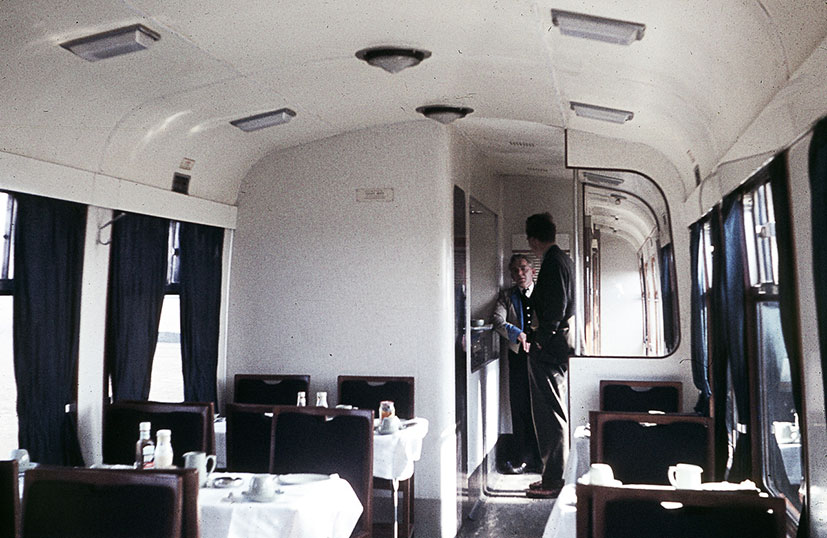
As no new BR standard Mk.2 catering cars were built from new, so it was that Mk.1 Restaurant and Buffet vehicles were included in Mk.3 rakes on the major main lines, until such time as the Mk.3 catering coaches became available. Certain services continued to use Mk.1 vehicles into the early 1990s; The Clansman and the Holyhead trains included RB(R) stock during 1990/1991 and Norwich services were still including them in 1993, according to the coaching stock book. Only once that the Mk.2f RFBs were fully in service, especially on Intercity cross-country services, was there no further need for Mk.1 catering stock and the remaining serviceable vehicles were relegated to being used in charter stock.
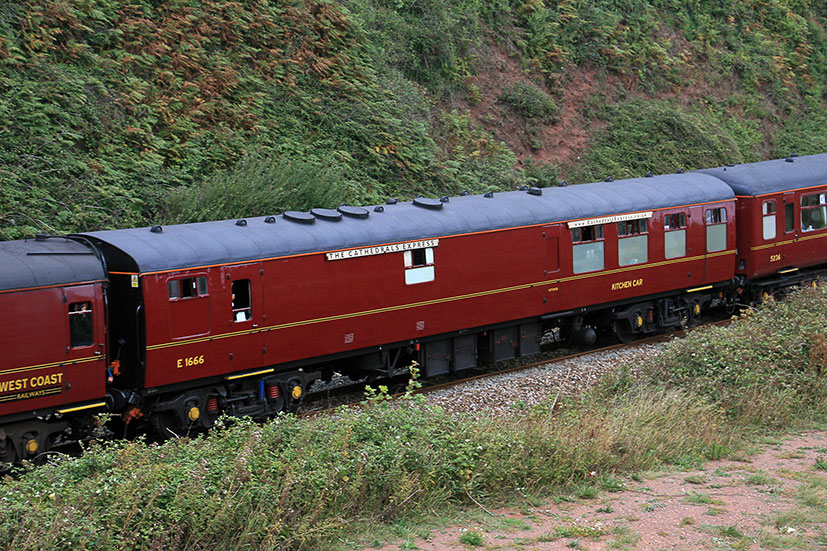
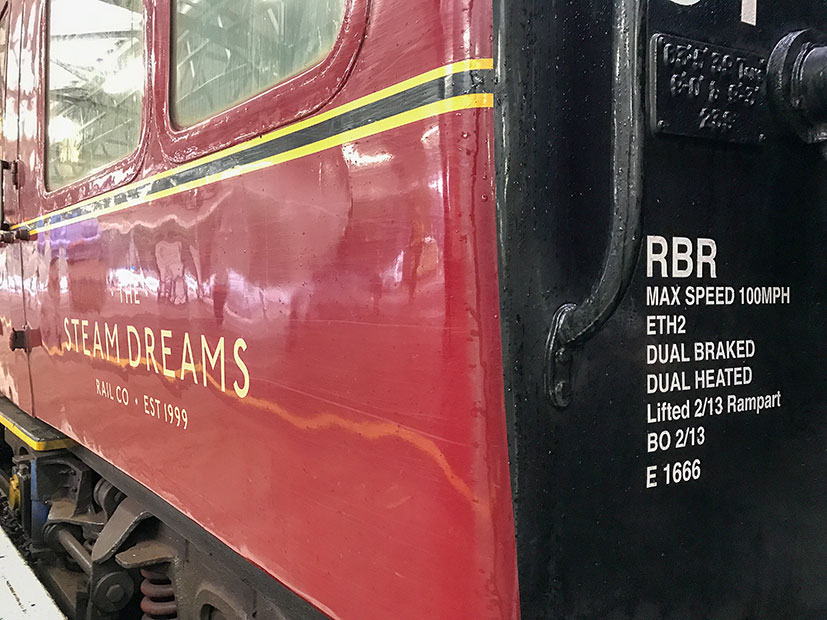
Two visits were made to the Epping Ongar Railway at their Ongar Station site to take measurements from RB(R) 1699, a former Riviera Trains vehicle originally built as an RB, to Diagram 24, under Lot 30628 by Pressed Steel in 1960. Normally, the Development team would only make one survey visit for a coach, especially for a Mk.1 vehicle, but with the EOR being ‘on the way back’ from a lot of locations we have visited during the past 12-18 months, on both occasions the visit was fitted in around measuring other locomotives. There must be something about Ongar though, because on both visits the heavens opened and we ended up distinctly bedraggled by the time the survey was completed, unlike the Bluebell Railway where the sun always seems to shine on our visits there!
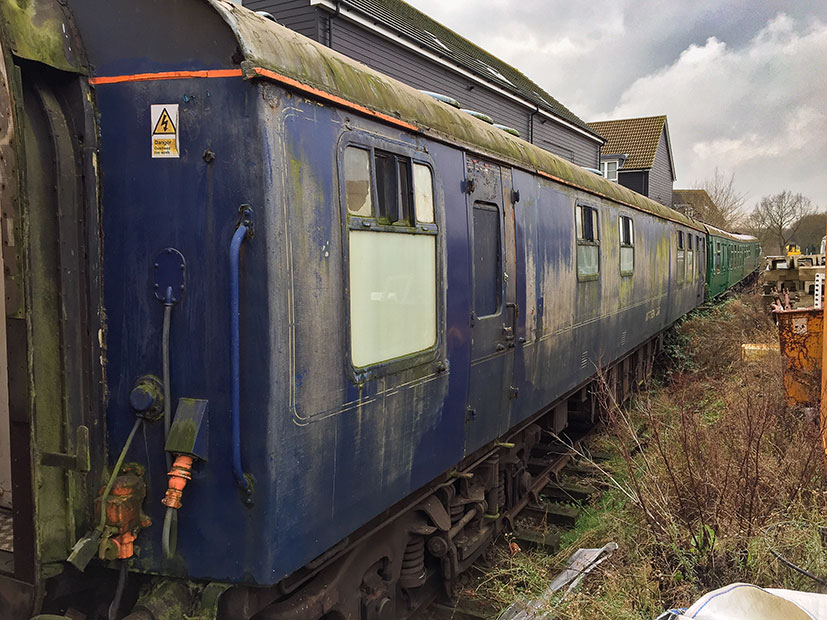
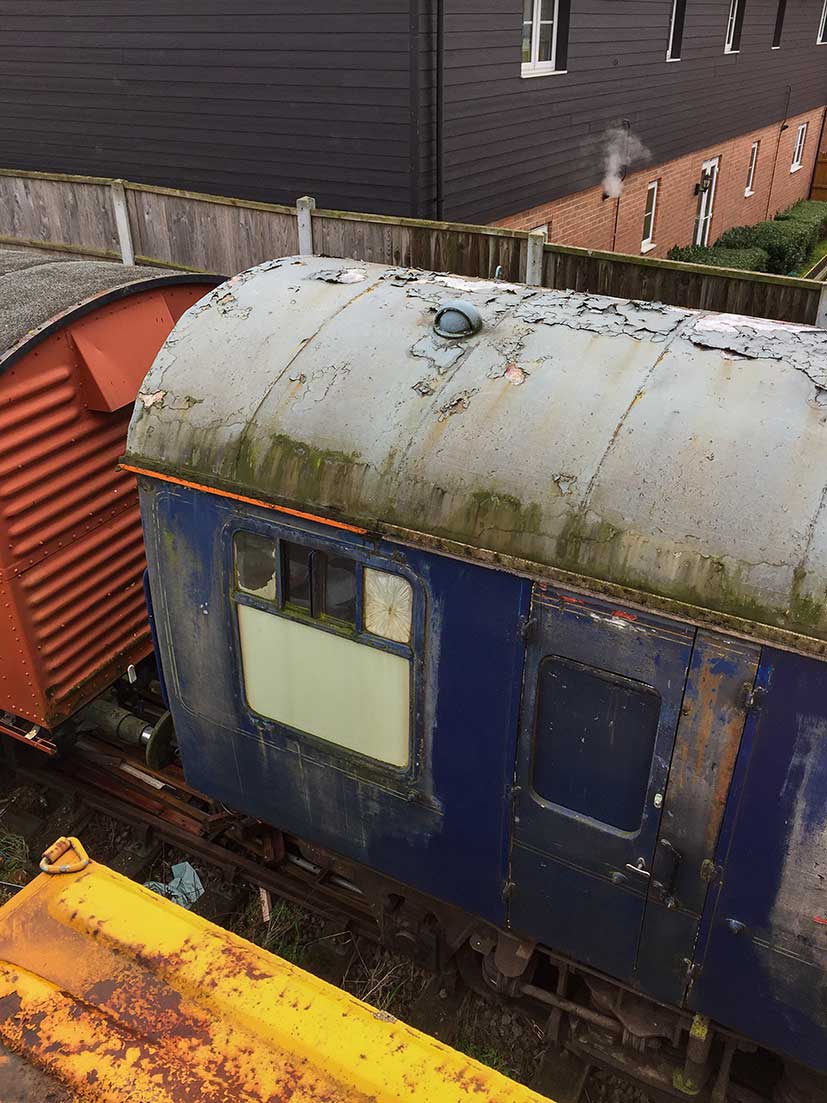
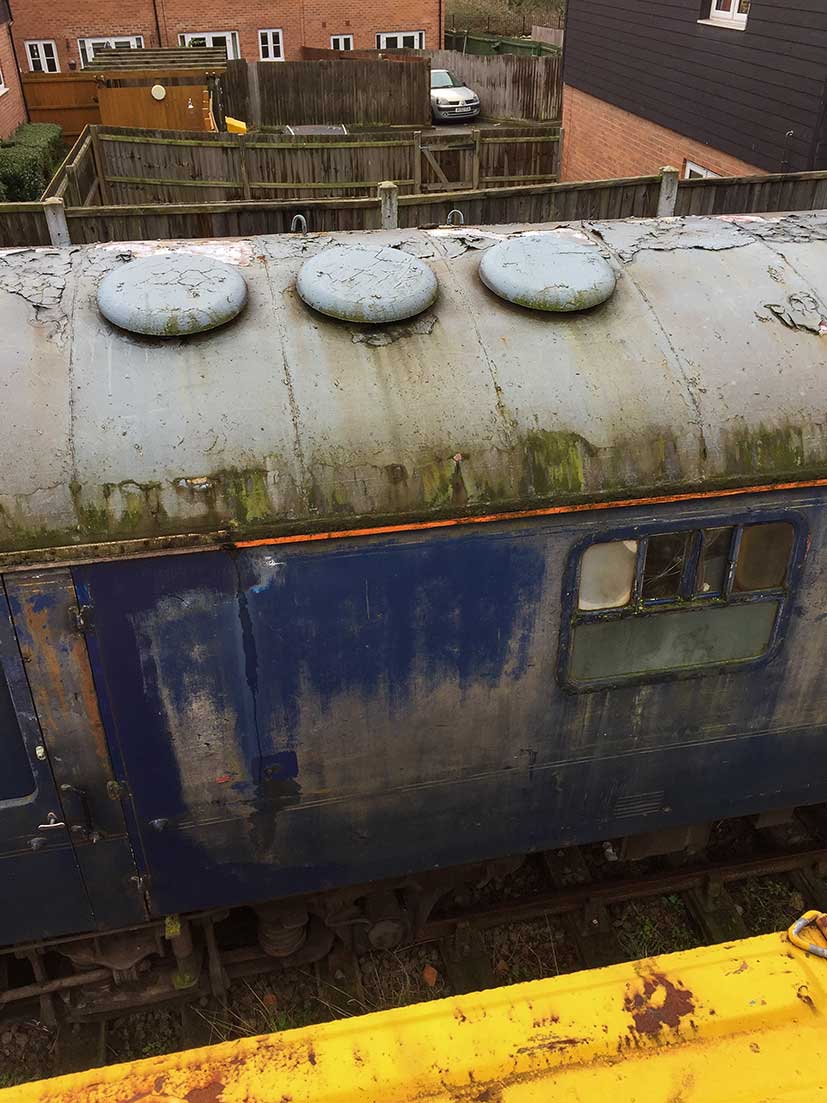
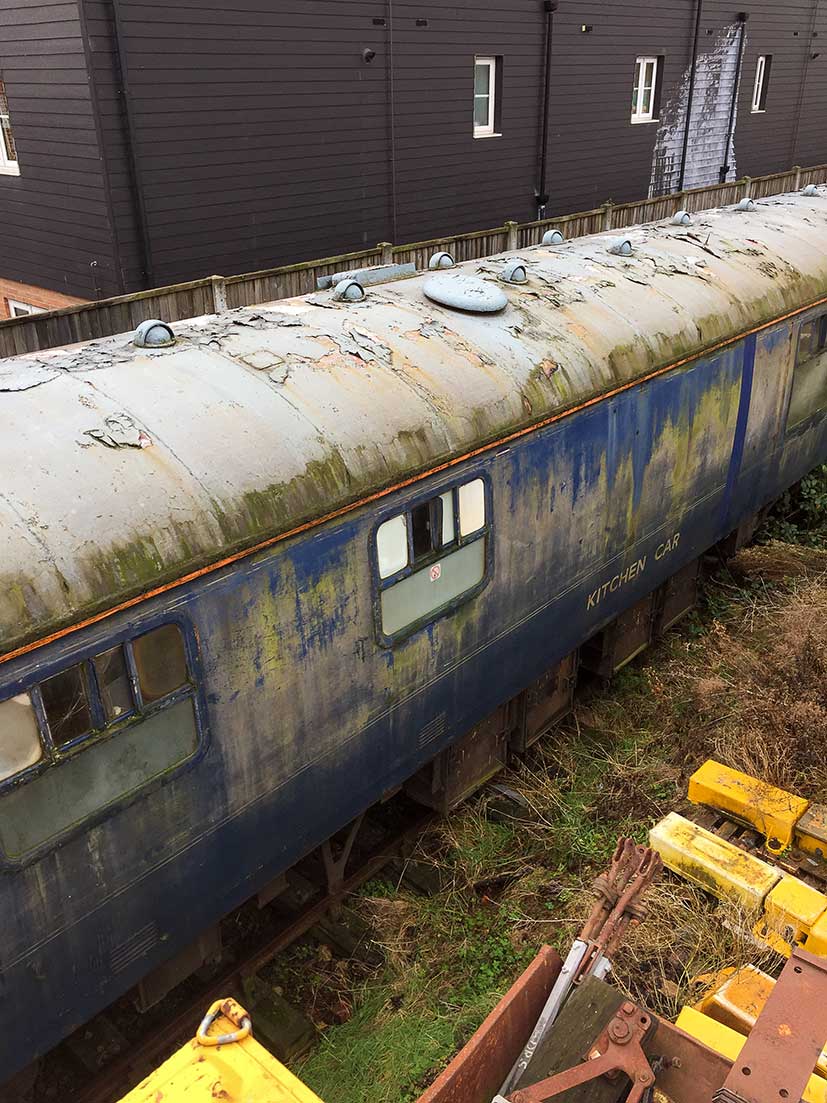
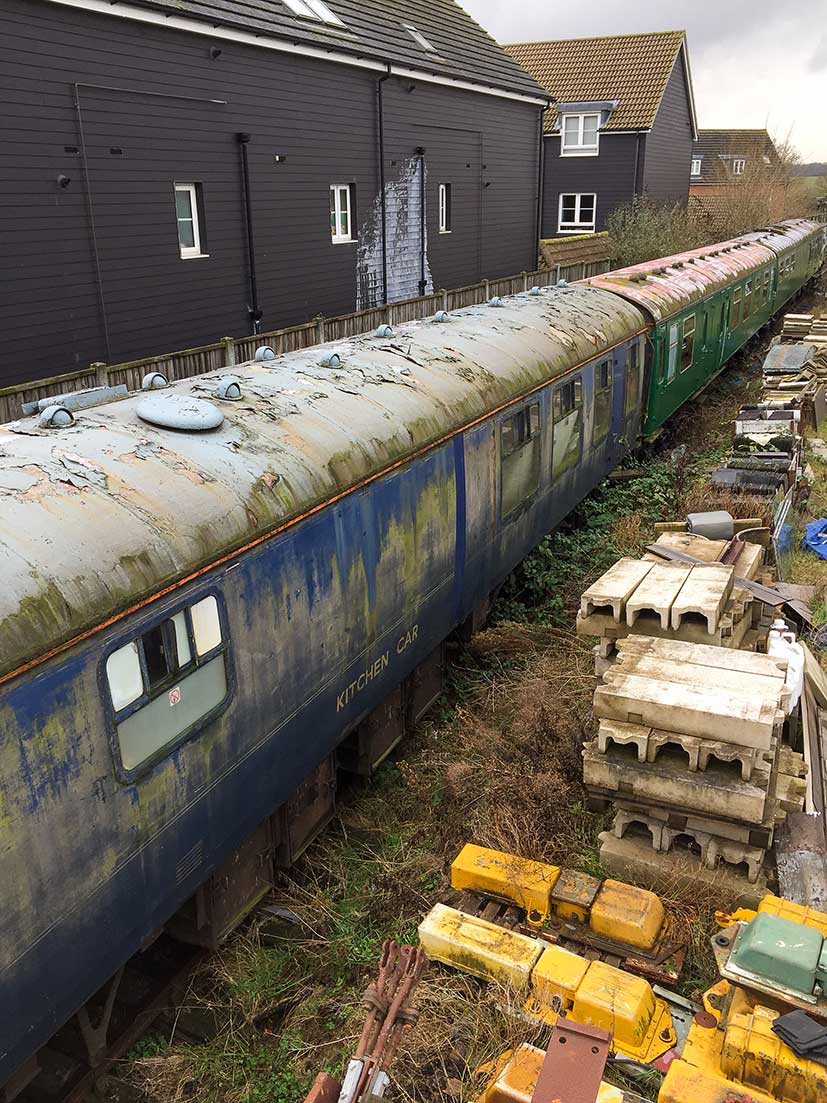
The design of the CAD model did not throw up too many problems, even though the underframe features more equipment than previous Mk.1 coaches (as well as a lot more roof vents) and as such, design was reasonably straightforward. Once completed, a 3D print was produced to check the CAD and this model was then subsequently used for the preview events hosted by our marketing team during January and at the Model Rail Scotland show during February.
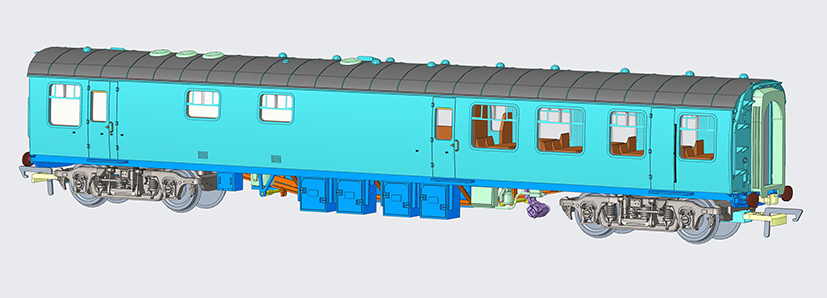
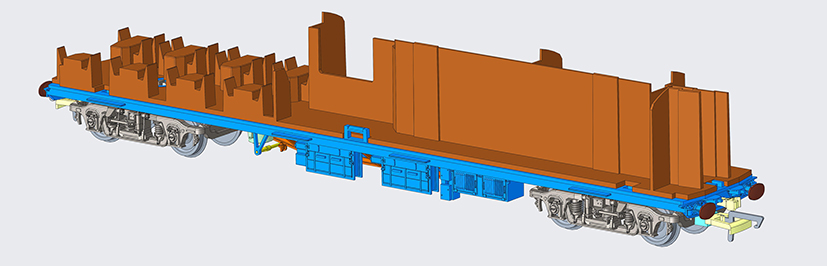
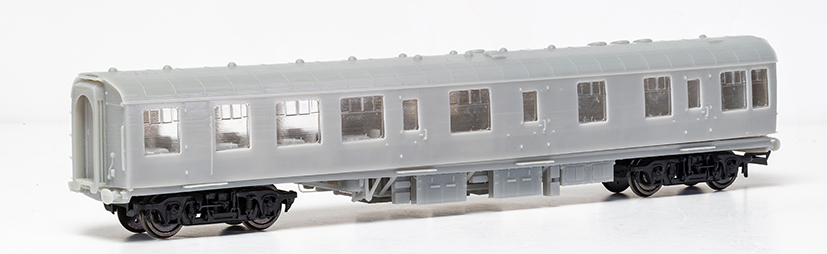
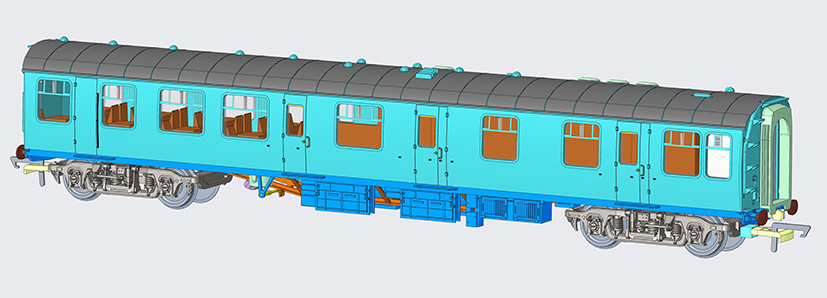
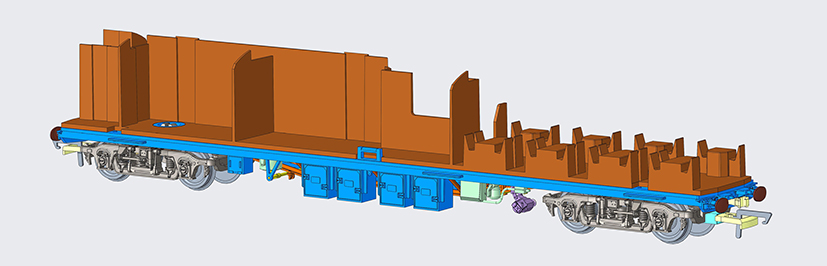
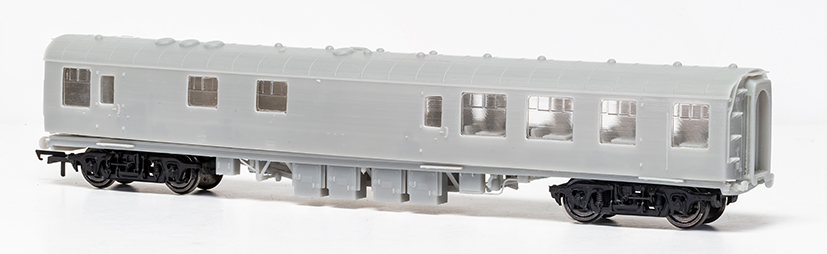
As we illustrated last month in Engine Shed, our teams in Hong Kong and China are working closely with us to help to mitigate the challenges to the approval process brought about by the Covid-19 lockdown and at the beginning of May, we received photographs of the engineering samples in advance of them being sent to Margate.
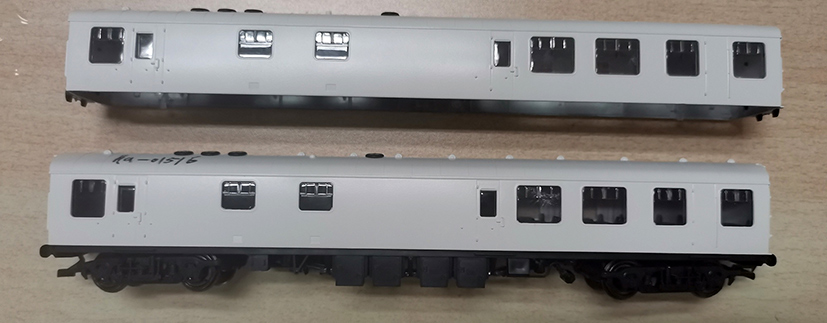
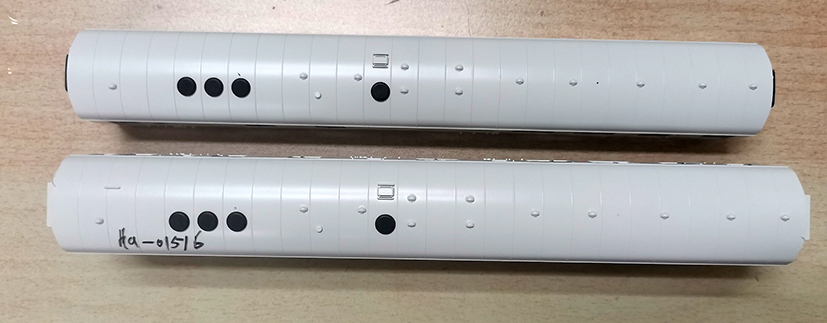
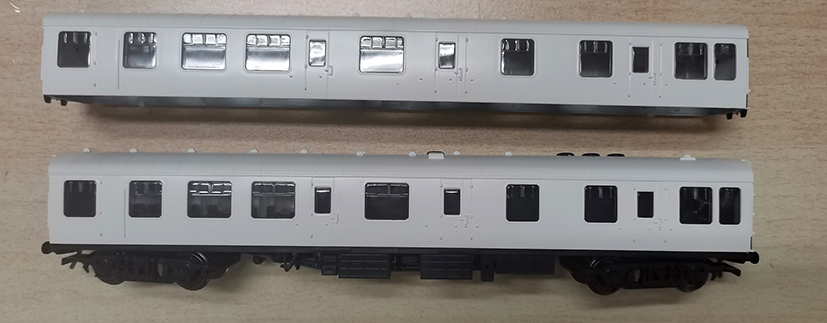
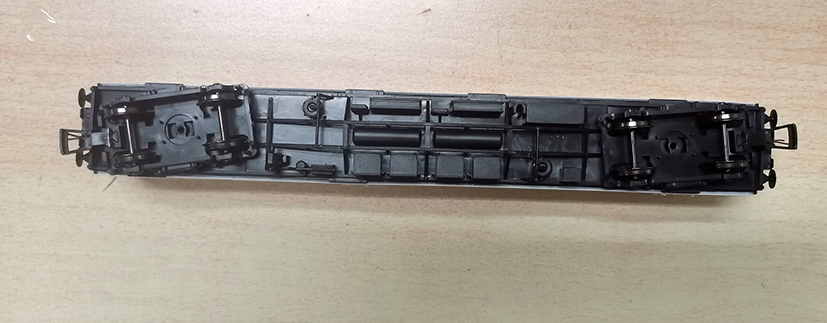
These samples have now arrived in Margate, giving us the chance to share the images with you properly.
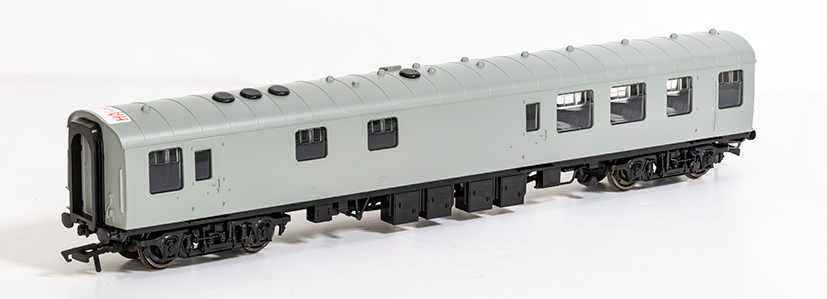
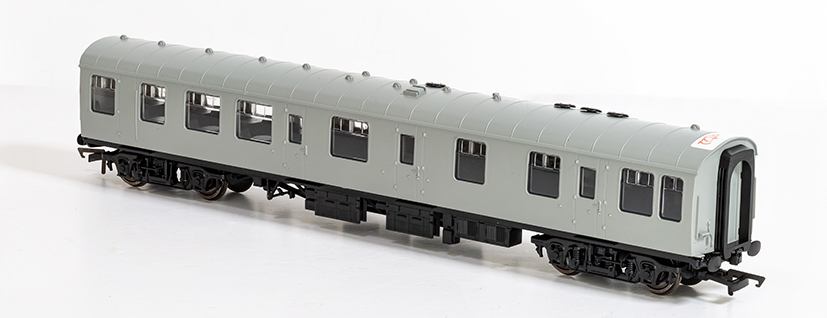
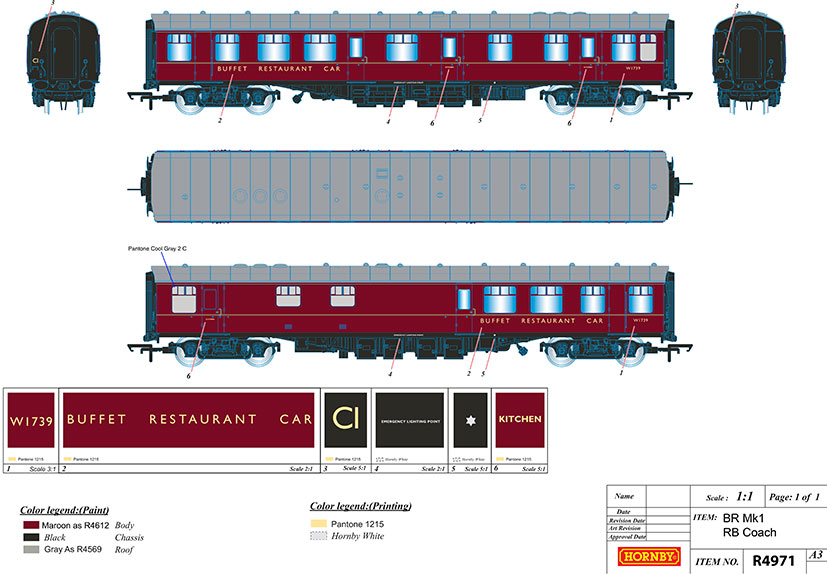
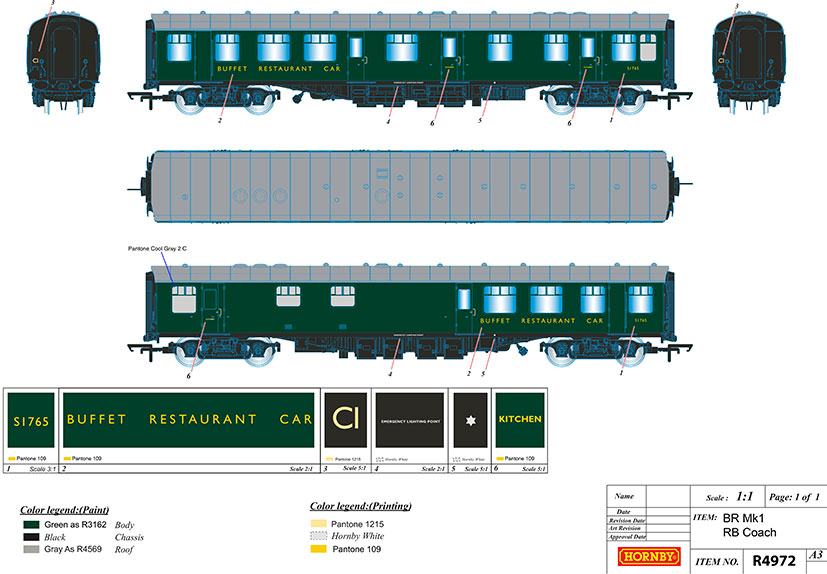
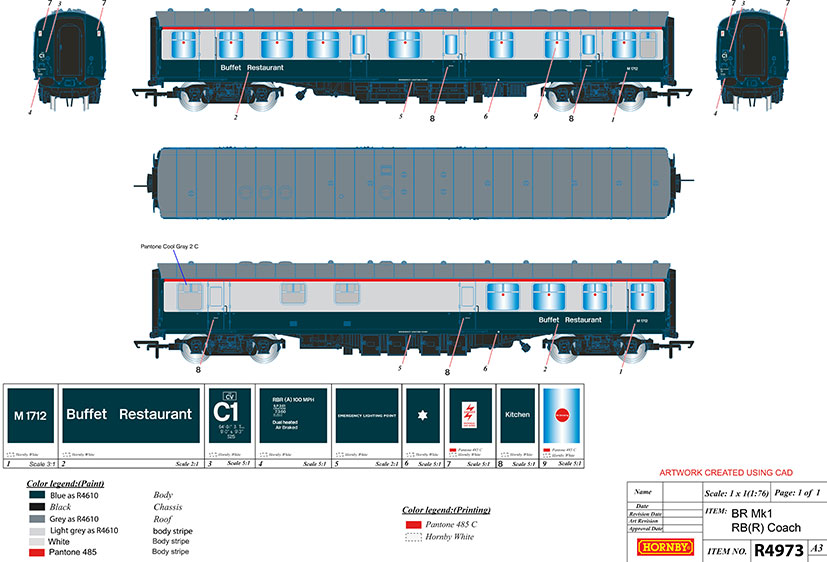
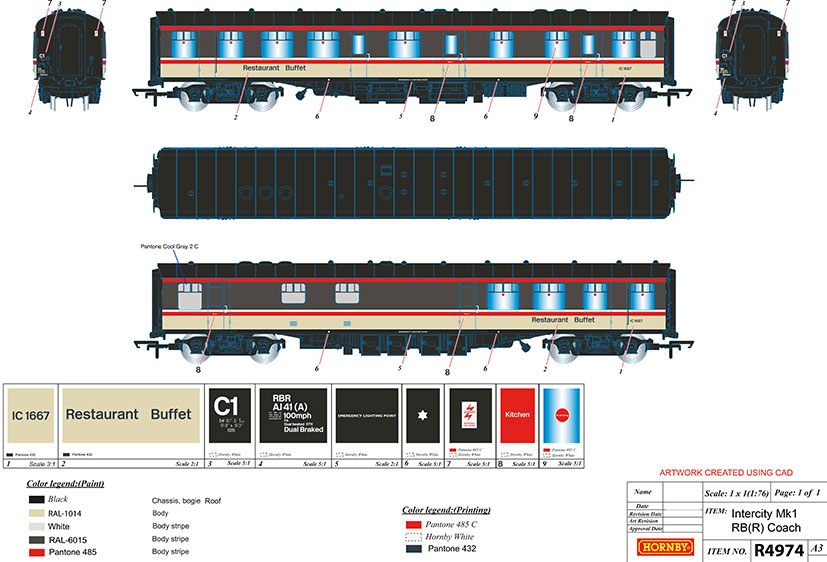
The above two builds cover R4973/R4973A and R4974/R4974A
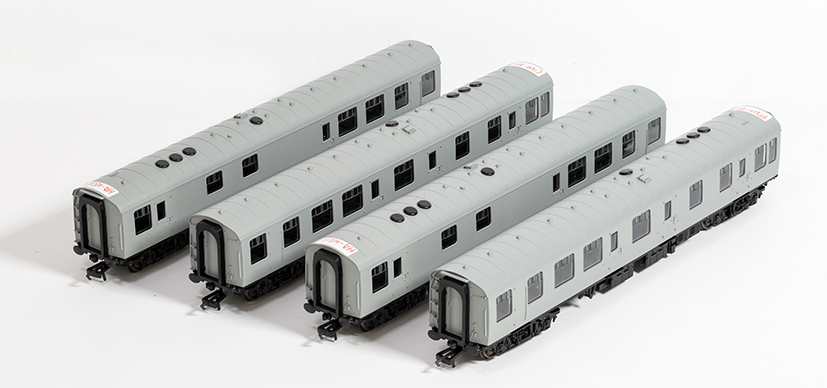
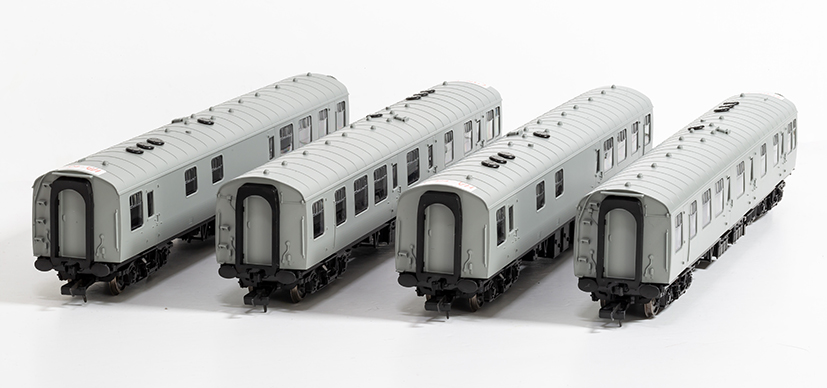
Vehicle number research for a project takes place much later in the lifespan of a project and while we have a good idea of what liveries we will want to produce at the outset; individual vehicle numbers are not usually allocated to new tooling items until the artwork is started. What this can lead to though, is a situation where we have to provide vehicle numbers for the catalogue far in advance of checking individual vehicle details for absolute accuracy and on occasion this can highlight build discrepancies. When the initial eight vehicles were announced for this year’s range, such a situation arose and we have had to adjust some of the vehicle numbers to reflect the right builds, which are highlighted below:
|
BR(W), Mk1 RB, W1739 - Era 5 |
BR, Lined Maroon |
|
|
BR(W), Mk1 RB, W1743 - Era 5 |
BR, Lined Maroon |
|
|
BR(S), Mk1 RB, S1765 - Era 5 |
BR(S), Unlined Green |
|
|
BR(S), Mk1 RB, S1757 - Era 5 |
BR(S), Unlined Green |
|
|
BR(M), Mk1 RB(R), M1712 - Era 7 |
BR, Blue/Grey |
|
|
BR(M), Mk1 RB(R), M1657 - Era 7 |
BR, Blue/Grey |
|
|
BR Intercity, Mk1 RB(R), IC1667 - Era 8 |
BR Intercity, Intercity Executive |
|
|
BR Intercity, Mk1 RB(R), IC1653 - Era 8 |
BR Intercity, Intercity Executive |
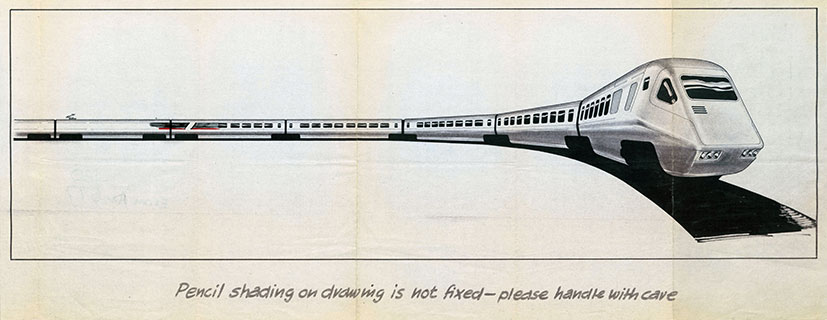
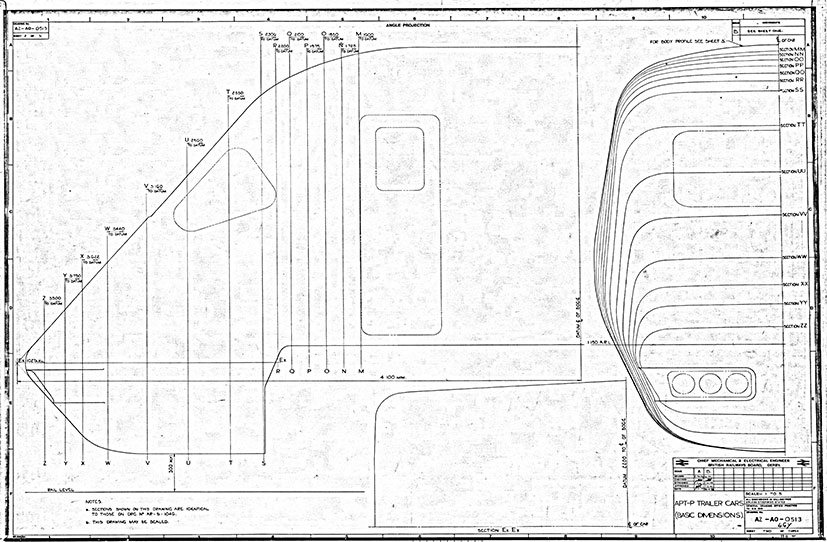
So much has been written on the subject of the APT-P based on rumour, supposition, modern-myth and outright lies, that it was difficult to know where to start with on the research when we first embarked upon the project. To get a proper ‘feel’ for the subject, the Hornby team visited Crewe Heritage Centre to view the remaining APT-P vehicles at the end of August 2018 and to compare them to the drawings that we held. We had retained a lot of BREL works drawings from the original Hornby APT-P project and with the help of Crewe’s Mike Lenz and particularly Brian Porter, Crewe’s APT ‘minder’, we managed to fill in the gaps and compile a master file of drawings to work from.
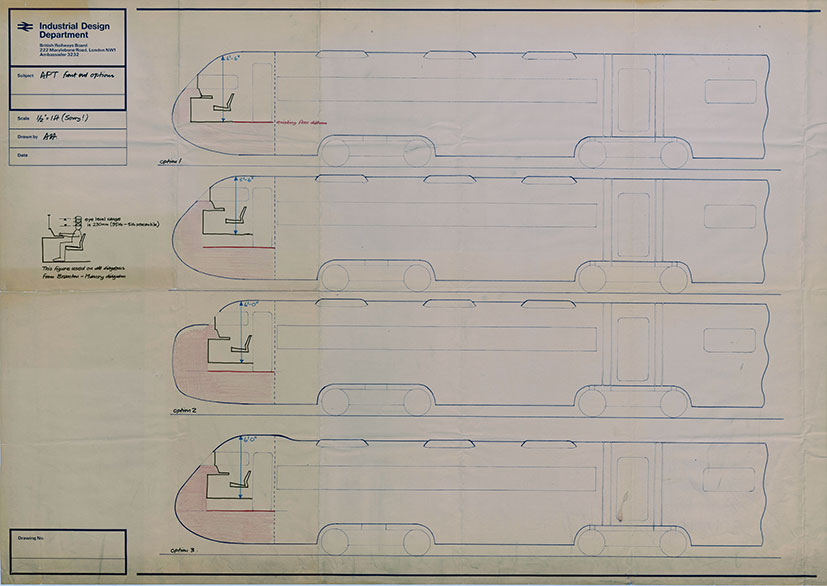
What could have been? Initial APT front end options submitted by BR’s Industrial Design Department. © British Rail
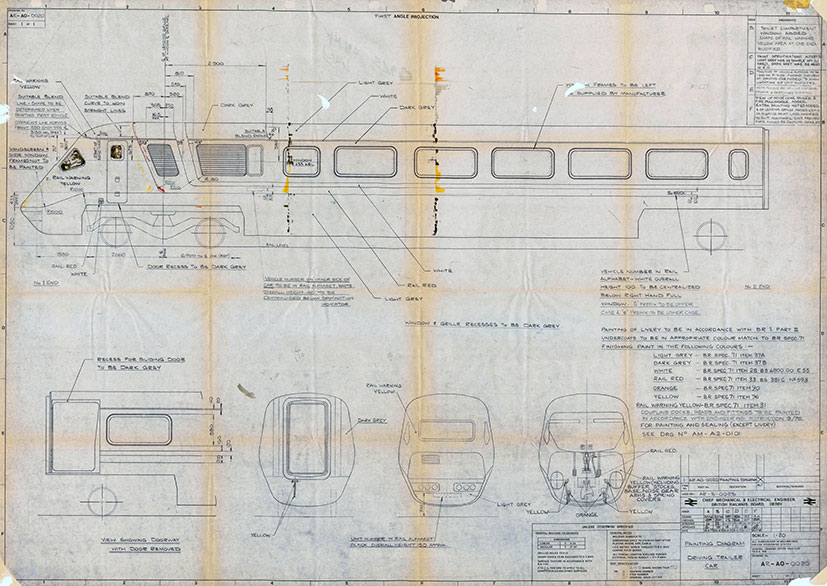
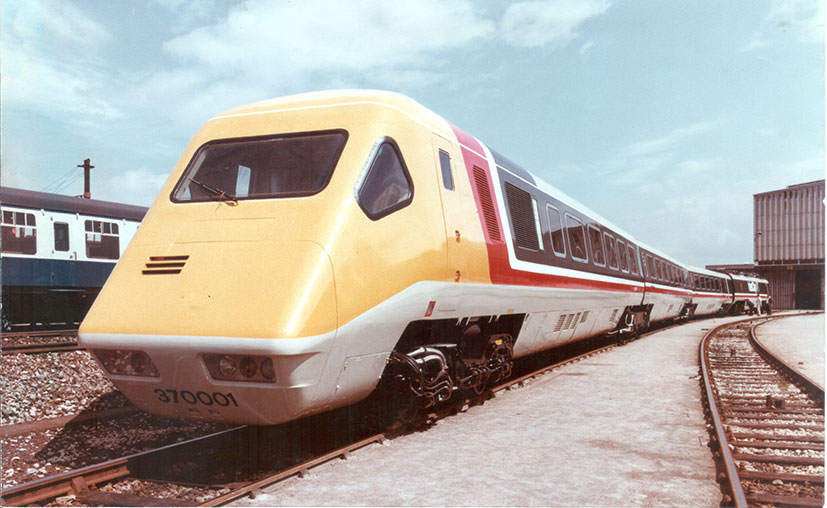
And the more familiar form of the production APT-P’s DTS. © British Rail
Fortunately, much of the original British Rail documentation regarding the entire APT project has been lodged with the National Archives in Kew, providing a fascinating insight into the project’s development and the politics and indecision that blighted APT’s progress and evolution.
One thing that became very clear, very quickly, was how varied the test train formations were. On paper, there were six sets of seven vehicles; each being a 1+6 formation of Driving Trailer Second (DTS), Trailer Second (TS), Trailer Restaurant/Buffet Second (TRBS), Trailer Unclassified (TU), Trailer First (TF), Trailer Brake First (TBF) and Non-Driving Motor (NDM). These sets were numbered 370 001-006, with Set 370 007 comprising the two ‘spare’ DTS and TBF vehicles. The inaugural run of APT-P took place on April 26, 1979 and took the form of two sets running back-to-back, creating a 2+12 formation that has come to be considered as the ‘typical’ fourteen car set, but the reality was that this was not a common running formation.
Due to the way an APT-P set comprised a mixture of articulated and standard bogies, the minimum operational form during Class 370 testing was a 1+4 formation of DTS-TBF-NDM-TBF-DTS, and this has been represented by the R3873 5-car Train Pack. Reference to photographs of APT-P sets also reveal 6-car, 7-car, 8-car, 10-car and 12-car sets during testing and passenger service, made up from various vehicles (as illustrated by the 2+8 formation that derailed on April 18, 1980, which comprised vehicles from five of the sets!) and this has had a direct bearing on the way that the additional vehicles have been offered in the range this year.
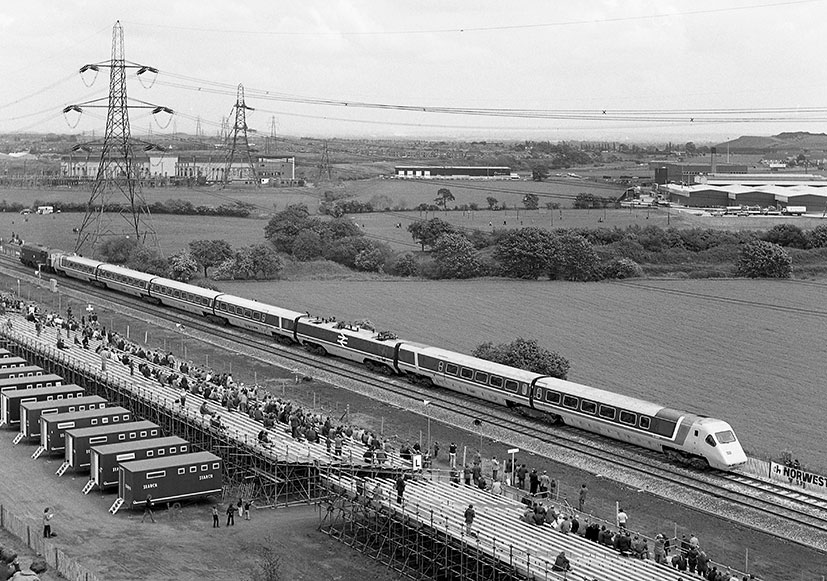
BR APT No. 370 004 at the Liverpool & Manchester Railway 150th parade in May 1980. © Brian Stephenson
During April 2019 the Hornby team paid a second visit to Crewe for a full survey on the APT-P vehicles which revealed some interesting details over the course of the day, particularly relating to the curvature of the DTS front end and the way the bogies interacted with the pantograph of the NDM.
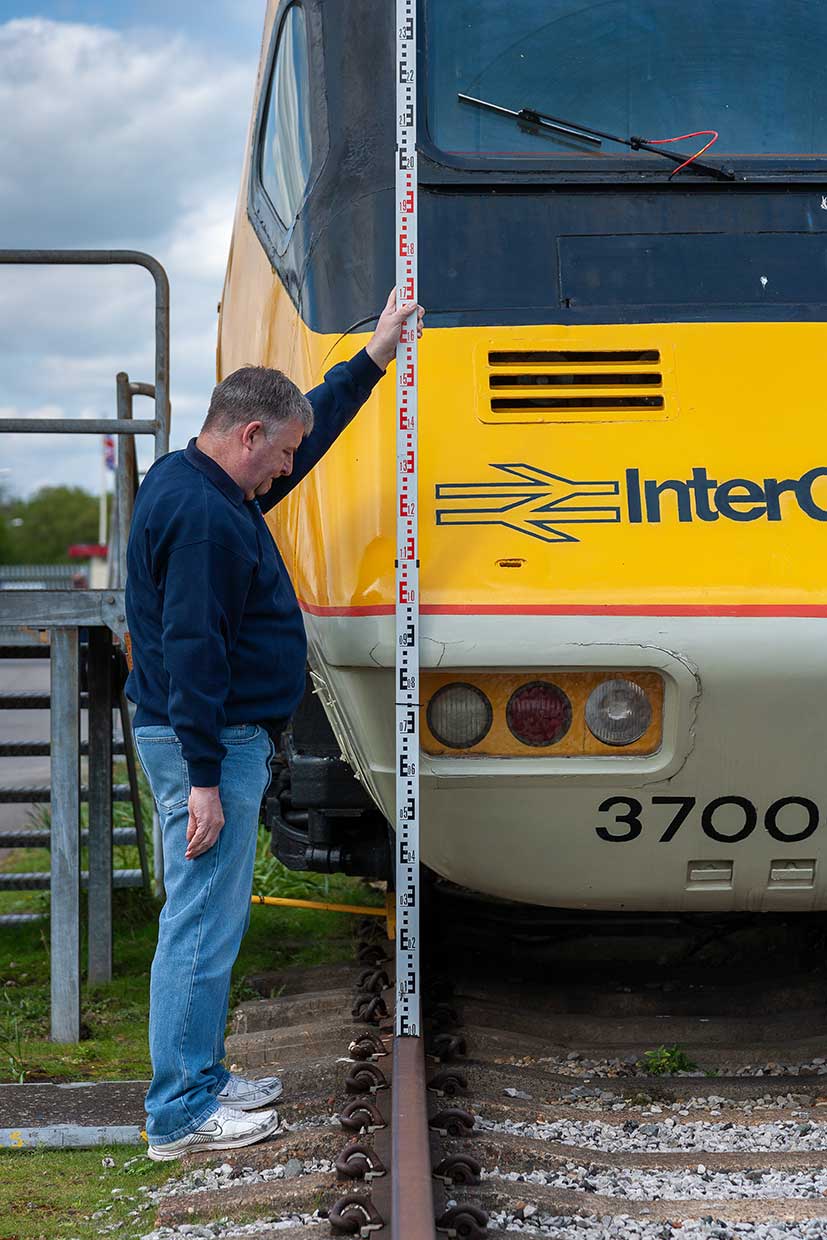
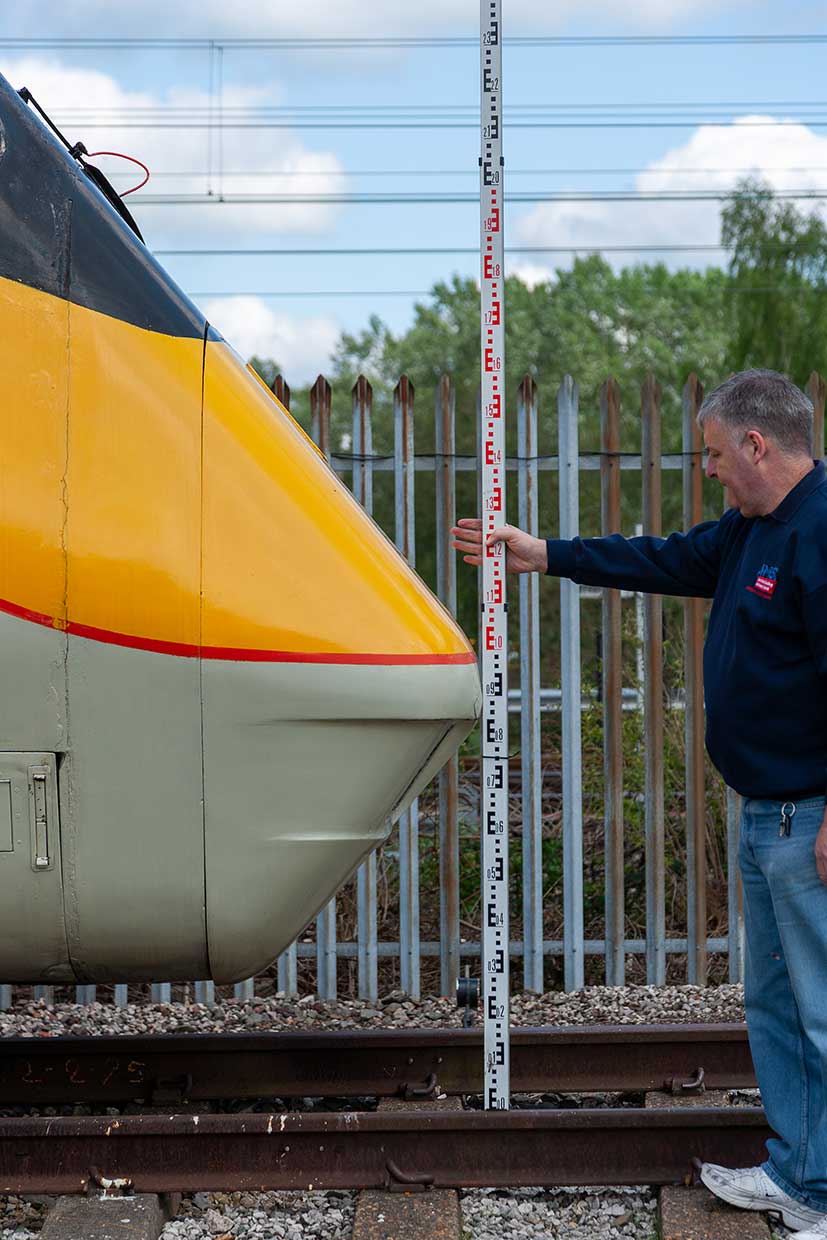
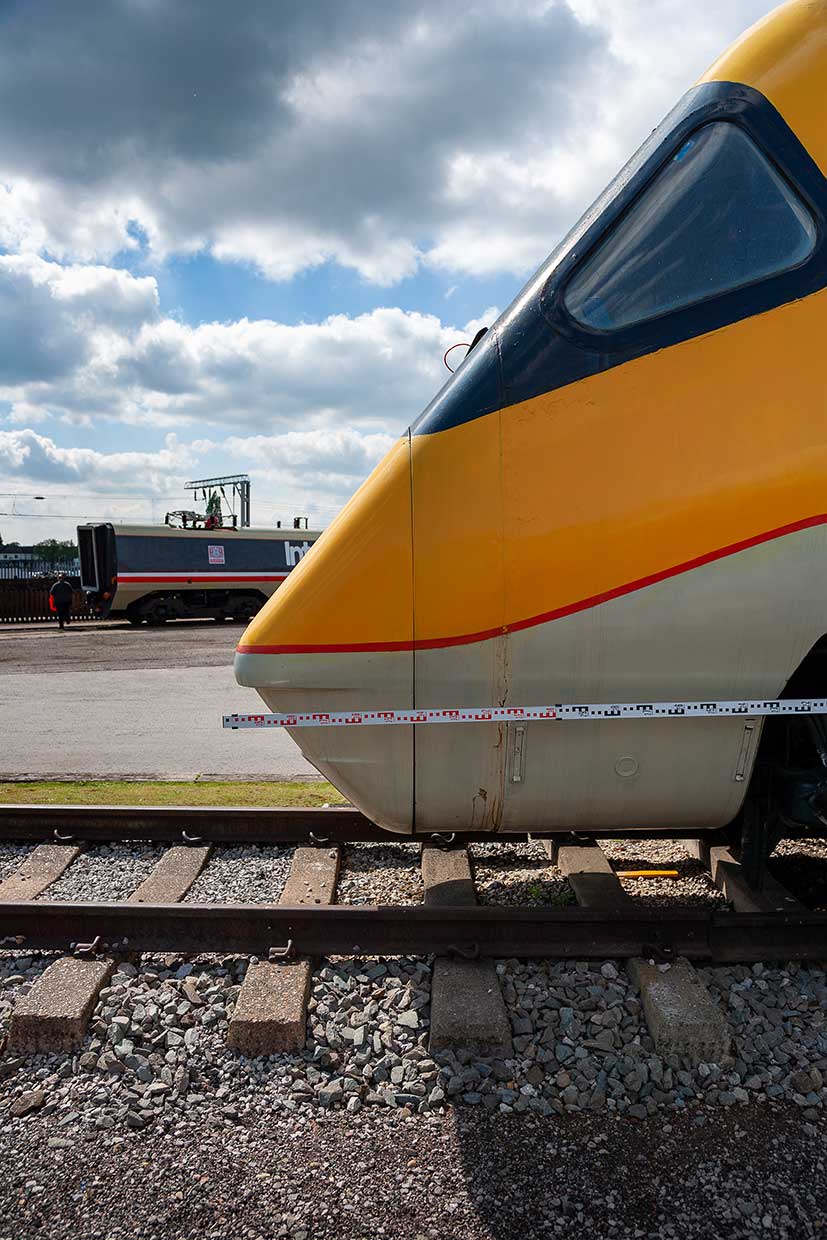
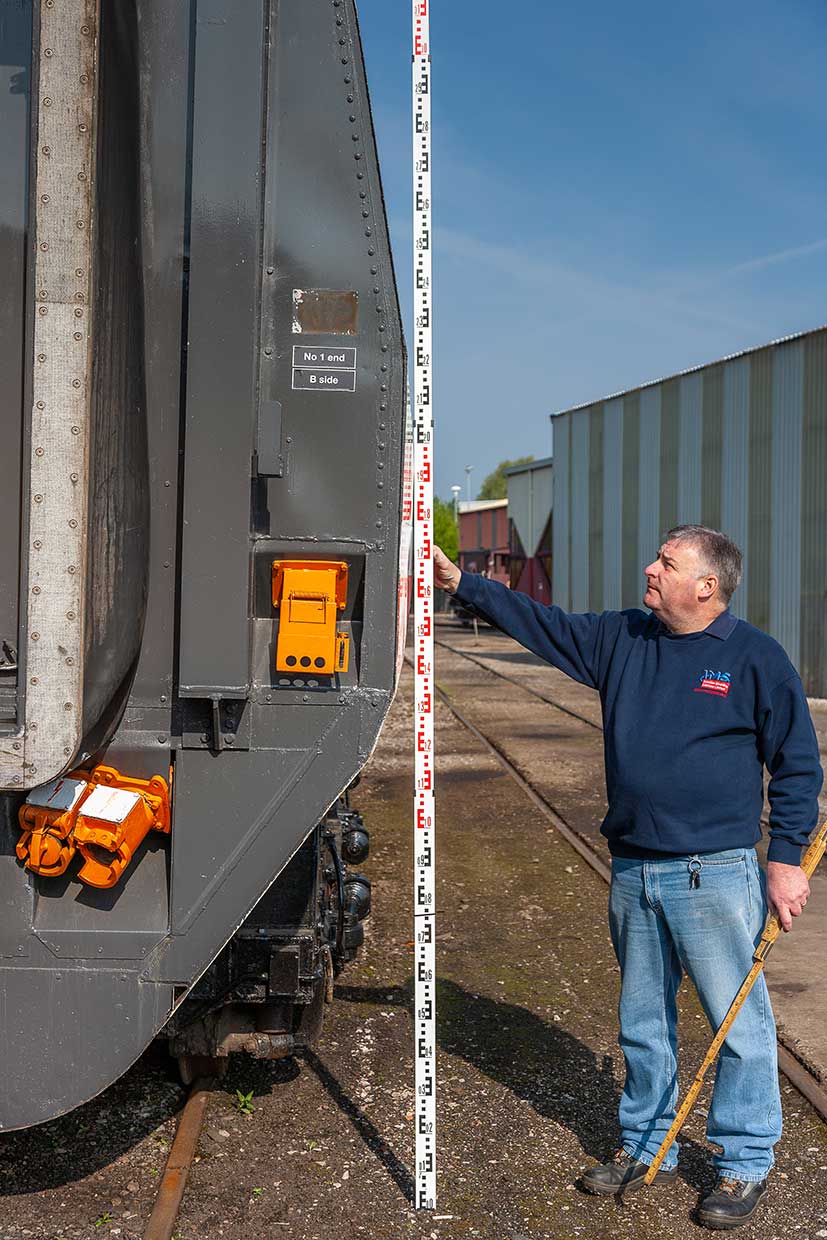
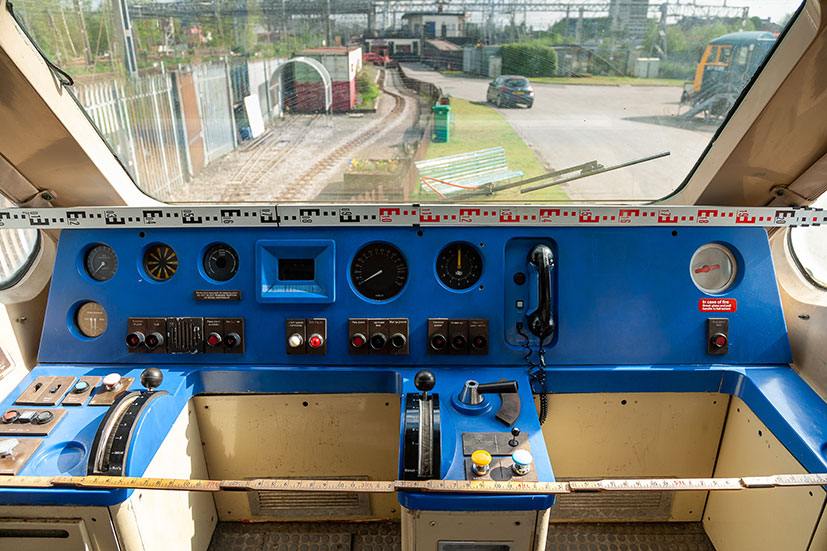
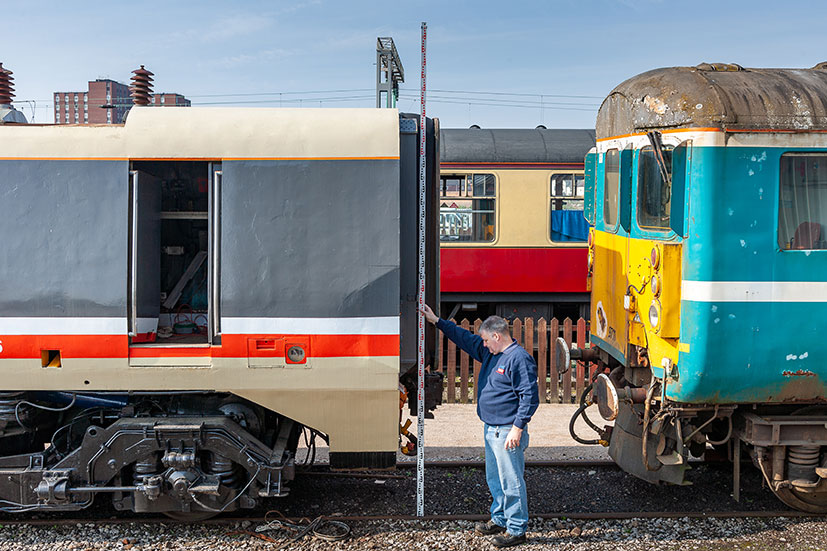
The picture above illustrates the difference in the body gauging between the APT and standard BR stock, such as BR Mk.2 DBSO 9711, the roof mounted power collection equipment accounting for the difference.
The APT-P has presented our designer with plenty of challenges, from the complex interaction of the curves on the DTS cab and nose, to the articulated bogies and how they fit, to the tilt mechanism and how it affects the couplings and on to how the close coupling is best represented, while maintaining usability over 00 track curves and points.
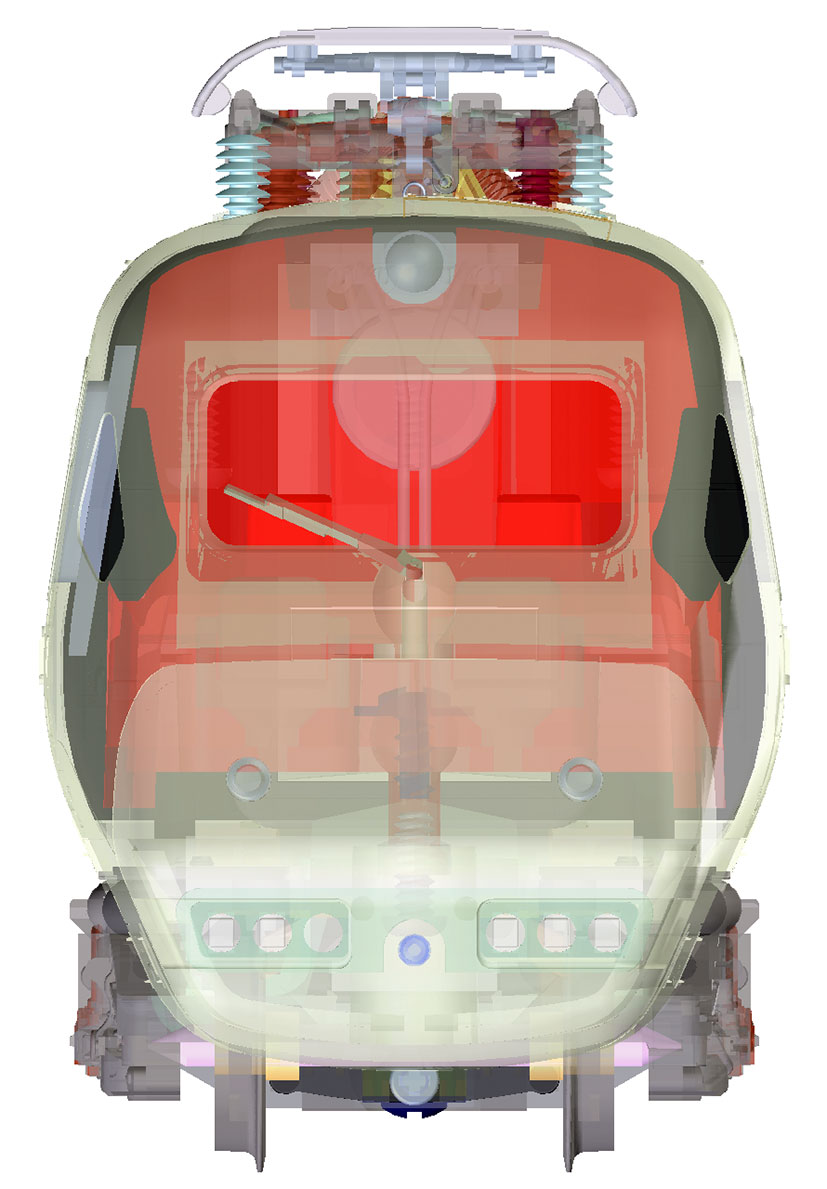
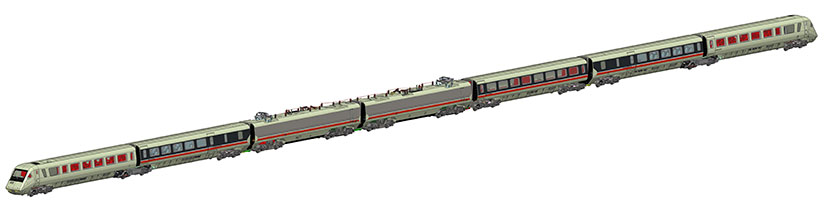
The full CAD image of the R3874 7-car Train Pack
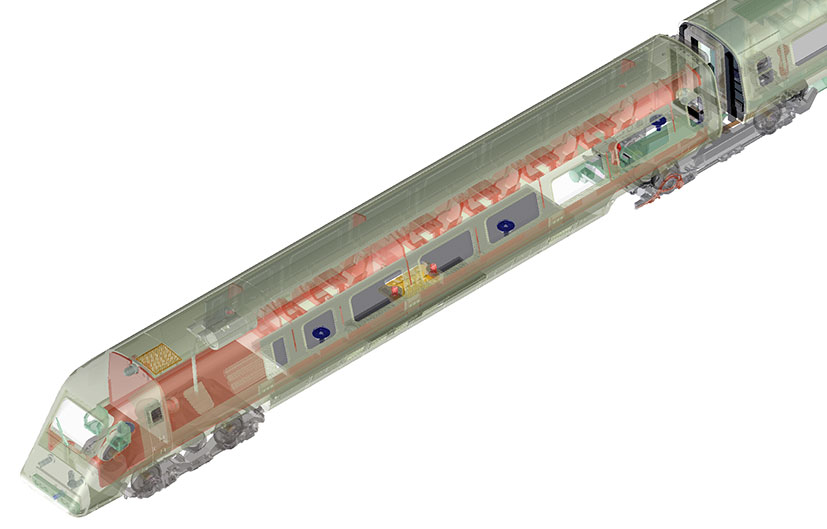
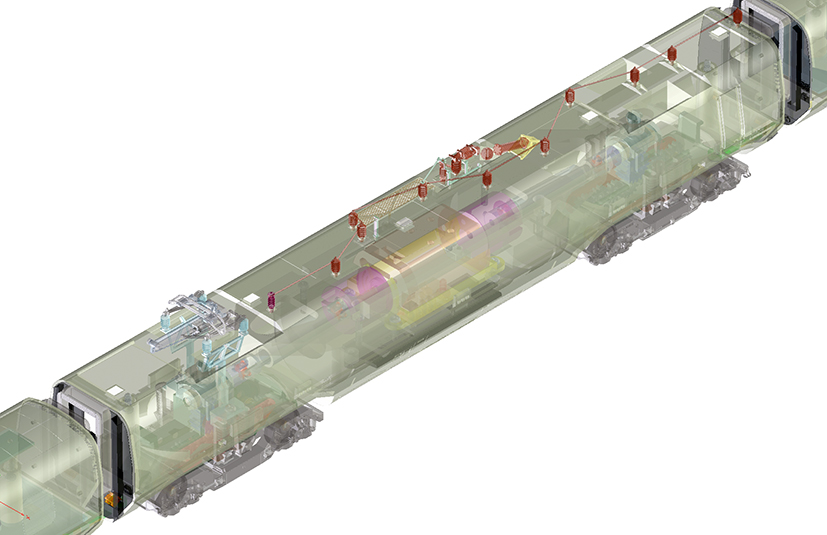
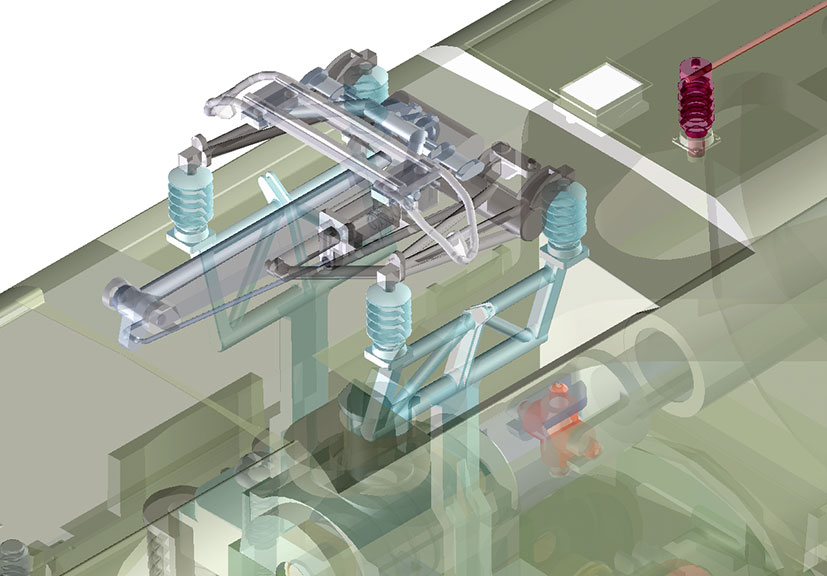
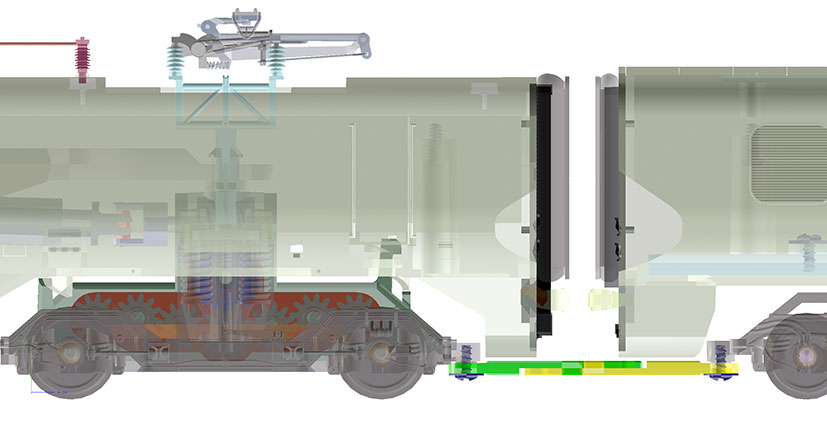
As the two shots above show, the pantograph will be sprung in a similar manner to that of the Class 91, mentioned in last month’s Engine Shed.
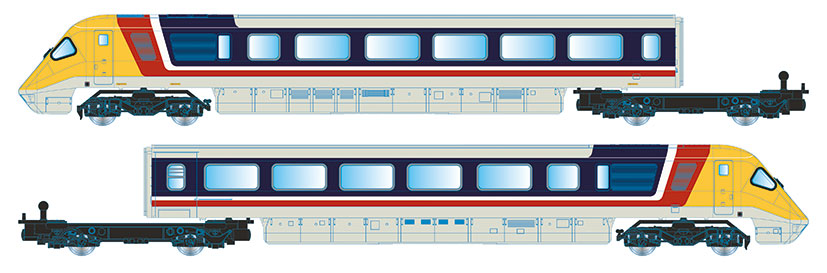
Decoration artwork is currently being drawn up, but is still at an early stage, as the Graphic Artist carefully places the elements together before moving on to specifying colours.
This has led to an extended period of testing, which has coincided with new working arrangements during the lockdown period, but this testing has ensured that all areas of the model’s operation are working smoothly and satisfactorily and the project has now been signed off, with tooling well advanced.
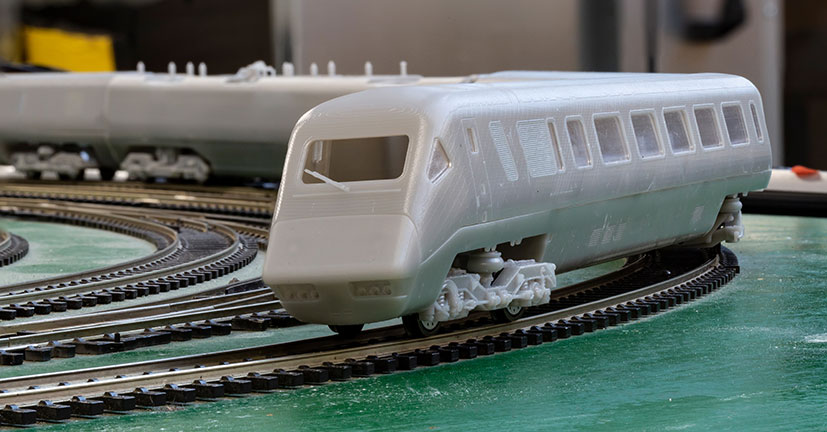
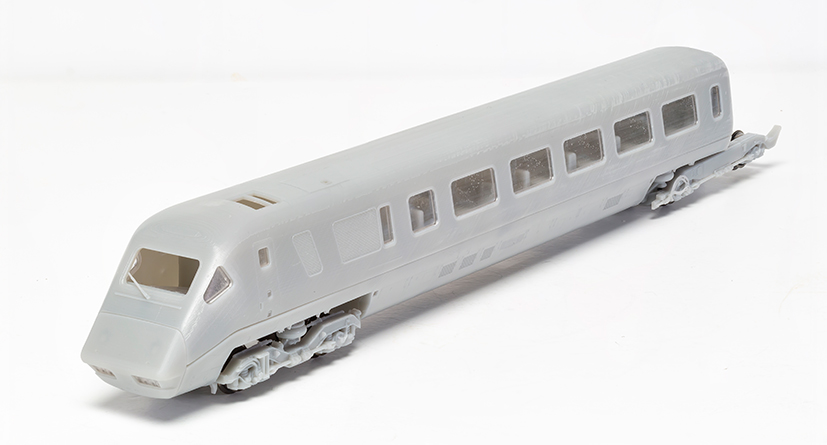
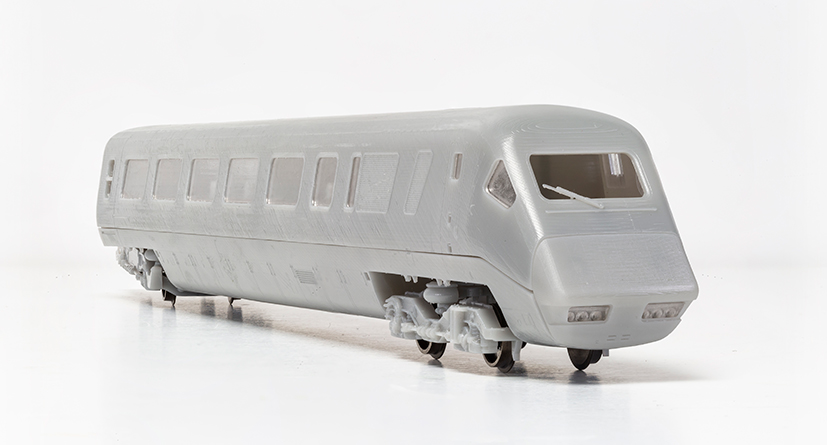
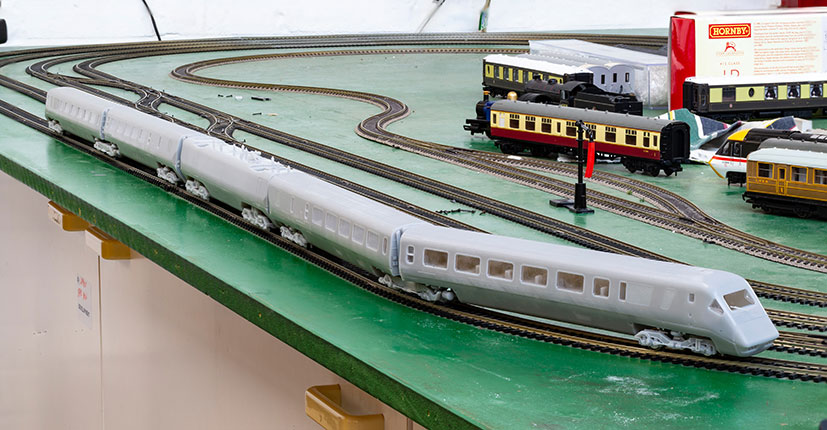
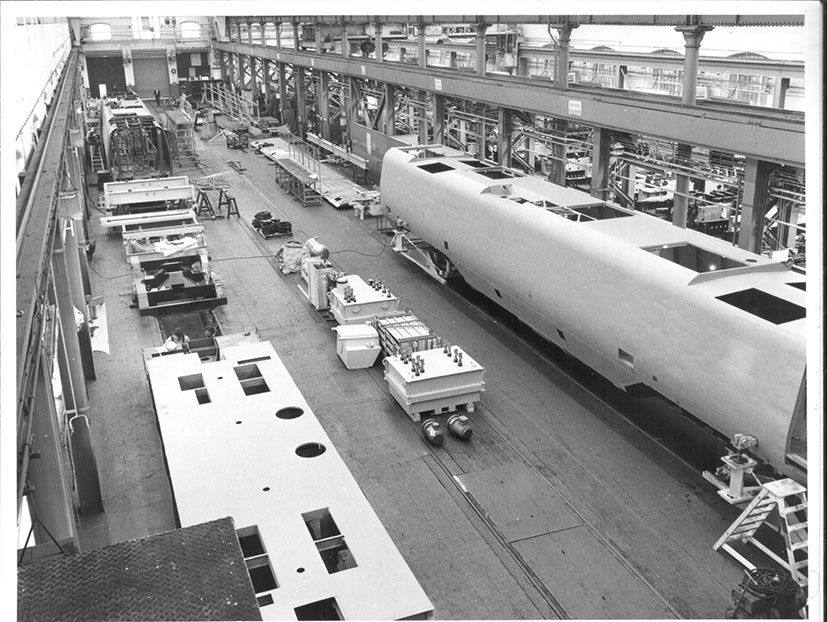
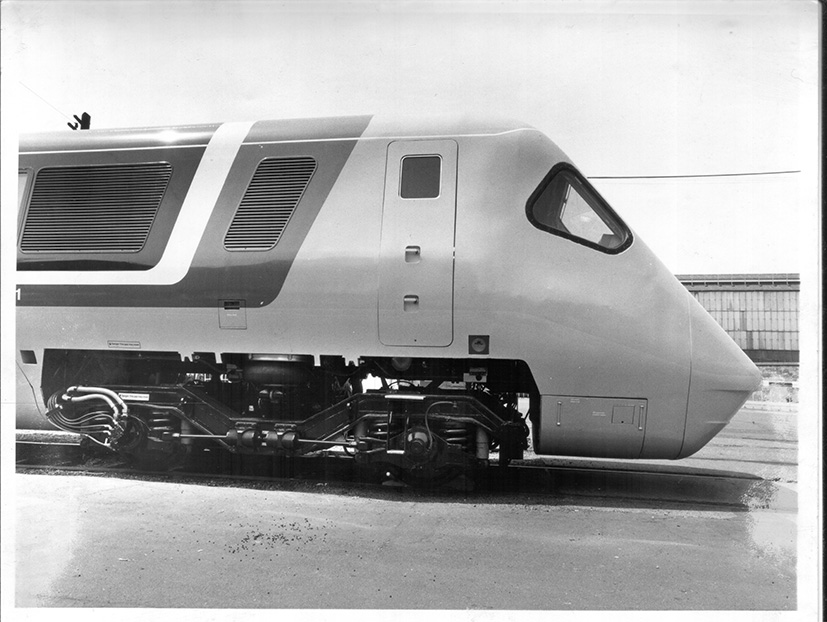
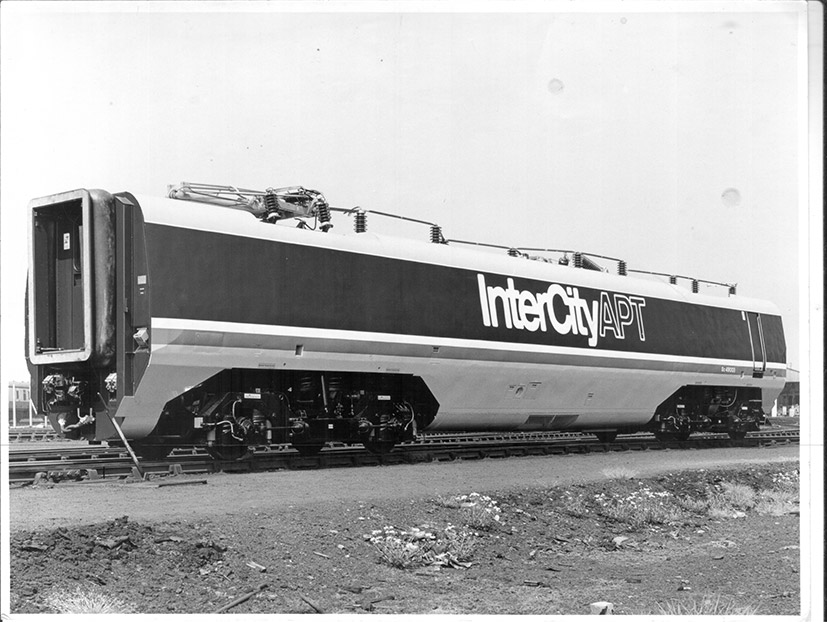
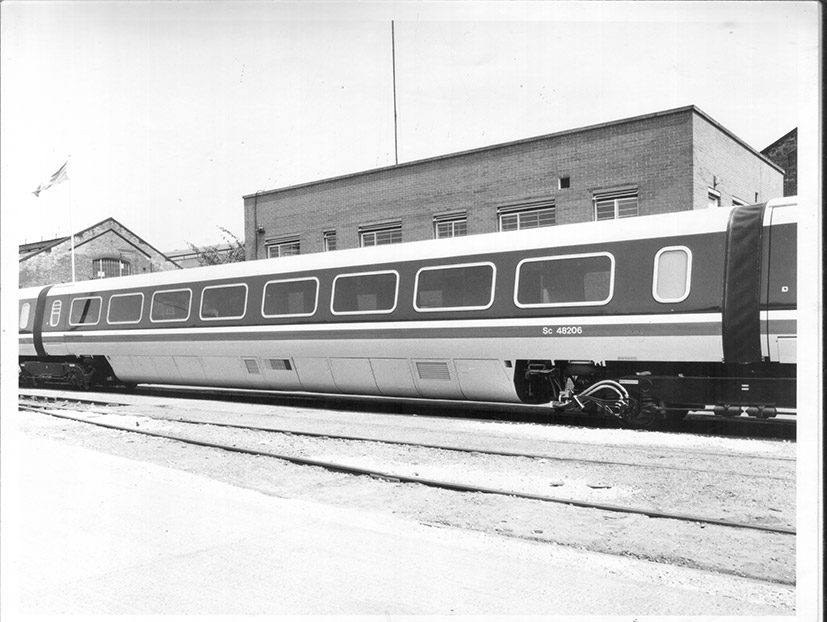
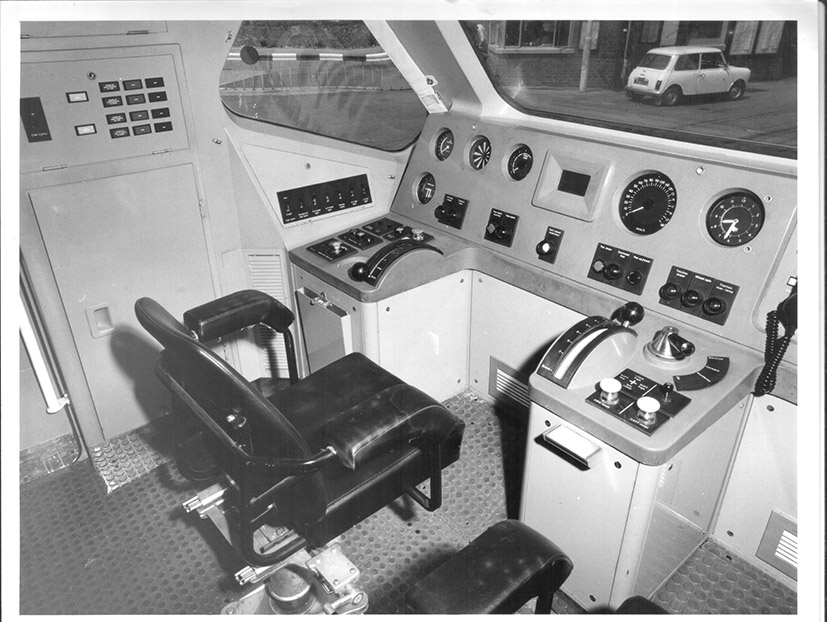
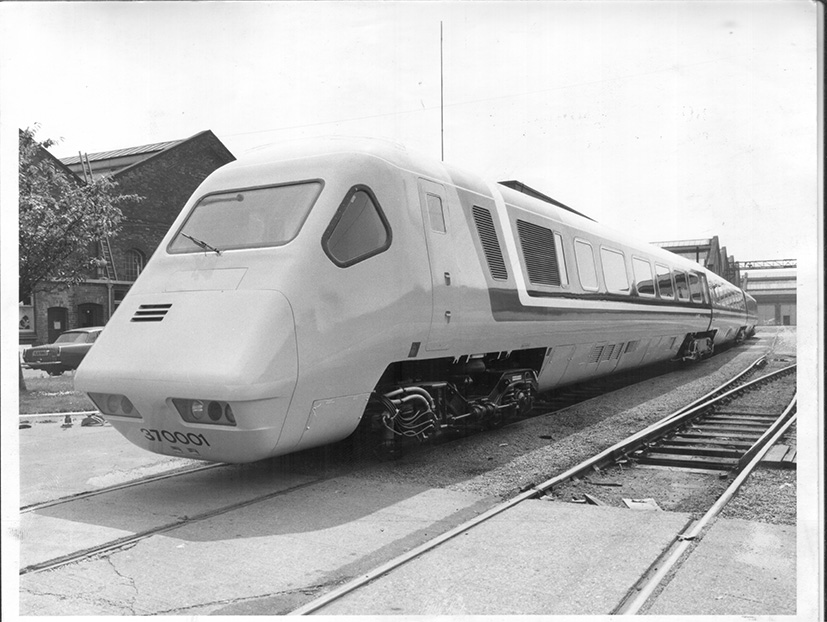
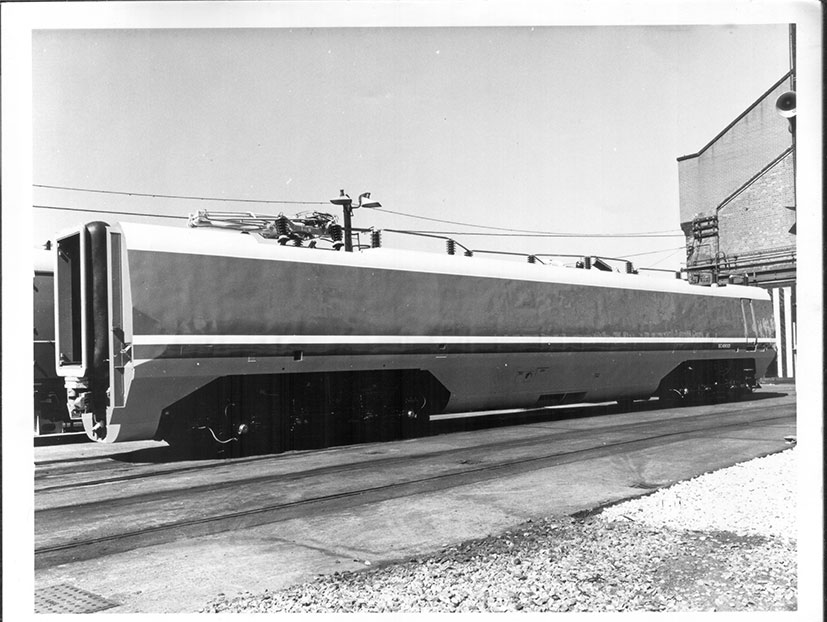
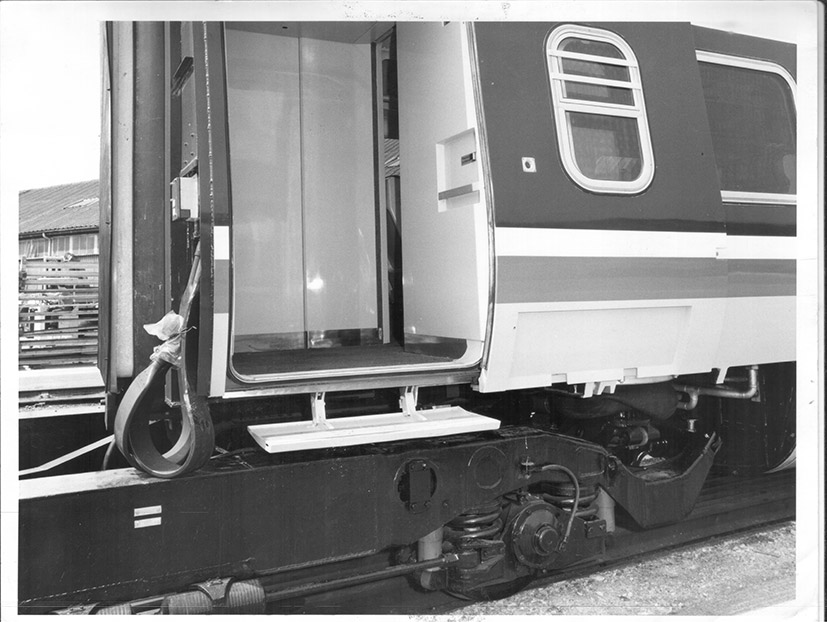
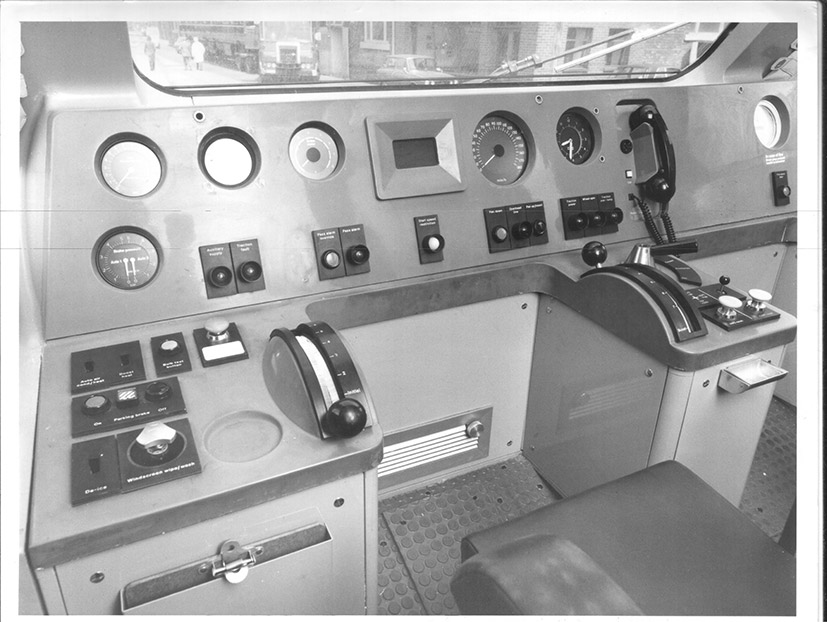
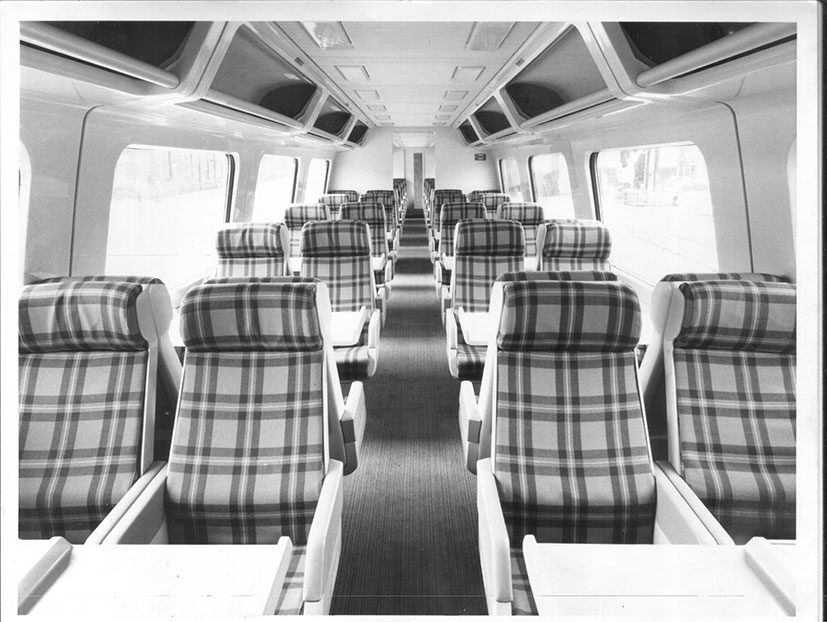
During research on the APT-P project, a series of British Rail publicity prints were unearthed in our archive, dating back to the creation of the original Hornby APT, which we would like to share with you. All photographs © British Rail.
One area that we do not often cover is how the resin Skaledale buildings are prepared. Just like locomotives, coaches and wagons, drawings, measurements and decoration artwork for each building have to be supplied to our factory for moulds to be created, but first an undecorated ‘master’ model has to be prepared by hand, as the following images illustrate.
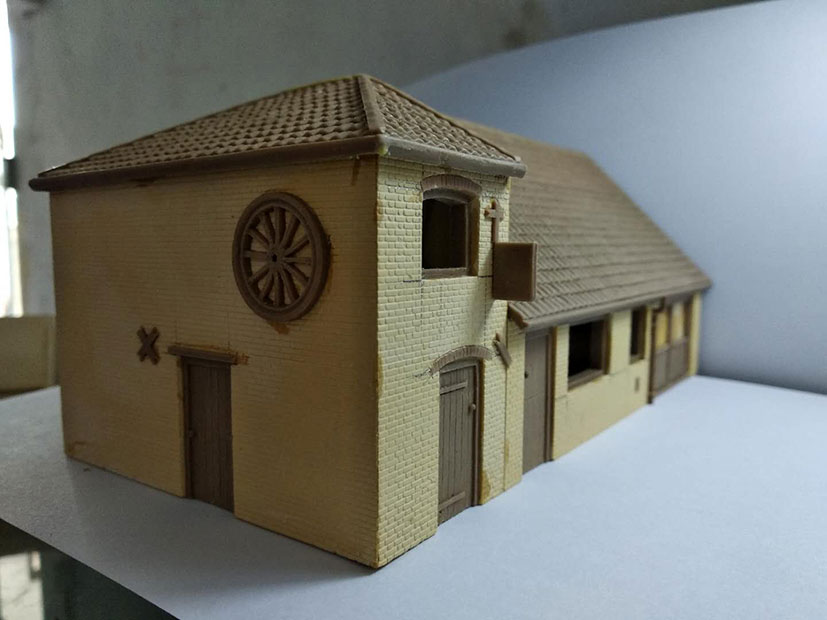
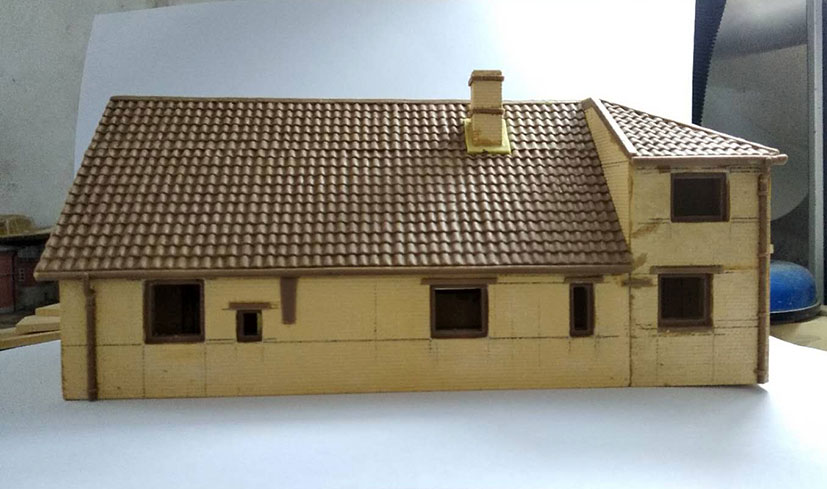
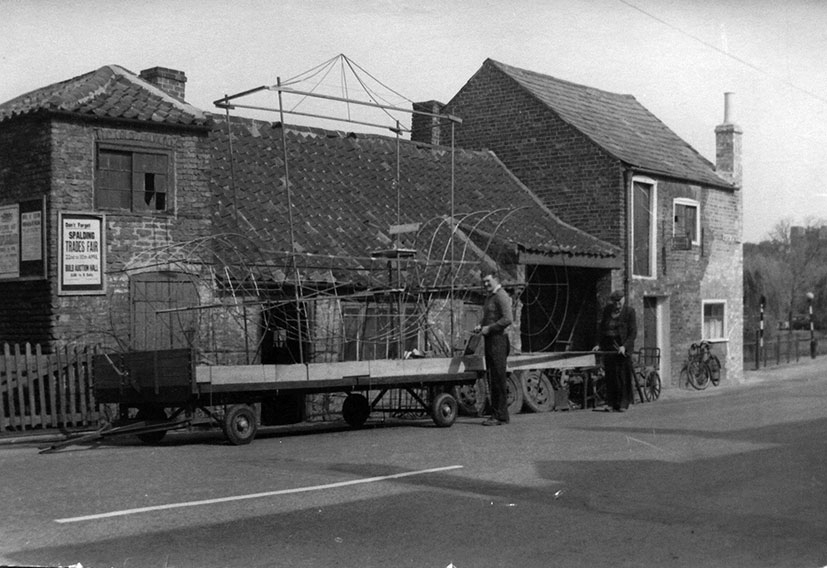
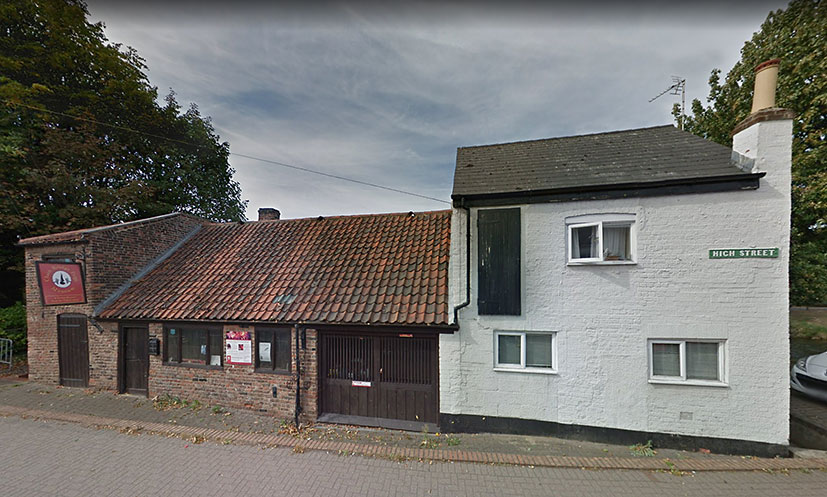
R7264 is based on Chain Bridge Forge in Spalding, a 19th century blacksmith’s workshop that backs on to the River Welland and is now a museum. Final picture © Heritage South Holland
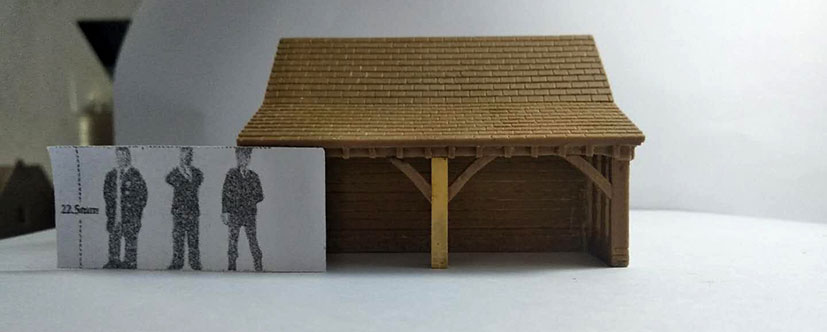
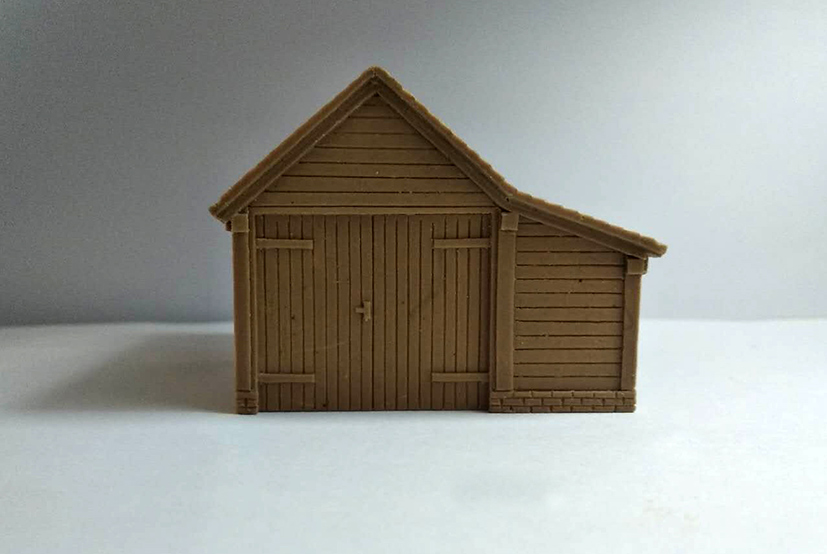
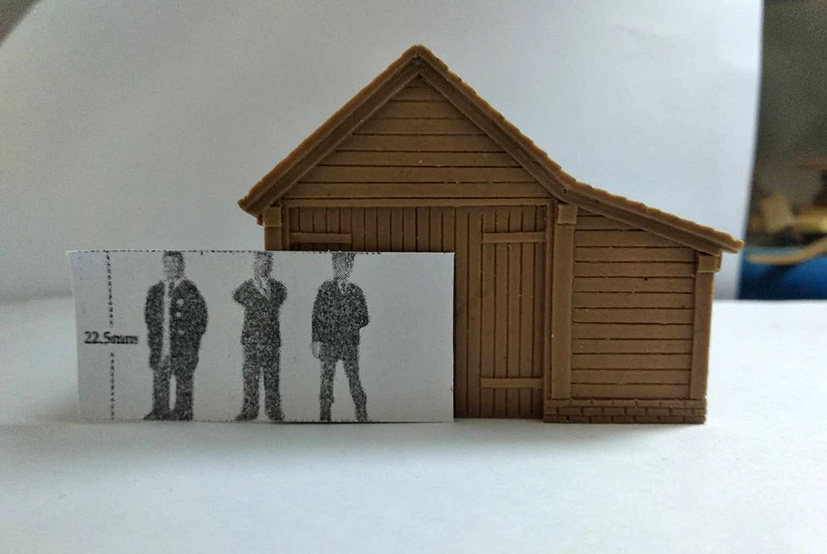
R7271 is based on a typical oak framed single garage and lean-to.
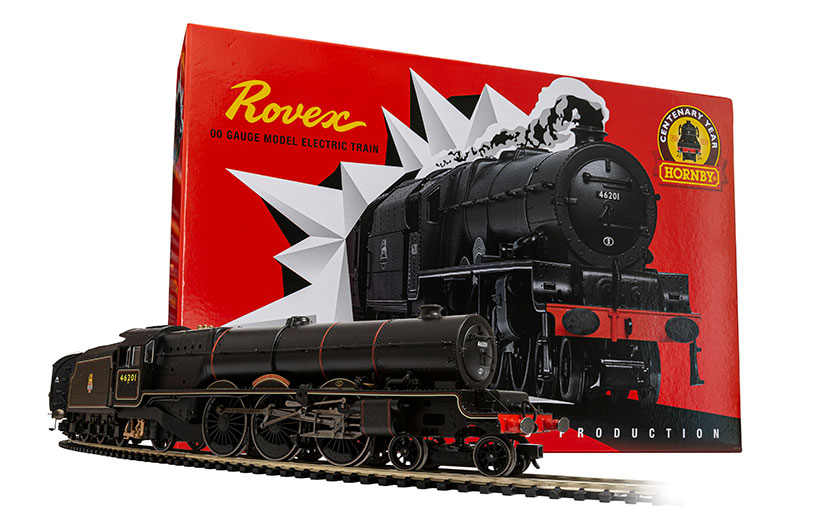
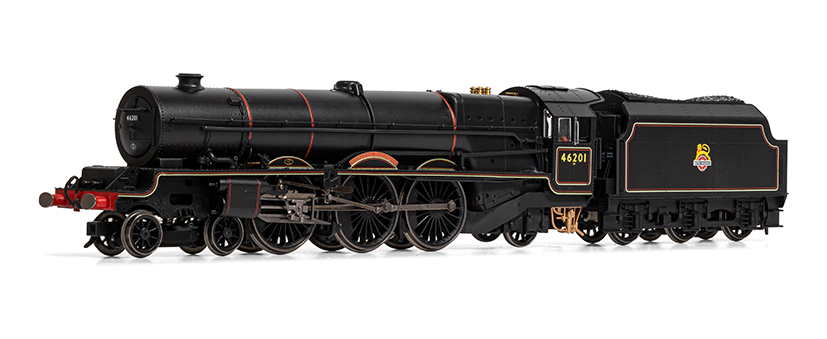
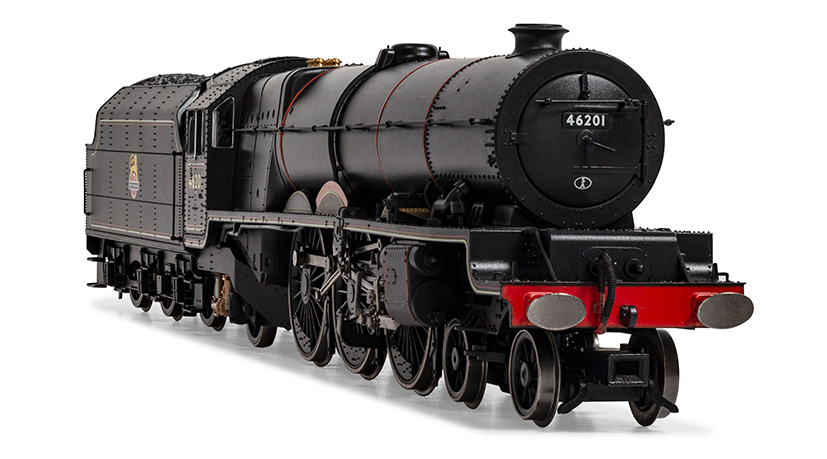
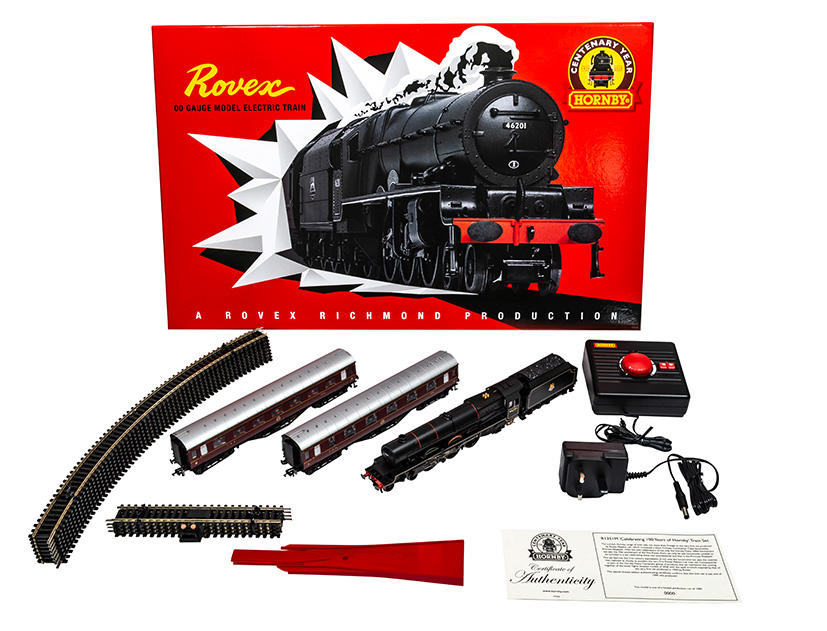
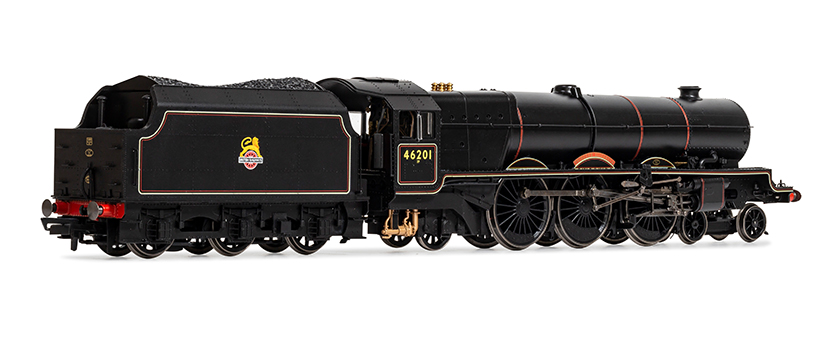
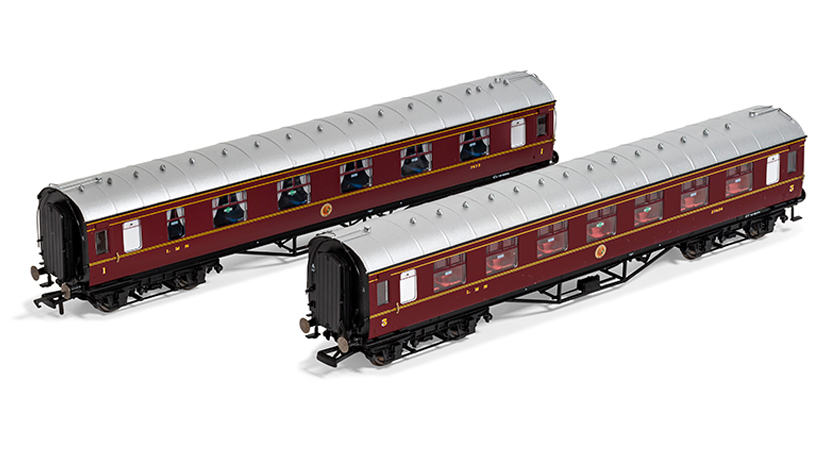
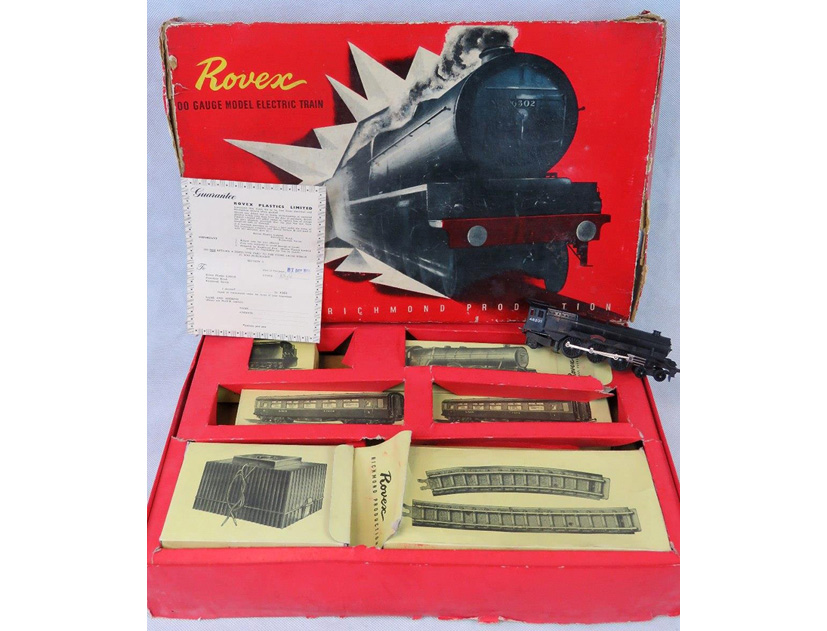
To round off this month’s edition of Engine Shed, we have just taken delivery of the approval samples for the R1251M Celebrating 100 Years of Hornby ‘Rovex’ Train Set, a modern recreation of the first Rovex train set that was first produced for Marks & Spencer in December 1950. Replicating the contents of that first train set as closely as possible, the original set is the DNA that has run through Hornby train sets ever since.
The next regular edition will be with you on the 19th June, where we hope to be in a position to update you on progress with some of the new tool items from the 2020 range, as well as unveiling livery artwork and (hopefully) some engineering and decoration samples.

In the meantime, to prevent any chance of boredom during this period of isolation, we have created the Hornby Kids’ Zone to keep your young railway enthusiasts (and some older enthusiasts as well, if some of the entries are anything to go by) out of mischief. More colouring sheets have recently been added and there will be more activities coming online soon!
If you have any feedback from this edition of the blog, please do pass your comments on to us through Facebook, Instagram or Twitter, or via our Official Forum.
Best wishes to you all, stay safe and healthy.
The Engine Shed team
Return to Engine Shed homepage
© Hornby Hobbies Ltd. All rights reserved.