
78000 at Barmouth Junction on 27 May 1961 © ColourRail
Good afternoon to you all and welcome to the February edition of Engine Shed.
Even with the extended Chinese New Year shut down this year, it has been a busy period for the Hornby Development Team, as there are still samples that are being tested, checked and signed off for production, plus artwork that is being prepared and R&D work that is taking place on items for the 2021 range. The initial ‘buzz’ surrounding the launch of the 2020 items has now settled down and the Hornby team are working to answer the many questions and enquiries from customers that inevitably follow the range launch, whether that is by email, telephone or in person at shows such as the recent Model Rail Scotland in Glasgow, or the forthcoming London Festival of Railway Modelling at Alexandra Palace on 21-22 March.
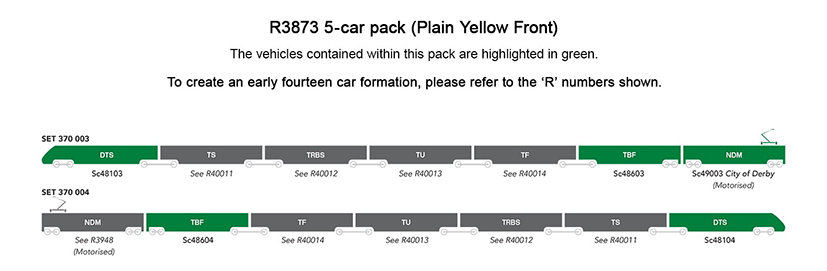
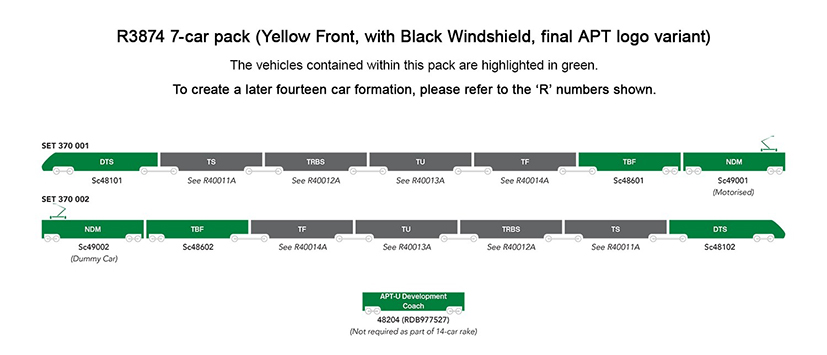
One of the most common questions that we have received from customers and traders since the 2020 range was launched relates to the composition of the Advanced Passenger Train Packs R3873 and R3874 and how they can best be expanded into full 14-car rakes. The Advanced Passenger Train will be the subject of a forthcoming Engine Shed, once testing and evaluation of the model’s running characteristics are completed and we will cover the development, operation and extension possibilities in far greater detail. In the meantime we have produced the graphics below to help you decide which pack is best for you and the expansion options available.
The arrival of the limited edition R3809 Tri-ang/Hornby Rocket Train Pack with retailers during the last couple of weeks heralds the first arrival of 2020’s newly tooled items and so we now turn Engine Shed’s attention towards the development of the Standard 2MT 2-6-0 models, currently due to arrive by mid-summer.
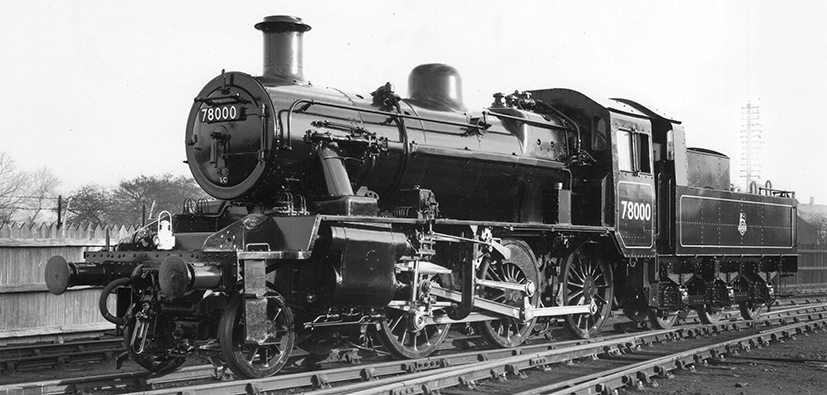
Developed from Ivatt’s Class 2MT 2-6-0 design of 1946 for the London, Midland and Scottish Railway, the BR Standard Class 2MT 2-6-0 design benefitted from the work carried out in 1949/50 to improve the steaming characteristics of the Ivatt. Under Robert Riddles, the design was principally carried out from Derby, with input from Swindon, Brighton and Doncaster drawing offices and the sixty-five locomotives ordered were all built at Darlington between December 1952 and November 1956, to Swindon Lot 402.
The principal difference between the two Class 2MT types centred upon the cab, on both locomotive and tender, with the BR Standard using an angled cab side, matched to the tender cab, to improve route availability to almost universal access across the British Railways network. The LMS top feed arrangement was replaced by the BR Standard clack valve arrangement and the appearance of the front end was smoothed out, giving a neater appearance.

The first ten locomotives were sent to the Western Region between December 1952 and April 1953, where they were allocated to Oswestry for work over the mid-Wales lines; the crews appreciating the extra protection from the Welsh elements afforded by the modern cab design. The second batch of thirty-five locomotives, delivered between December 1953 and December 1954, were shared between the Eastern and Midland Regions, covering an area from Leicestershire to Wales and Cumbria to Durham. The third batch of ten engines were delivered to the Scottish Region between October and December 1955, working across the region, even up to Wick and Thurso in the far north. The final batch of ten locomotives was delivered between February and June 1956 and ended up with the Midland Region, at Chester and Wigan. The Southern Region never received an allocation of BR Standard 2MTs, the closest being the locomotives allocated to Willesden that worked transfer freights and the occasional suburban passenger services in the south-west of London.
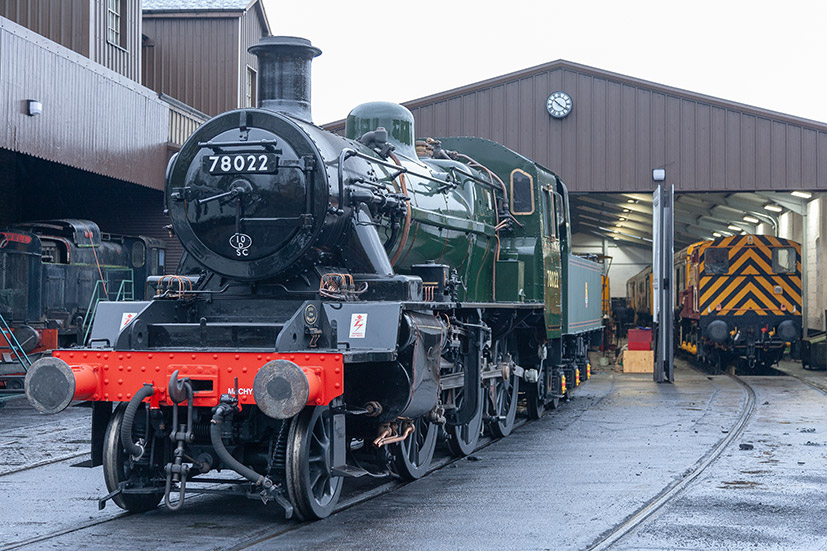
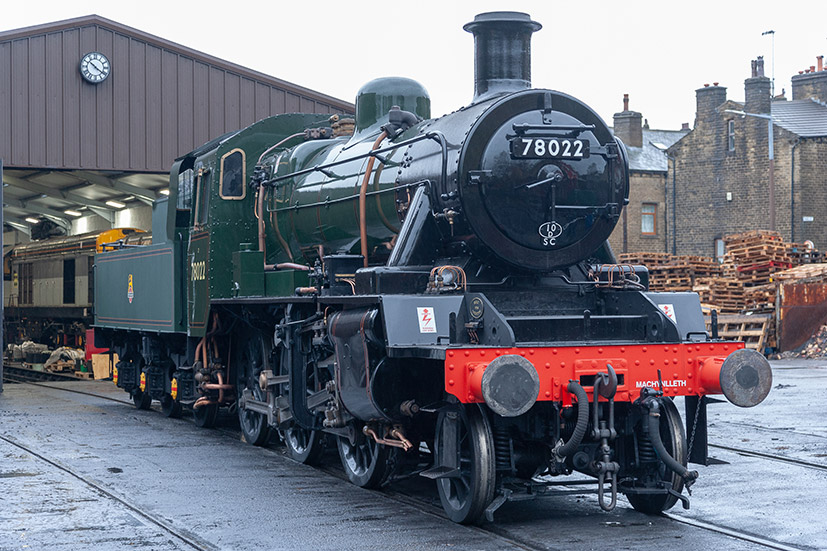
Towards the end of BR steam traction, some of the class were moved to storage awaiting suitable work, but the first withdrawal from service took place in November 1963 and by the end of May 1967, the rest of the class had been withdrawn, most being sent for scrap, however four locomotives; 78018, 78019, 78022 and 78059, were saved for preservation. In 1975, the Standard 4 Locomotive Society purchased 78022 from Woodham Bros. and the locomotive arrived at the Keighley & Worth Valley Railway on 11 June 1975. Restoration was to take a further eighteen years, but in 1993, 78022 finally returned to traffic at the railway. The Hornby team first visited Haworth Engine Shed at K&WVR’s invitation in July 2018, during the locomotive’s second restoration period and returned for a full survey visit in late November that same year; a much damper visit and distinctly colder, despite the heat generated by the prototype diesel-electric 0-6-0 shunter, D0226, that was working in the yard during the visit.
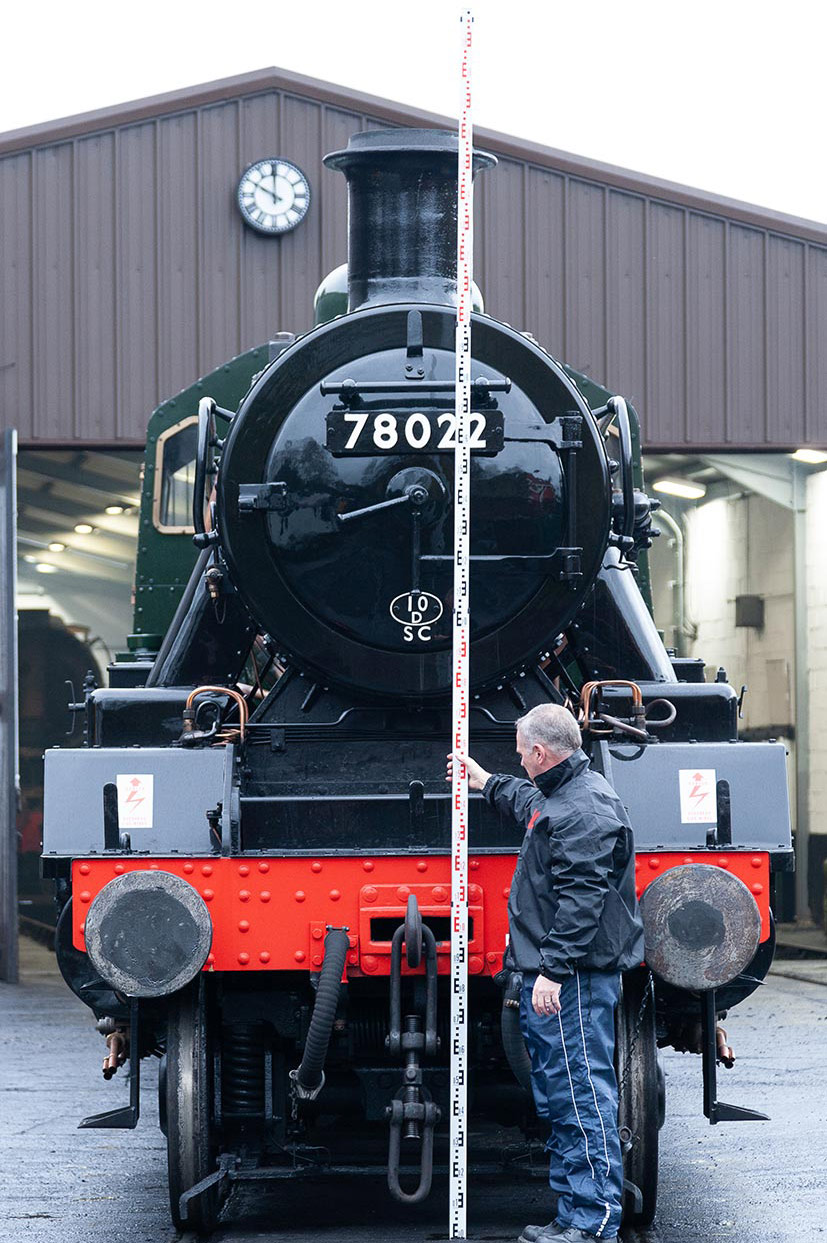
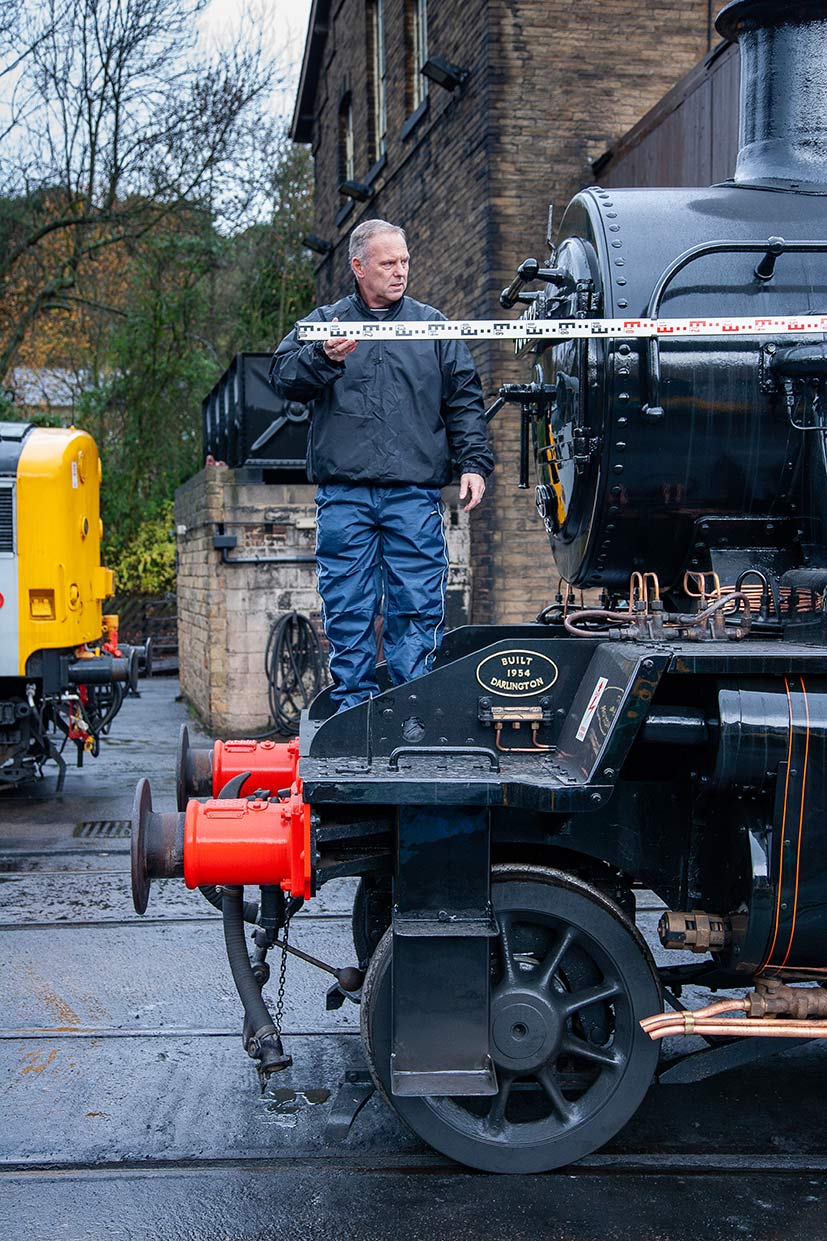
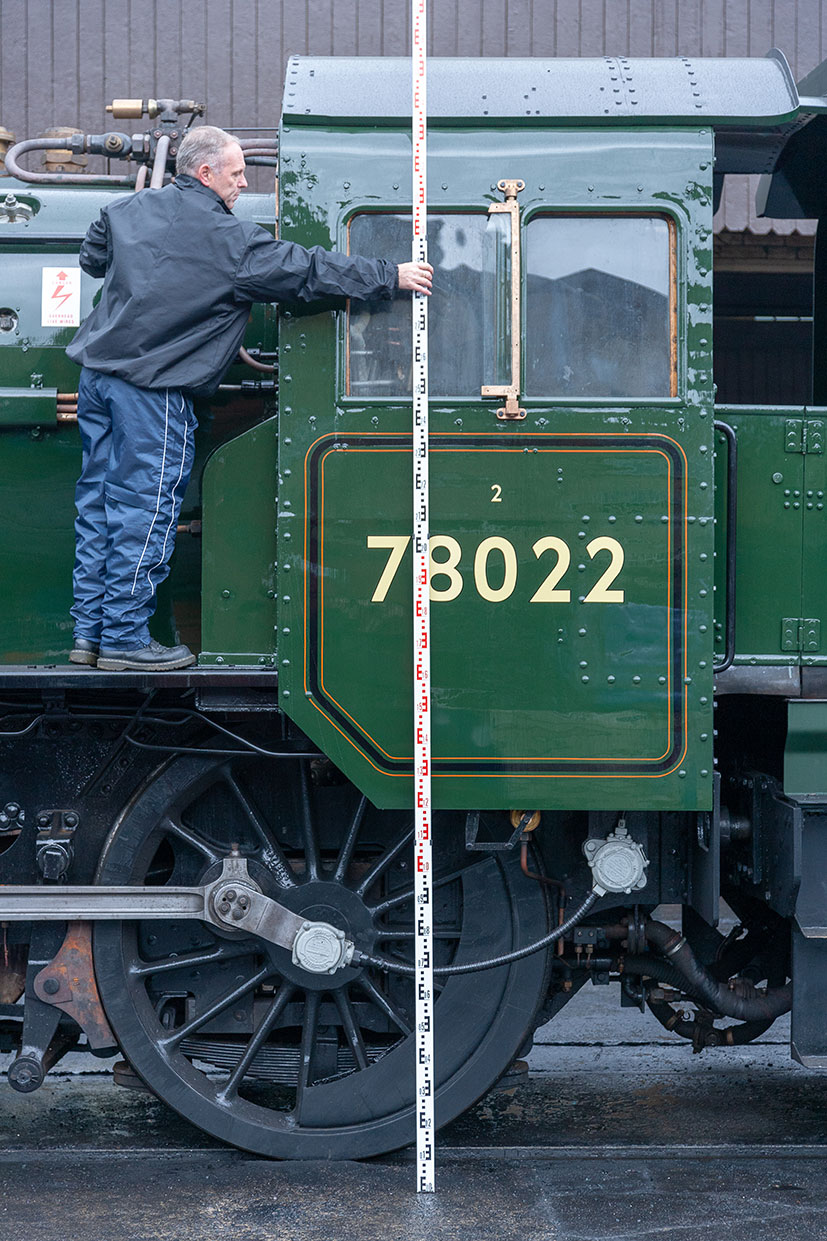
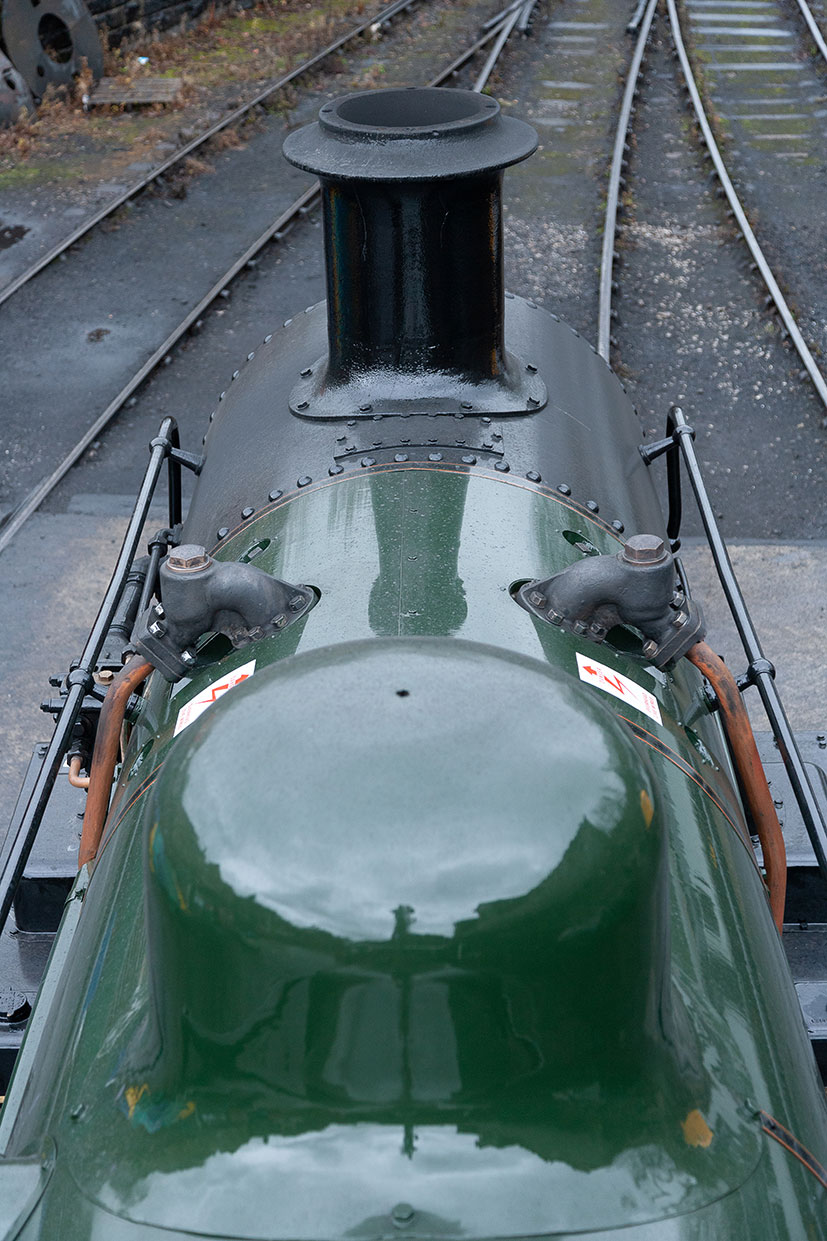
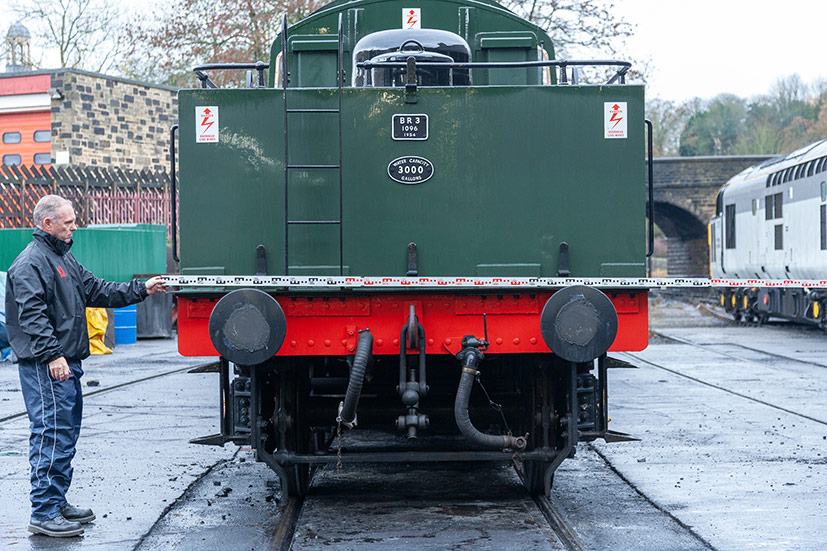
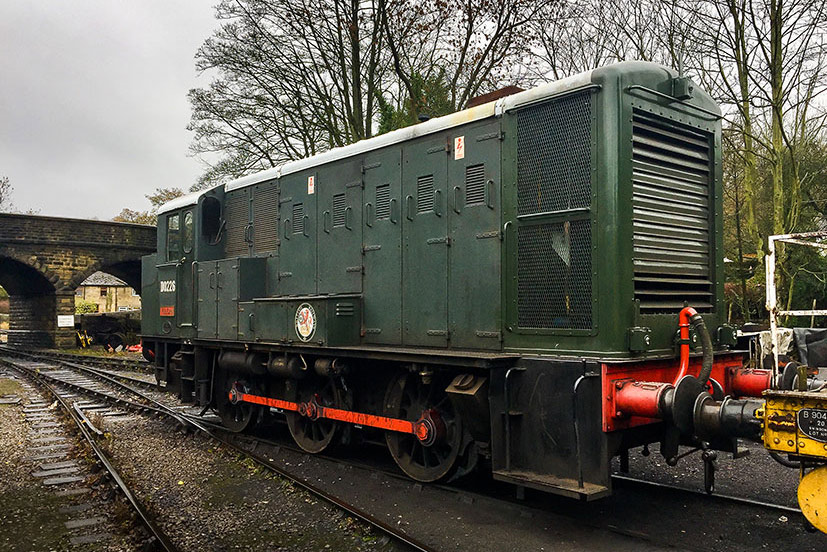
As ever, we would like to thank the Keighley & Worth Valley Railway for their assistance and hospitality during our visits and if you would like to see 78022 in action, next week’s Steam Gala at the railway may prove the ideal opportunity.
Just in time for Model Rail Scotland, we received the first engineering sample for the BR 2MT and while visitors to the Glasgow show were able to view the model in the display cabinet, for those that did not have the opportunity to visit Scotland, or be able to get a close enough view at the show, the Engine Shed team have photographed the engineering sample for your viewing below.

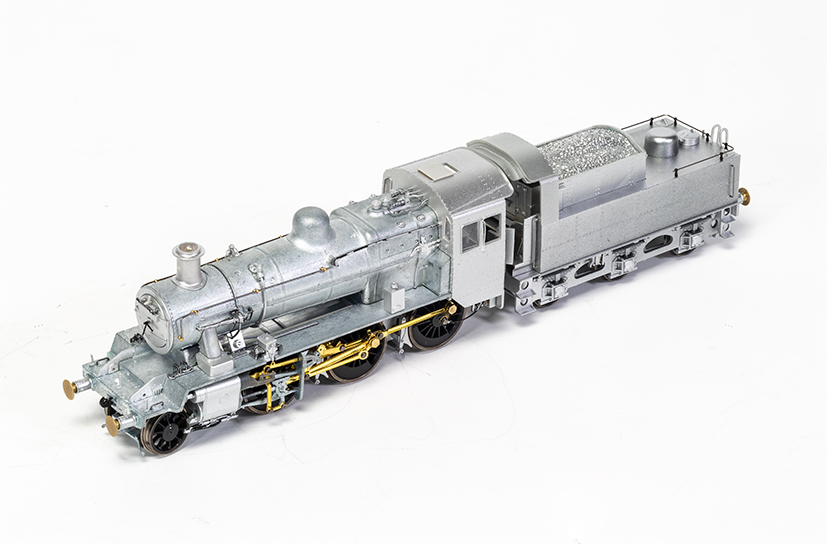
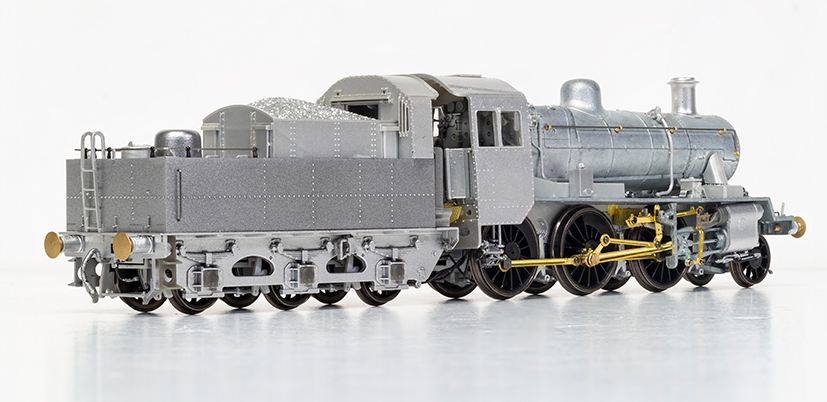
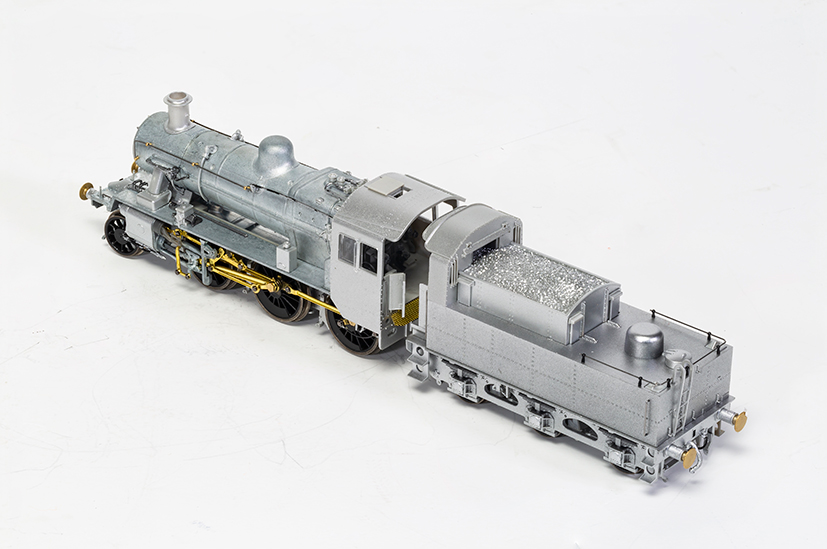

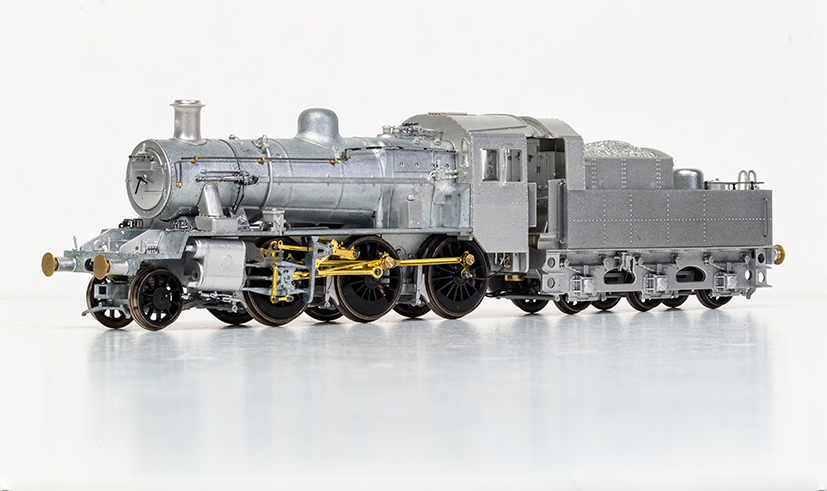
* Please note that these images represent the first engineering example that has been received and as such do not necessarily represent the final builds of the models, as refinements to the tooling and fit may yet take place and erroneous items may have been fitted to test the build.
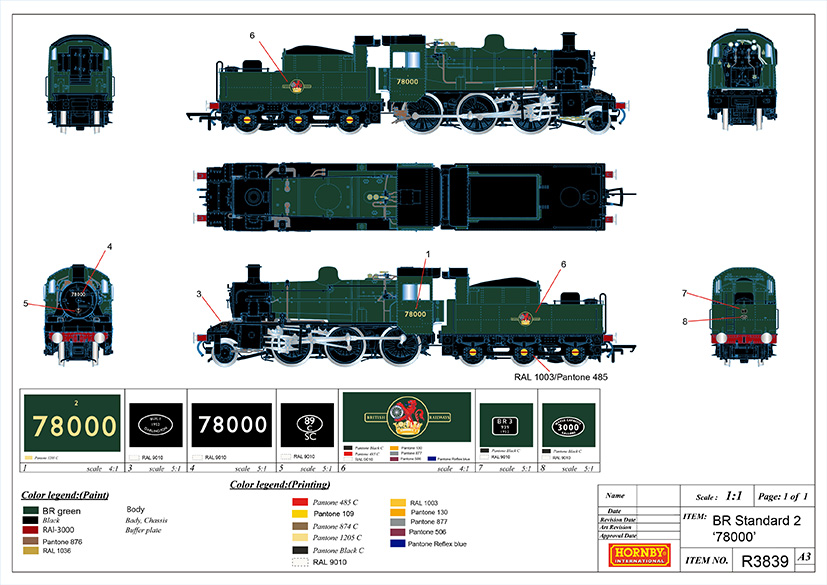
To further whet the appetite for the three forthcoming models, R3838, R3836 and R3839, we are pleased to be able to release the decoration guides for each locomotive, confirming the livery details.
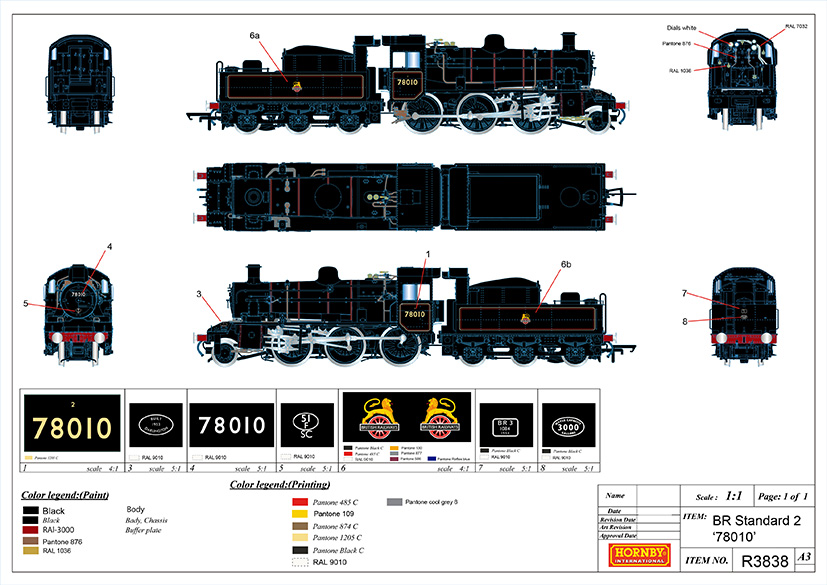
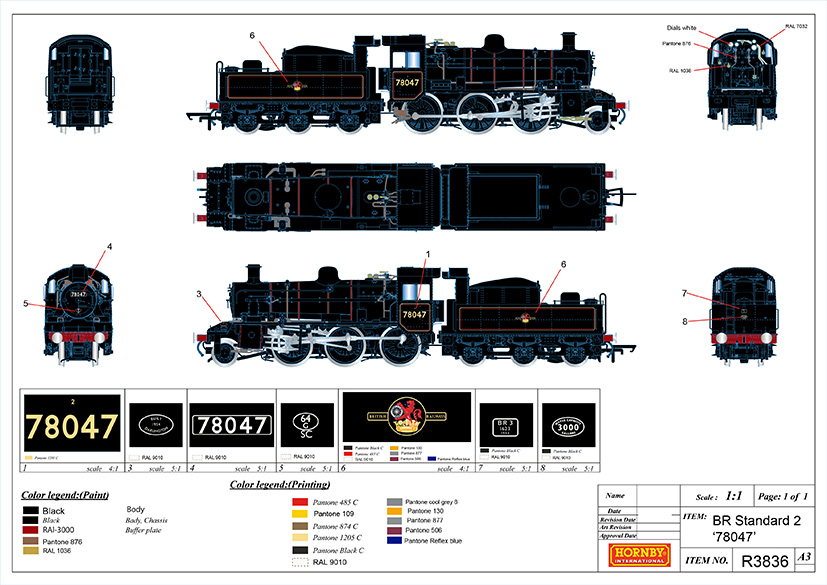
We will have more to bring you on the development of the BR Standard 2MT over the coming months, but if you should find yourself with a spare nine minutes and thirty-four seconds and want to reminisce over lost working practices and routes, 78018 (now preserved and running on the Great Central Railway), was the unwitting star of a British Transport Film entitled “Snowdrift at Bleath Gill”, a film that follows the Motive Power, Operating and Engineering Departments as they go to work with snowploughs and burners to free 78018 as it became snowbound travelling between Kirkby Stephen and Barnard Castle. The team eventually dig the locomotive clear and thaw out the moving parts, rescuing the train four days after it became stranded.
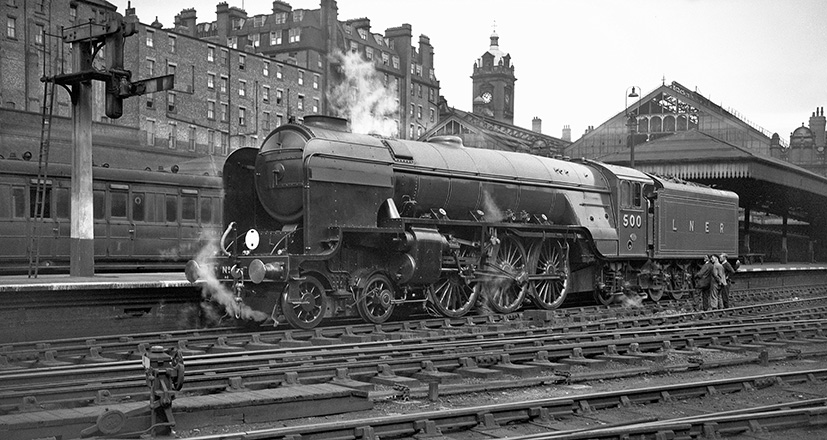
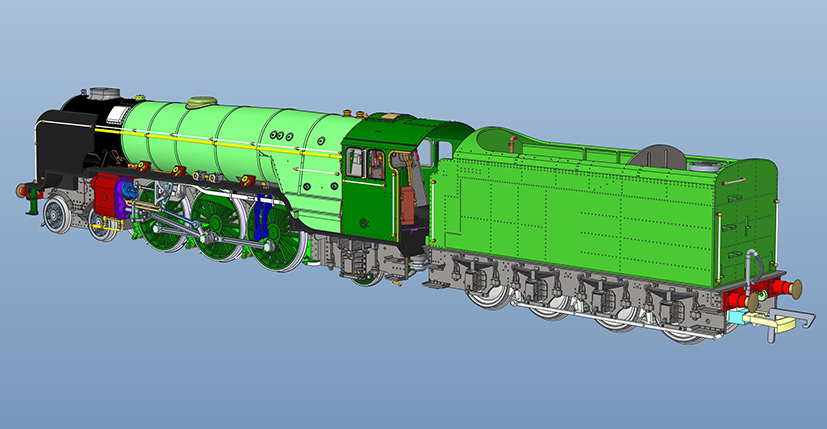
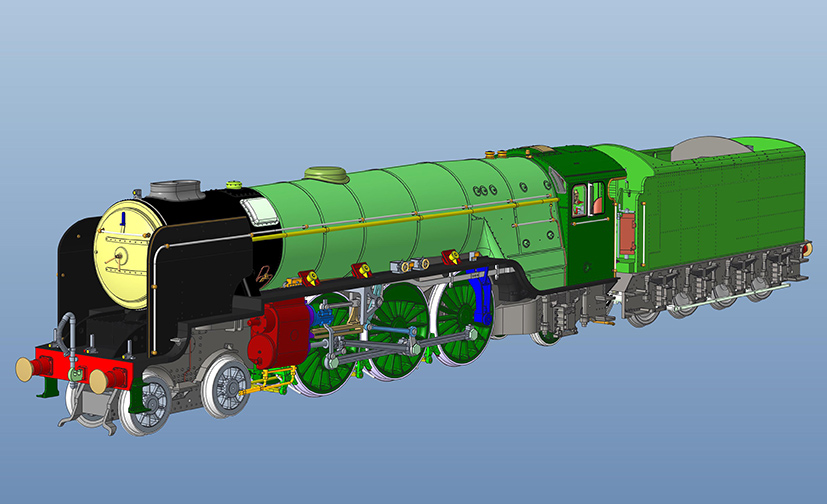
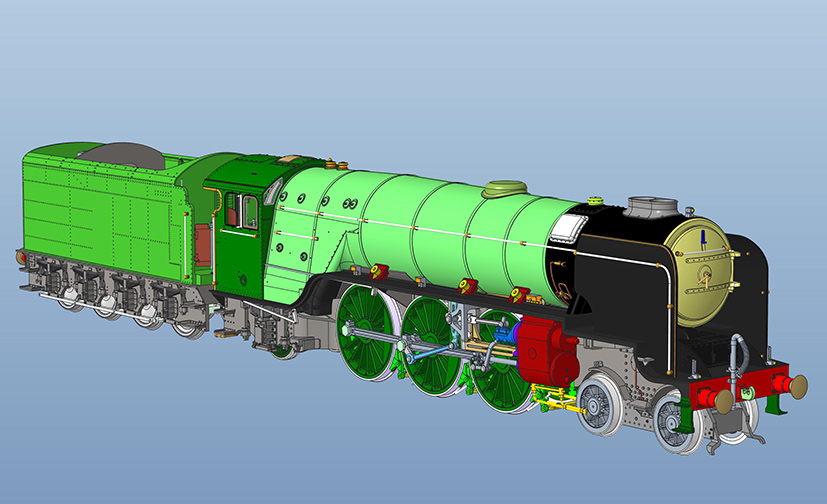
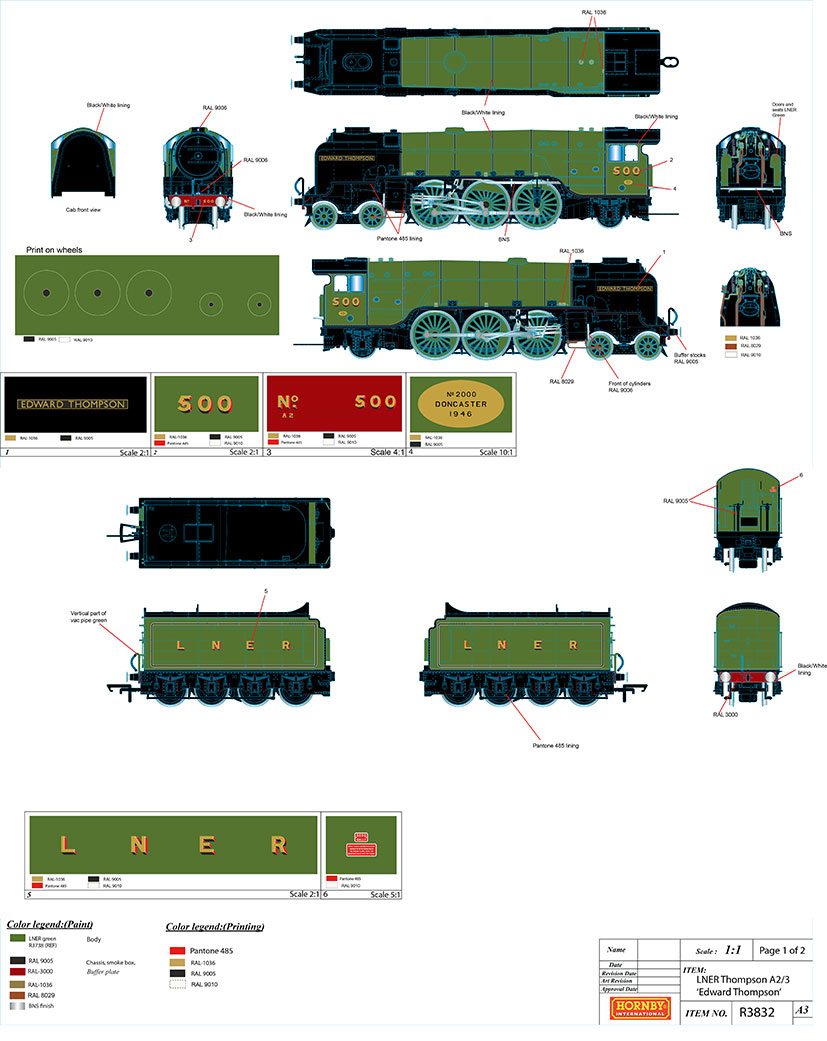
In last month’s Engine Shed, we introduced the Thompson Class A2/3 with a ‘Frankenstein’ stereo 3D sample print that lacked smoke deflectors and included a mixture of LNER Pacific running gear. For this edition we thought that the Engine Shed’s readership might appreciate an exclusive look at the final CAD and decoration artwork for R3832, Class A2/3, 500 ‘Edward Thompson’. The A2/3s, along with the A2/2 models, will feature in greater detail in a later Engine Shed edition but for now we would like you to peruse the following images.
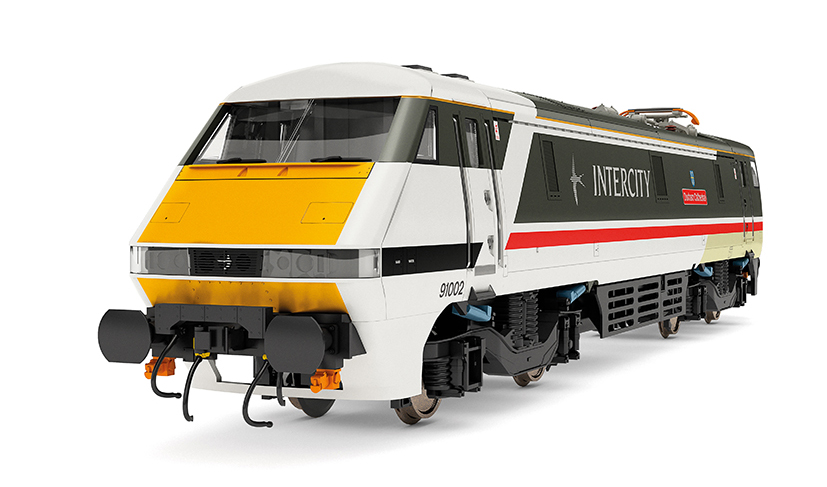
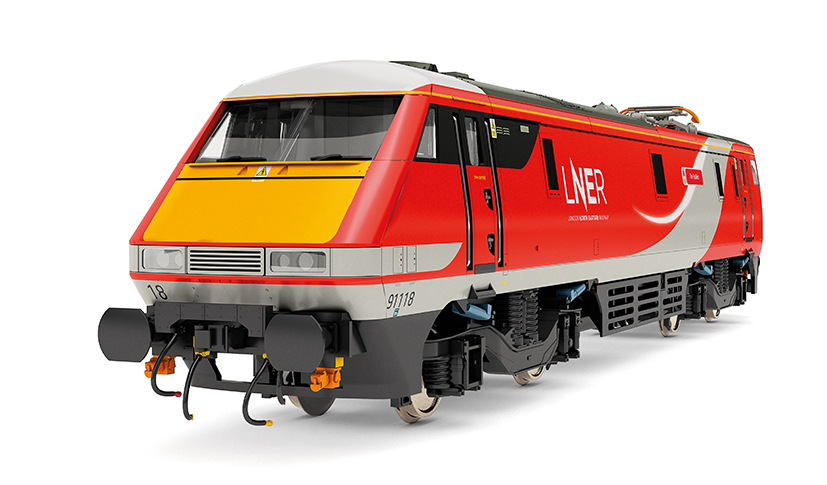
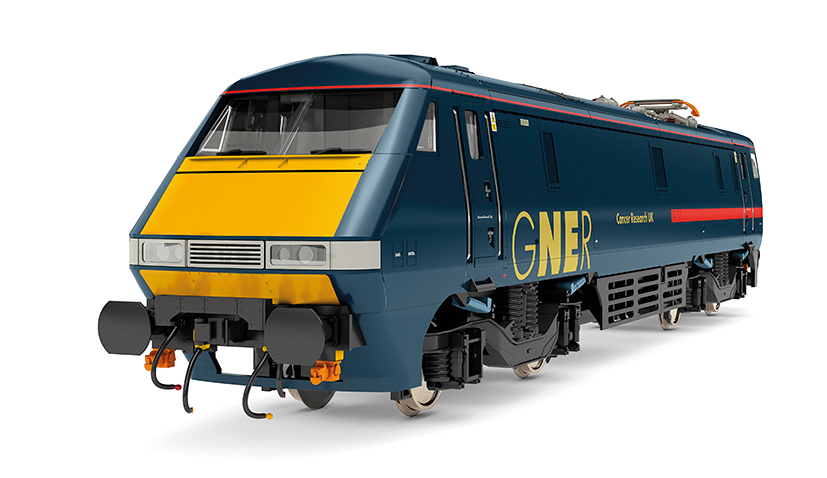
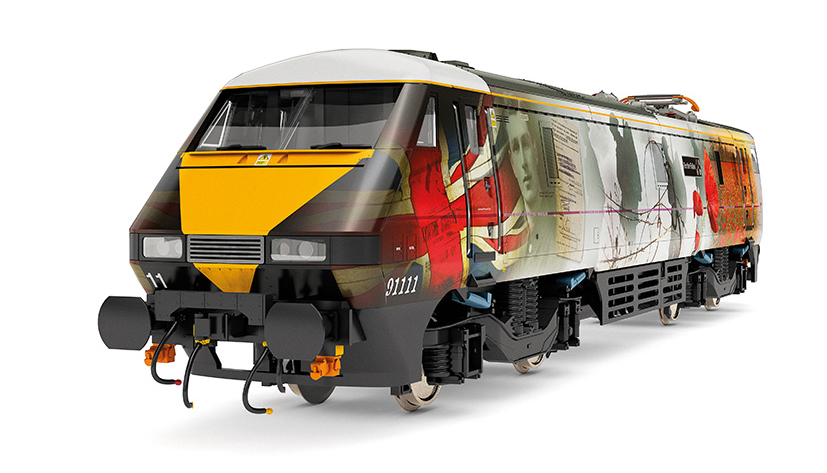
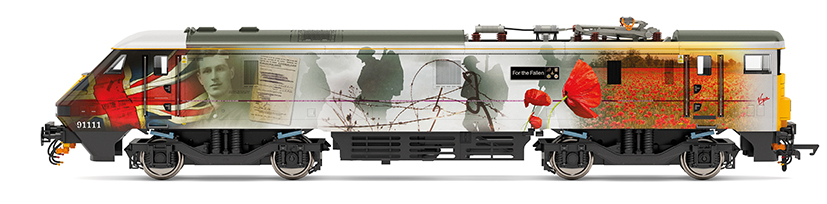
Continuing with the theme of exclusive previews for the Engine Shed readership, we have now finalised the artwork for each of the new Class 91 locomotives; R3890, 91002 ‘Durham Cathedral’, R3891, 91118 ‘The Fusiliers’, R3893, 91117 ‘Cancer Research UK’ and R3892, 91111 ‘For the Fallen’ These images will go on to be used on the product packaging, for advertising and in the website listings.
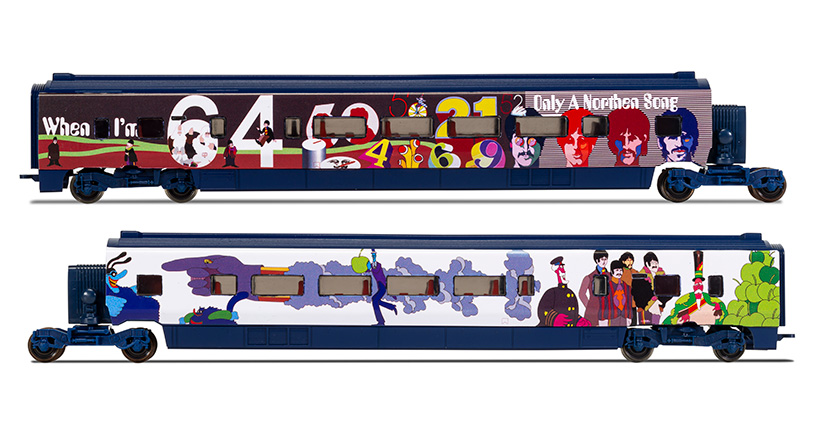
Probably the most eye-catching livery that featured in the 2020 range announcement was that applied to the Class 373/1 Eurostar models in the R1253M Train Set, the R3829 Train Pack and the two R40001 Coach Packs, based on scenes from The Beatles’ film ‘Yellow Submarine’.
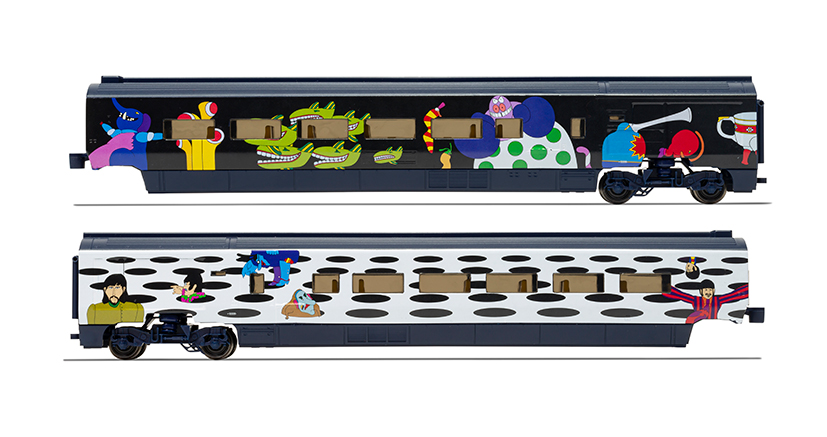
Marking Eurostar’s first use of the Class 373 for an external agency marketing campaign, on 8 September 1999 the surviving Beatles; Sir Paul McCartney, Ringo Starr and George Harrison, along with the Apple Corporation, transformed Sets 3005/3006 with a vinyl wrap that recreated scenes from ‘Yellow Submarine’ for just one of the promotional events that marked the release of the remixed CD album that Autumn, along with the remastered version of the film that was being released in cinemas and on video. Costing in excess of £100,000, the artwork was the result of four months intensive work by Apple Corporation's Art Director, Fiona Andreanelli, with the finished vinyl artwork taking two weeks to print and a further six days to apply to the train. At over 400 metres in length, each carriage portrayed a different design, telling a different part of the Yellow Submarine story. To the accompaniment of a Jazz band playing ‘Yellow Submarine’, Sets 3005/3006 departed Waterloo on the official launch, much to the surprise of passengers booked on the service, which was a normal departure rather than a dedicated press charter, due to industrial action at the time.
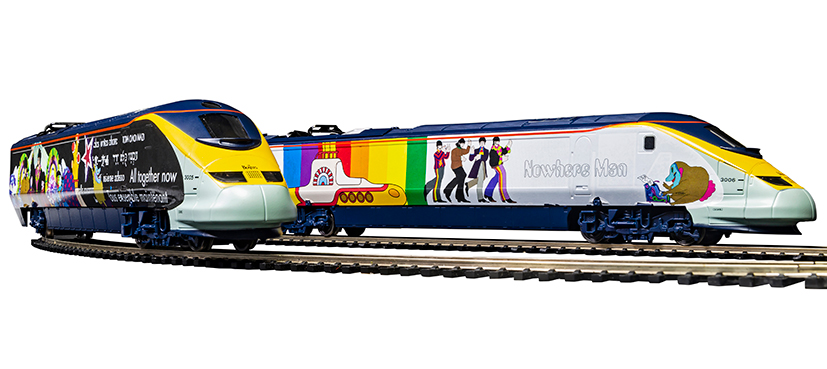
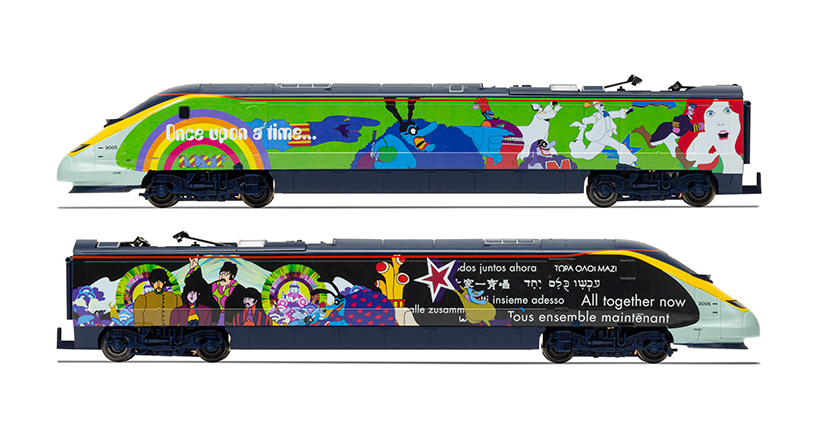
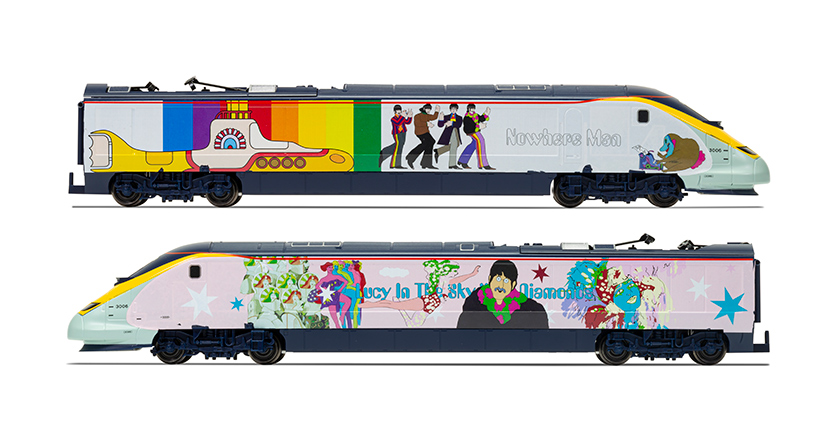
The illustrations above show the artwork applied to both sides of the two Power Cars in both the Train Pack and the Train Set
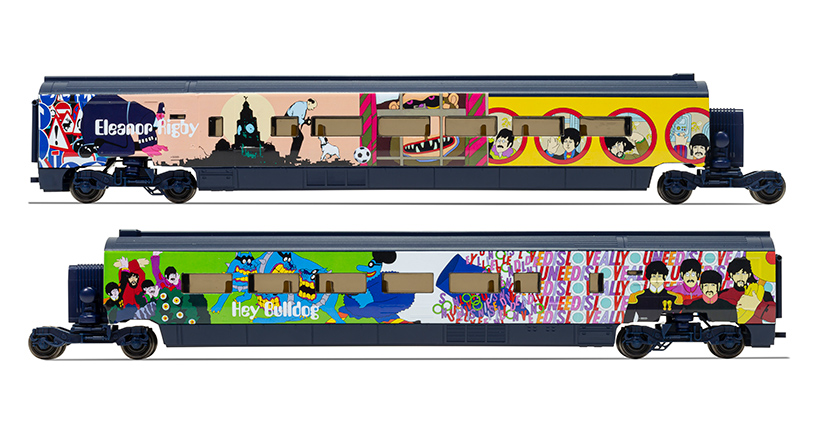
(Above) The artwork applied to both sides of the two coaches supplied in the Train Pack and Train Set
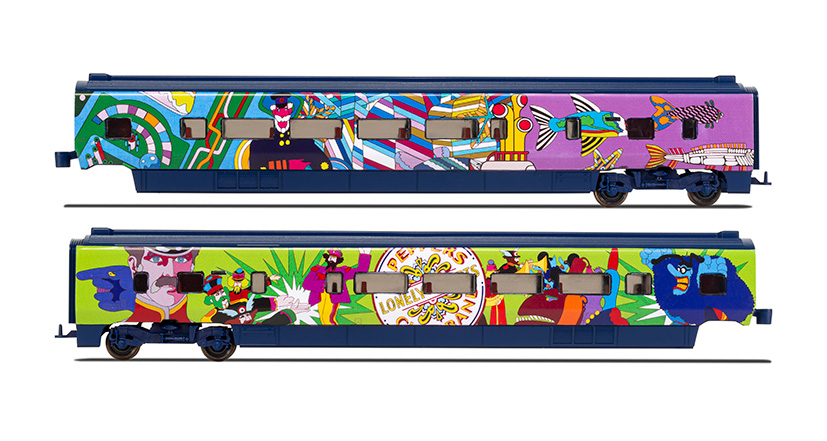
(Above) The artwork applied to both sides of the two coaches supplied in the Centre Saloons Coach Pack
*In creating the designs for these models, the livery layout has been compressed onto six vehicles to create a representation of the graphics that were applied to the full eighteen passenger cars of Sets 3005/3006 and as such are not intended to accurately portray the livery in service.
To round out this month’s Engine Shed, we thought that we would highlight the release of the R8247 Point and Accessory Decoder (PAD) Version 2; an enhanced release over the original R8247 that was first available in 2006. This new version, which has been released to retailers in the last week, supports programmable pulse duration and number of pulses per port, along with support for channel grouping that has been added to allow multiple point control, etc. from a single address. The upgrade has also seen an increase to three address modes, which further expands the flexibility of the unit.
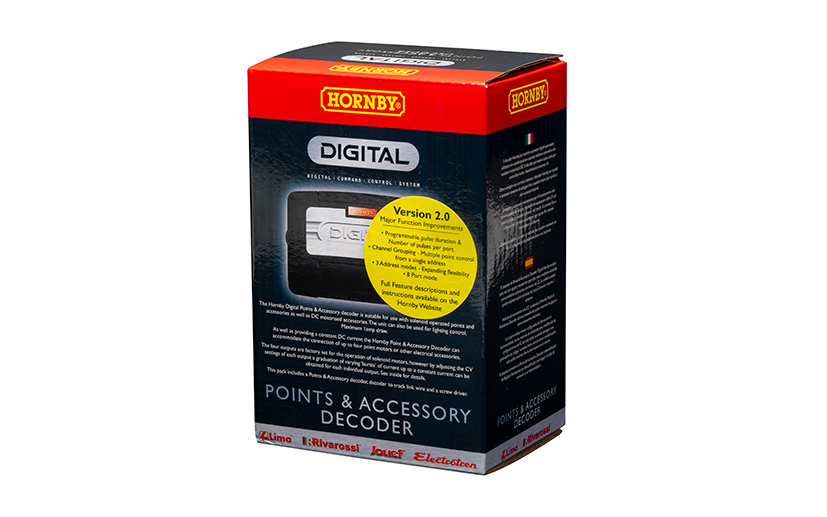
Full and comprehensive instructions for the enhanced features of the PAD are available to download from the website at https://www.hornby.com/uk-en/downloads/view/index/cat/3/.
That concludes this month’s edition of the Engine Shed, the next edition will be with you on the 27th March, where we hope to be in a position to update you with progress on further new tool items from the 2020 range, as well as unveiling additional livery artwork.
If you have any feedback from this month’s blog, please do pass your comments on to us either on Facebook or Twitter, or through our Official Forum.
Best wishes to you all,
The Engine Shed team
Return to Engine Shed homepage
© Hornby Hobbies Ltd. All rights reserved.