Good afternoon to you all and welcome to this, the first of our Engine Shed blogs for 2020.
The launch of the Hornby range at the beginning of January always marks the beginning of quite an intense period for the Hornby brand; once the range is published both the Marketing and Sales teams are involved in preview events for our retailers, before moving on to London and Nuremburg for the annual Toy Fairs, while the Development team are busy working their way through the various stages of production relating to the items in the range, from assessing 3D prints and engineering samples to approving final production samples. With 2020 marking the centenary of the Hornby Railways brand, the range is even larger and more varied this year and so we hope to cover as many of the new projects and highlights in Engine Shed as we can during the course of the year. To help achieve this, Engine Shed will be published regularly every four weeks, with extra editions being inserted as and when we feel we have something of interest to pass on to you.
So now that the dust has settled on the range announcement, hopefully many of you will have picked out new items that are of particular interest to you, while for others there will no doubt be questions that need answering, so let us take a brief look at the new tooled projects that we will be following the progress of this year:
* Please note that where Stereo 3D sample prints are shown below, they do not necessarily represent the final builds of the models, being intended for internal evaluation of the CAD. As such, the models may have erroneous running gear fitted, or even be missing components (such as the smoke deflectors on the A2/3).
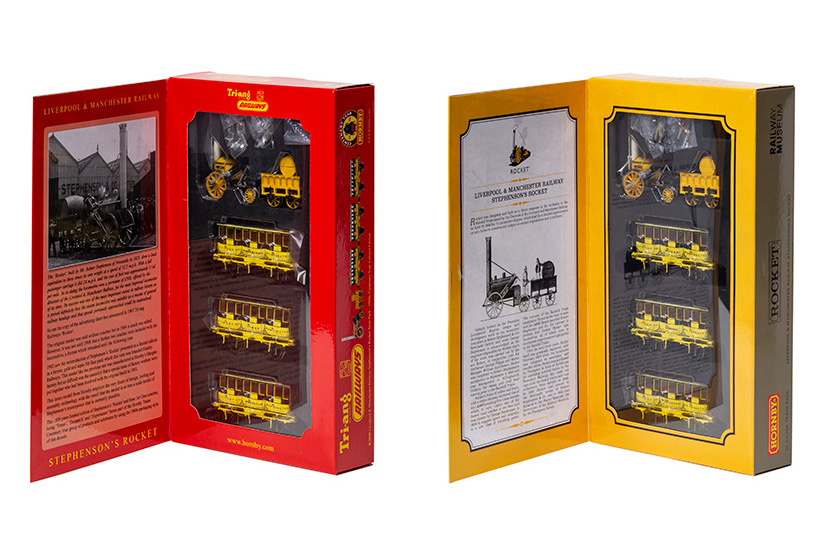
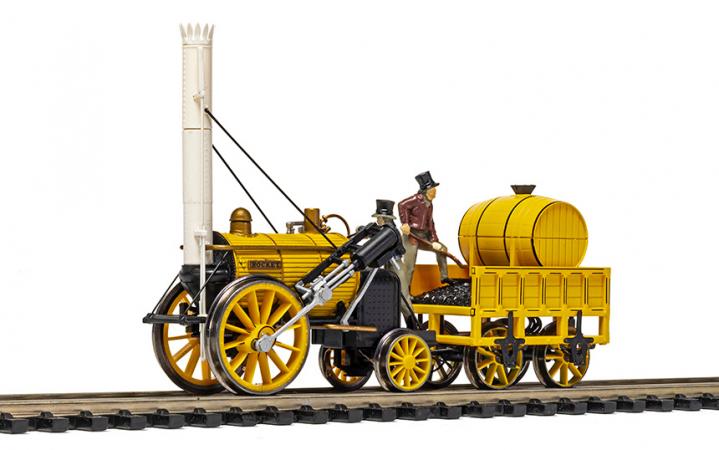
The Stephenson’s Rocket Train pack is available in two versions; on the left is R3809, which comes as a Tri-ang Railways packaged Limited Edition of 1500 pieces, each with a numbered Limited Edition Certificate and on the right is the main range version, R3810.
George Stephenson’s 0-2-2 Rocket was designed and built in response to the invitation issued by the Directors of the Liverpool and Manchester Railway to attend the Rainhill Trials on April 25, 1829 and the locomotive’s victory at that event sealed Rocket’s place in Britain’s railway history. Research for this project began in earnest during February 2018 and both the R3809 and R3810 Train Packs are currently in transit, being due to arrive during February 2020.
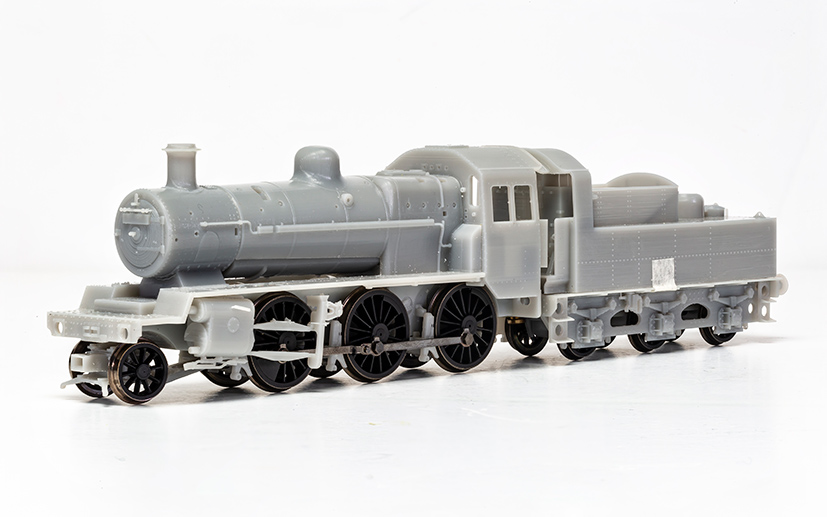
Developed from Ivatt’s Class 2MT 2-6-0 design of 1946 for the London, Midland and Scottish Railway, the BR Standard Class 2MT 2-6-0 design benefitted from the work carried out in 1949/50 to improve the steaming characteristics of the Ivatt. Under Robert Riddles, the design was principally carried out from Derby, with input from Swindon, Brighton and Doncaster drawing offices and the sixty-five locomotives ordered were all built at Darlington between December 1952 and November 1956.
Research for this project began during June 2018 and the Hornby Development team visited the Keighley & Worth Valley Railway in November that year, having arranged to survey their locomotive 78022. Design on the project has been completed and in the last couple of weeks the first engineering sample has been received, which is currently being assessed. We hope to cover this subject in more detail in next month’s Engine Shed.
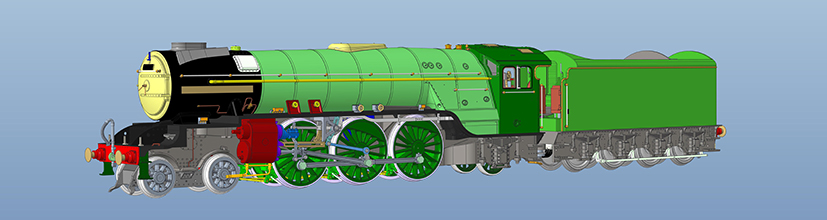
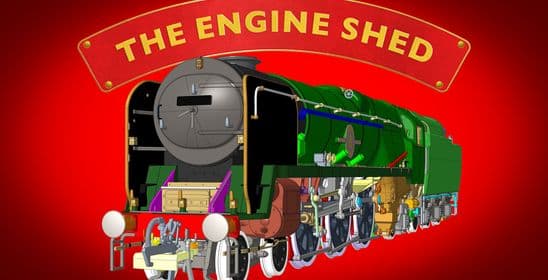
With Sir Nigel Gresley’s death on April 5, 1941, he was succeeded as Chief Mechanical Officer of the LNER by Edward Thompson, the Works Manager at Doncaster, at a time when the LNER were struggling to maintain and run their locomotive fleet under gruelling wartime conditions. Thompson favoured a policy of standardisation in locomotive construction and to promote his idea of how heavy mixed traffic locomotives should be built, in the summer of 1942 he proposed an experiment to convert a 2-8-2 P2 locomotive to a 4-6-2 arrangement. This trial proved satisfactory and free from trouble as far as the LNER Board were concerned and in August 1943 permission was granted to modify the remaining five P2 locomotives in the same manner.
Research for this project began during June/July 2018 and the design phase has been completed, with the 3D models generated and assessed. We are currently waiting for the first engineering samples to arrive.
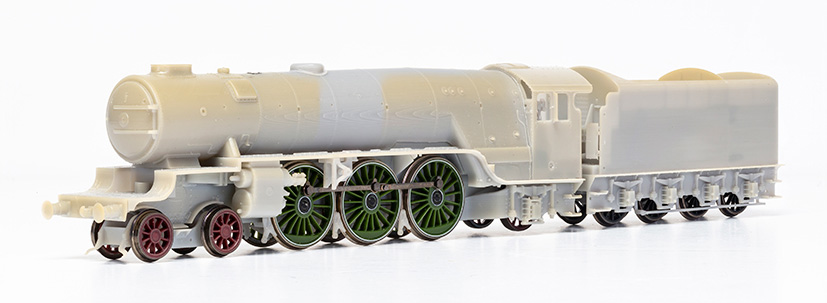
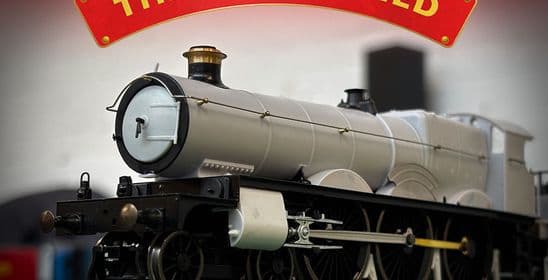
As mentioned above, Thompson favoured a policy of standardisation in locomotive construction, but it was not until 1944 that he could push this policy forward; an emergency board meeting of the Railway Executive Committee approving his 1945 Locomotive Construction Programme for thirty new Pacific locomotives. The design of the new A2/3 locomotives was based on that of Thompson’s A2/2 rebuild of the 2-8-2 P2 class, albeit with an increase in boiler pressure and a reduction in cylinder size, and orders were placed for ten locomotives initially, followed by a further five. Fitted with a new pattern Diagram 117 boiler from Darlington, which differed visually from the P2’s Diagram 106A boiler by having a round dome rather than the more familiar Gresley ‘Banjo’ dome, Thompson reverted to his favoured GNR style flat fronted cab for the A2/3. At the front end, traditional large deflectors were mounted either side of the smokebox, as opposed to the small winglet style deflectors that were in vogue with the LNER at the time. The first A2/3 was completed in May 1946, just a month before Thompson’s retirement and it was the 2000th locomotive to be built at Doncaster.
Research for this project began during June/July 2018, along with that for the A2/2 and the design phase has been completed, with the 3D models generated and assessed. We are currently waiting for the first engineering samples to arrive.
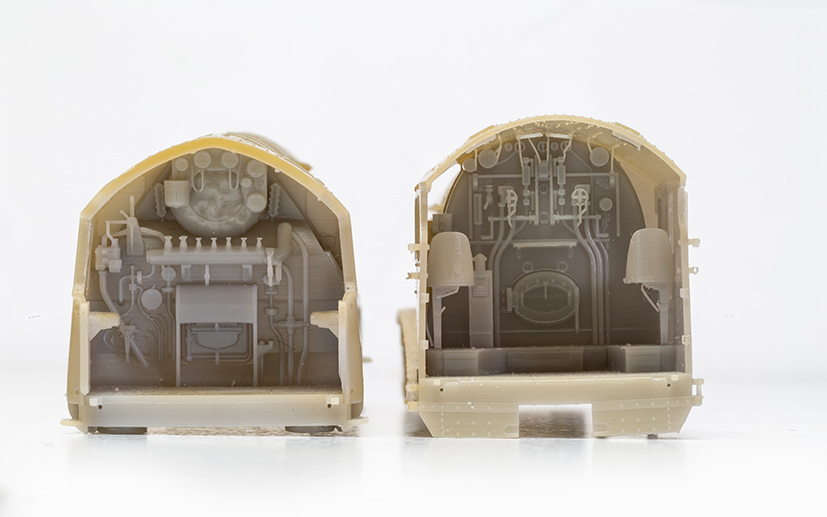
The first reference to 10000’s designation as Class W1 was on 9 November 1926, but where the widely adopted name of ‘Hush-Hush’ came from is disputed. It could be that the nickname arose in the late summer of 1928, as news of Gresley’s new locomotive began to leak out, however other sources suggest this was possibly an internal Darlington name that came from the distinctively quiet motion sound the loco made, or even because of a mistaken caption that featured in a Pathé News item. On 20 November 1929, nameplates were drawn up featuring the name British Enterprise and were cast soon after, but these plates were never fitted and the loco remained unnamed, being referred to as ‘Hush-Hush’ ever since. On 9 January 1930, the first trip to Kings Cross took place, although it was to be a further six months of trials though before 10000 finally entered traffic on June 20, 1930. Between June 1930 and May 29, 1933, 10000 run 70,000 miles in service, from Kings Cross to Edinburgh, including the Flying Scotsman and Queens of Scots services and when the locomotive entered Darlington Works on 21 August 1935, it was anticipated that 10000 would be subject to a major overhaul and modification. During this period however, Gresley decided that it was time to rebuild 10000 as a three-cylinder locomotive with a conventional firetube boiler and 10000 was moved to Doncaster Works on 13 October 1936, the first drawing for the modification being prepared at the end of November. When 10000 was finally released from Doncaster Works in November 1937, it was a significantly different locomotive; being fitted with a diagram 111 boiler that was very similar to the diagram 108 boiler fitted to 2006 Wolf of Badenoch, and with a streamlined casing to the same pattern as the A4 class.
This project has been in development for some time, research for the project beginning back in June 2015 with the first design phase taking place shortly after. In January 2019, the project was revived and expanded to include the rebuilt version of 10000 and all design has now been completed, with the 3D prints being generated and assessed. We are currently waiting for the first engineering samples of both versions to arrive.
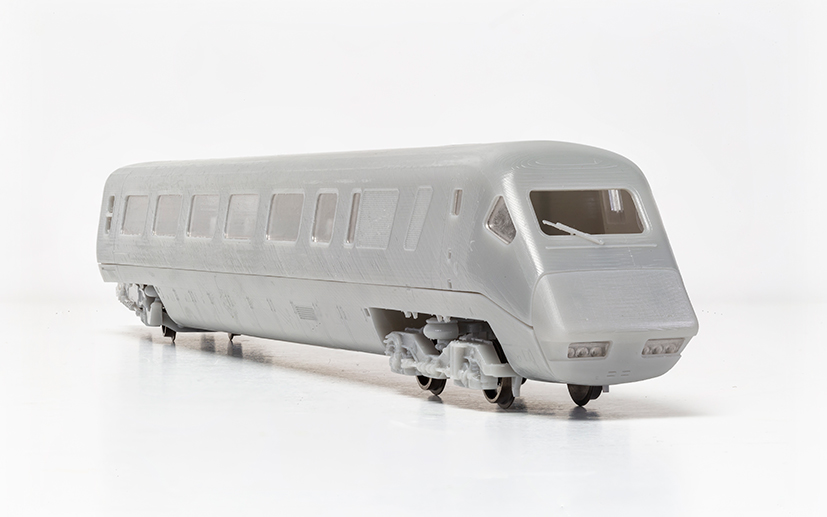
In a move similar to the current situation of the DfT defining design specifications, it was the passenger business of British Rail that decided upon the original configuration for the APT-P; each set was to comprise fourteen cars, with the two power cars marshalled at the outer ends of the sets. It soon became clear that the use of two pantographs, one on each power car, was unsuitable for the OHP wires in place at that time and the use of two power cars in the middle of the train became the only option, effectively cutting the train in half. This created two 1+6 formations of DTS, TS, TRBS, TU, TF, TBF and NDM (Non-Driving Motor), through which passengers could not pass due to the high magnetic fields generated by the electrical equipment contained in the NDM. The NDM was the first vehicle completed for testing in June 1977 and it spent a year on static tests at RTC Derby, as well as dynamic tests on the WCML with a spare HST Power Car from September 1977. In mid-1978 the power car was joined by the rest of the first half set for testing on the WCML and was unveiled to the press on June 7th but, hampered by industrial action, it was to be February 1979 before various formations of the full train were marshalled to test different aspects of the train. At the end of the year, on December 20, 1979, a new rail speed record of 162.2mph was achieved and by March 1980 all three APT-P trains were delivered and ready for mileage accumulation on the WCML.
Research for this project began during August 2018, with the first of several visits to Crewe Heritage Centre taking place to survey the remaining vehicles on display there. The design phase has now been completed and the 3D models generated, with the commencement of tooling occurring shortly.
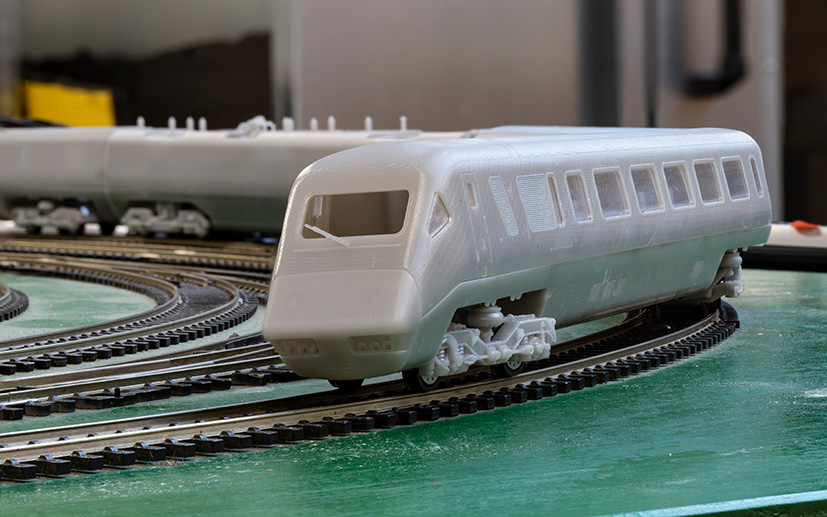
Two APT train packs are being offered; R3873, a 5-car pack representing Set 370 003 with DTS Sc48103, TBF Sc48603 and NDM Sc49003 City of Derby, along with Set 370 004 comprising TBF Sc48604 and DTS Sc48104 and R3874, the 7-car Pack representing Set 370 001 with DTS Sc48101, TBF Sc48601, APT-U Test Coach 48204 (RDB977527) and NDM Sc49001, along with NDM Sc49002, TBF Sc48602 and DTS Sc48102 from Set 370 002. To complement these train packs, we are releasing a number of coach packs so that full Sets can be assembled, these being:
R40011: Two TS coaches required in part to complete R3873 5-car Pack (Sets 370 003 and 370 004).
R40011A: Two TS coaches required in part to complete R3874 7-car Pack (Sets 370 001 and 370 002).
R40012: Two TRBS coaches required in part to complete R3873 5-car Pack (Sets 370 003 and 370 004).
R40012A: Two TRBS coaches required in part to complete R3874 7-car Pack (Sets 370 001 and 370 002).
R40013: Two TU coaches required in part to complete R3873 5-car Pack (Sets 370 003 and 370 004).
R40013A: Two TU coaches required in part to complete R3874 7-car Pack (Sets 370 001 and 370 002).
R40014: Two TF coaches required in part to complete R3873 5-car Pack (Sets 370 003 and 370 004).
R40014A: Two TF coaches required in part to complete R3874 7-car Pack (Sets 370 001 and 370 002).
The solo NDM (R3948) is 49004, which will complete the fourteen cars needed for R3873 and this model is powered, with a centrally mounted 5-pole motor driving both bogies via cardan shafts.
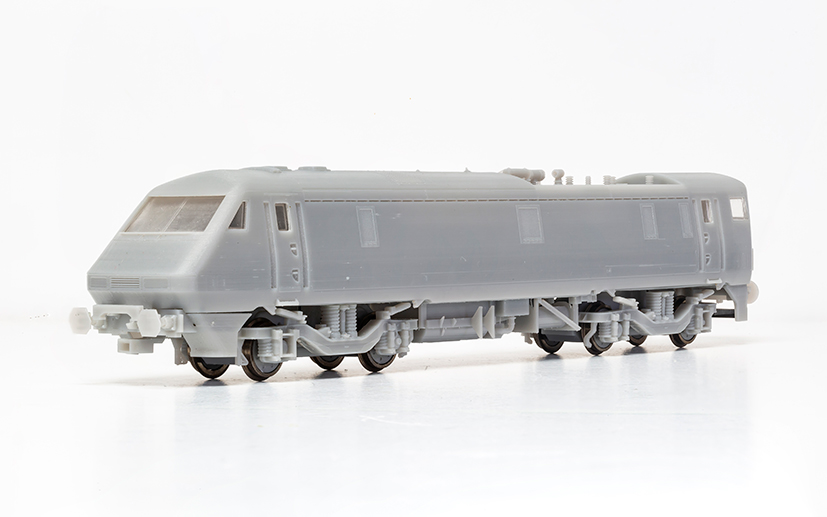
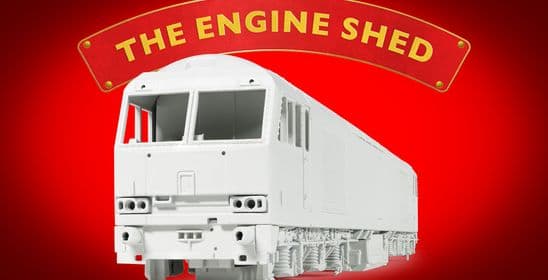
In 1984, with electrification well under way on the East Coast Main Line, the British Railways Board decided that a fleet of new high-power locomotives and rolling stock would be required to operate alongside the existing highly successful HST fleet. The design, which owed a lot to work undertaken on the Advanced Passenger Train project, was to be called Project Electra and the service would be called InterCity 225. The first of the Class 91 Bo-Bo locomotives, 91001, was unveiled to the press at British Rail Engineering Limited’s Crewe works on 12 February 1988, just two years after British Railways Board had announced that an order had been placed for thirty-one Class 91s.
Another long-term project, research for this project began during May 2016, with the first of several visits to the National Archives to look at the original project documents, followed by a trip to York for the first of several vehicle surveys in June 2016. The design phase has now been completed and the 3D models generated and assessed. Tooling has commenced and we are currently waiting for the first engineering samples of both versions to arrive.
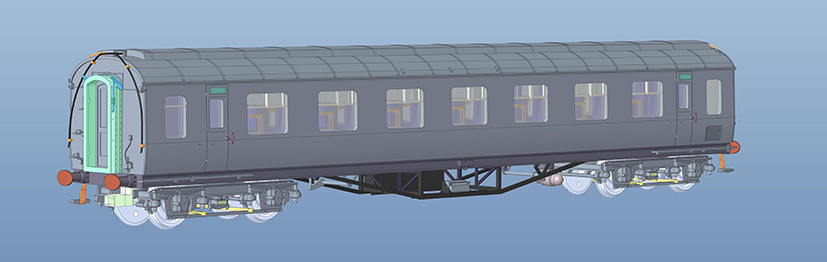
In response to the London & North Eastern Railway’s ‘Coronation’ sets, hauled by their A4 Pacific locomotives, the London, Midland, Scottish Railway Board announced the advent of a similar train, the ‘Coronation Scot’, to run over their route, covering the 401·4 miles between Euston and Glasgow in 6½ hours, at an average of 61·7 miles an hour. The full ‘Coronation Scot’ train consisted of nine cars, the formation (from the London end) being; Brake Corridor First (BFK), Corridor First (FK), Restaurant Open First (RFO), Kitchen (RK), Restaurant Open Third (RTO), Restaurant Open Third (RTO), Kitchen (RK), Restaurant Open Third (RTO) and Brake Corridor Third (BTK). Three sets of coaches were to be provided for the ‘Coronation Scot’, with any two sets operating at one time, the other being held as a spare. Unlike the LNER’s ‘Coronation’ sets, most of the coaches for the ‘Coronation Scot’ were selected from the latest new batches of Stanier’s Period III stock, with the exception being the FKs and BTKs, which were built new for the service. The selected coaches were sent to the LMSR’s Wolverton works where they were converted for service.
The third of our long-term projects, research began during January 2016, with the first of several visits to the Railway Museum’s ‘Search Engine’, along with several other archival sources that have had to be consulted to decipher the intricacies of the forced air ventilation units in particular. The project has proved quite complex, but a survey visit to the Severn Valley Railway at the beginning of December allowed the last questions to be answered and with the design phase now completed, the 3D models are expected shortly.
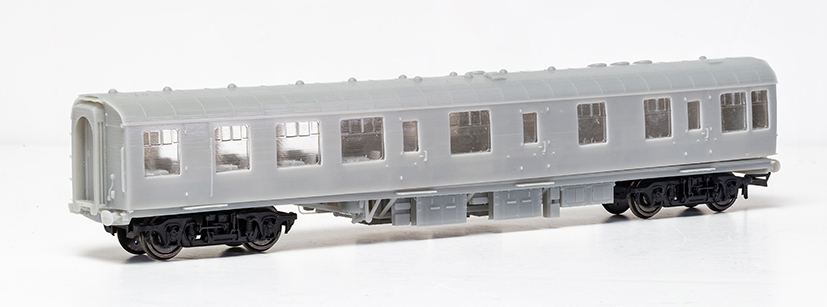
During the early 1950s it became apparent that social patterns regarding rail travel catering were changing, a direct consequence of WWII attitudes towards dining. The catering department of British Railways was experiencing a demand from travellers for cheaper and lighter meals and was seeing an increase in social drinking that was not related to dining. This change in dining patterns meant that the use of a Buffet vehicle, rather than a full Kitchen Car/Dining Car combination, was sometimes a better option and the third phase 1957-62 Mk.1 building programme provided many of BR’s vehicles with buffet facilities, not just in addition to full meal provision, but also replacing it.
Research for this project began during February 2019, with the first of several visits to the Epping Ongar Railway taking place to survey their Mk1 Buffet Restaurant. The design phase has now been completed and the 3D models generated and assessed. We are currently waiting for the first engineering samples of both the RB and RB(R) versions to arrive.
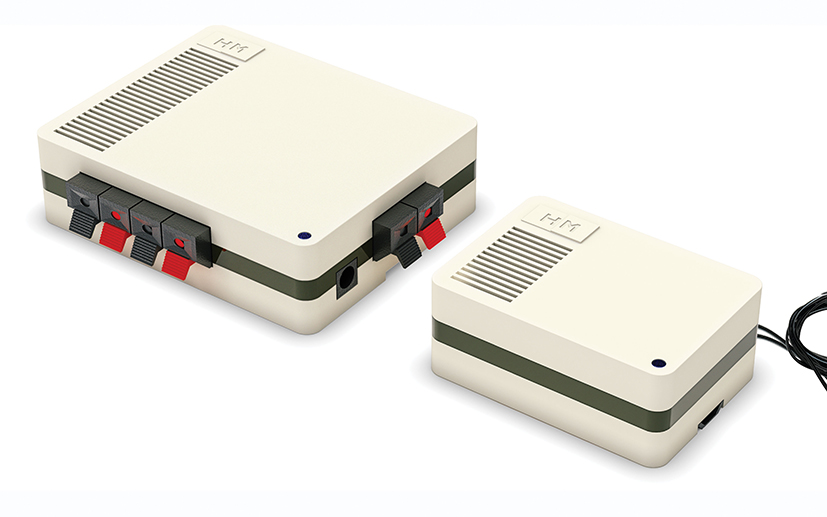
The HM6000 12vDC Bluetooth Low Energy (BLE) Unit, Control App and supporting HM6010 Point & Accessory (PAC) Unit allows the control of a 12vDC analogue layout using Bluetooth technology via all major IOS or Android based smartphones or tablets and includes inertia and braking control, as well as allowing generic steam, diesel and electric locomotive sounds from the control device.
Research for this project began during July 2019 and much of the work is completed, with the PCB assemblies done and awaiting final samples, the CAD for the casing being completed and the application and user interface also complete. Extensive testing will now commence with an availability date expected in the early part of the third quarter.
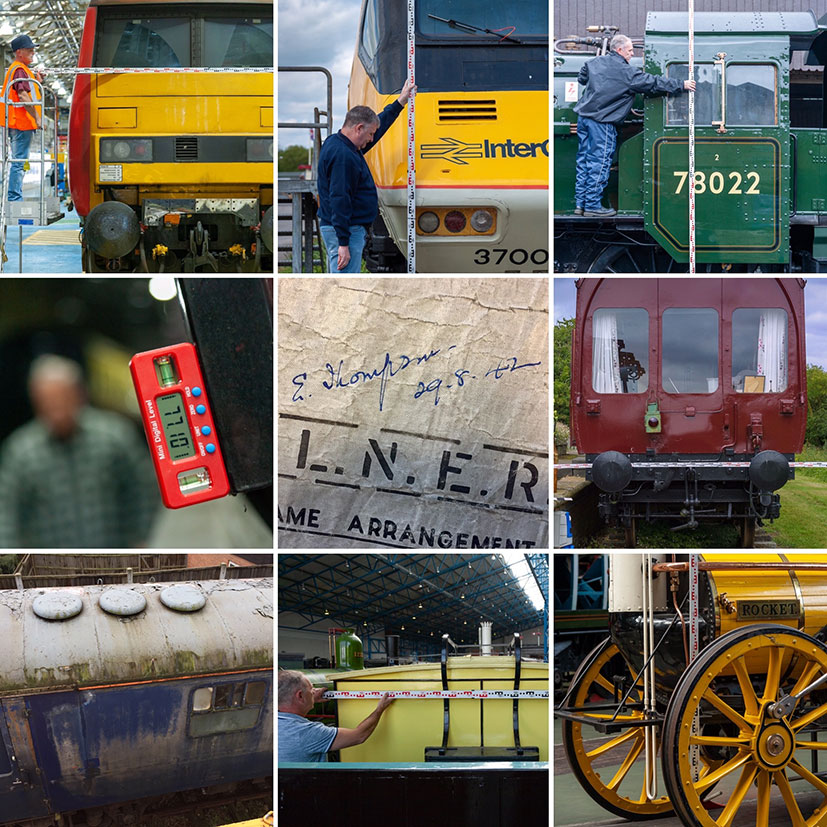
Research trips to cover the new items in the 2020 range have taken the Hornby Development team from Essex to North Yorkshire and many points in between.
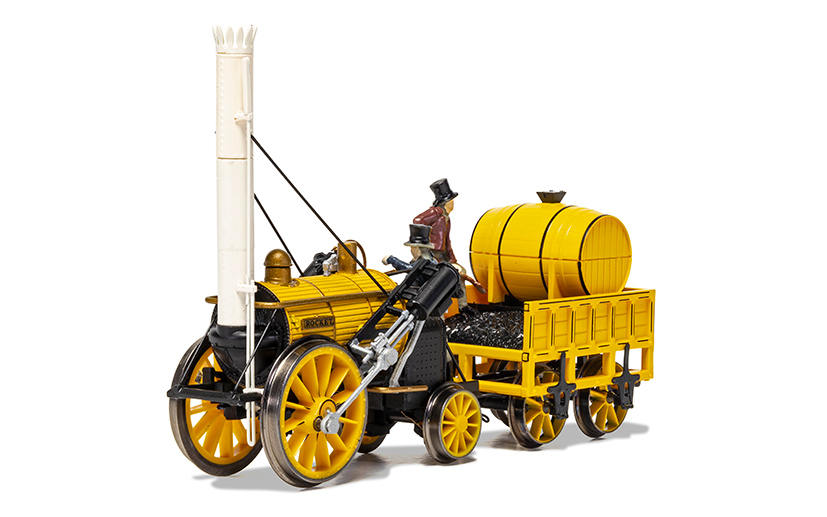
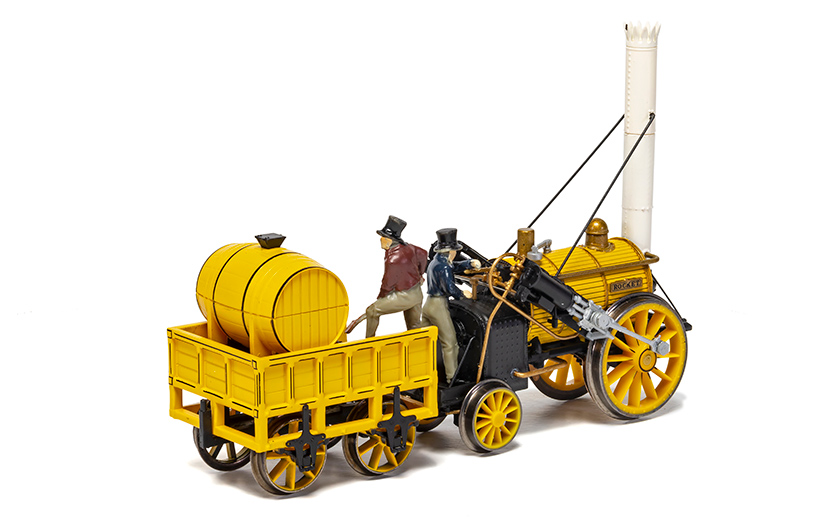
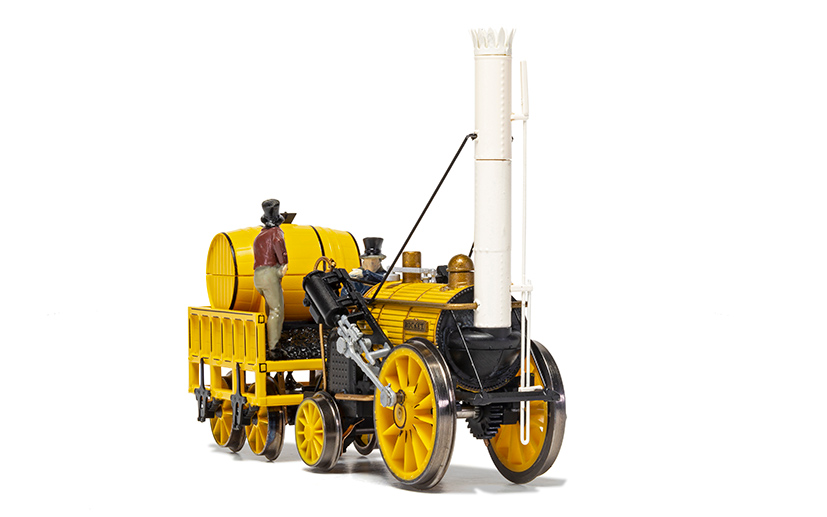
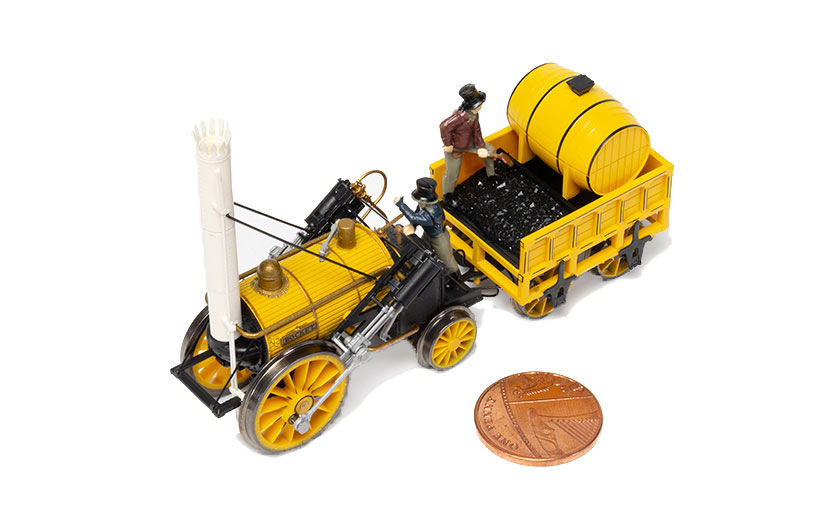
With some highly impressive new tooling items for 2020, one particular project has really caught the imagination of model railway enthusiasts. Available in two different train packs: R3809 Stephenson’s Rocket Train Pack Centenary Year Limited Edition features Rocket with the First Class coaches ‘Times’, ‘Despatch’ and ‘Experience’, as well as two crew members and R3810 Stephenson’s Rocket Train Pack, which features the First Class coaches ‘Globe’, ‘Renown’ and ‘Wellington’, along with two crew members. As mentioned previously, both train packs are in transit, with R3809 due to land on these shores in the second week of February and R3810 following a couple of weeks later. Given that both should arrive before the next edition of Engine Shed, we thought that we would bring you up to date with the project now.
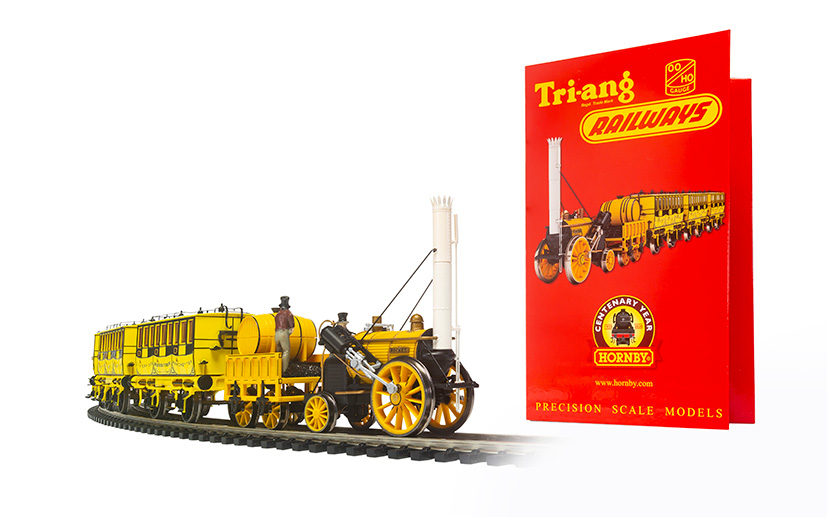
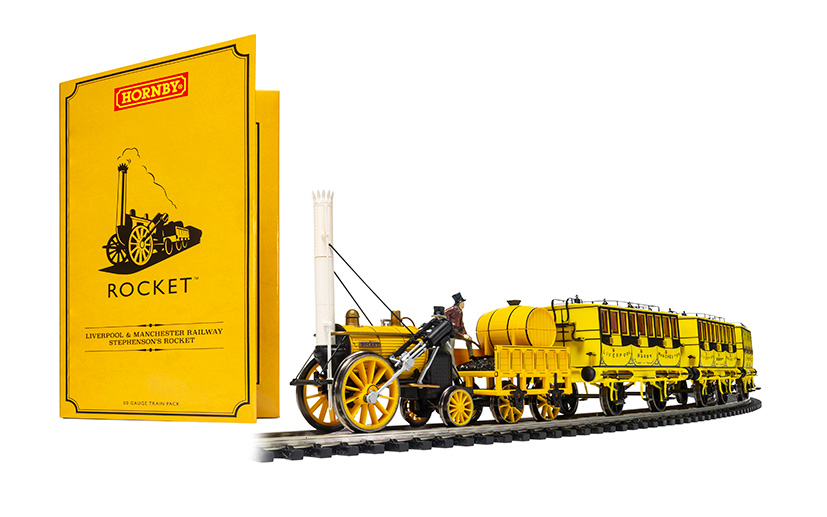
The packaging of the new products has been carefully considered to present the Rocket and First Class coaches in the best possible way, regardless of whether they will be displayed on a shelf, or run on a layout. The overall length of the Rocket, tender and three coaches is 320mm.
Rocket was designed and built as a direct response to the invitation to the Rainhill Trials issued by the Directors of the Liverpool and Manchester Railway on April 25, 1829 for, “a Locomotive Engine, which shall be a decided improvement on any hitherto constructed, subject to certain stipulations and conditions.”
Initially known as the Premium Locomotive Engine, design and development work on the locomotive took place at Robert Stephenson & Co’s Newcastle factory and while George Stephenson is acknowledged as the engineer responsible for Rocket, much of the work was carried out by his son Robert, in conjunction with his draftsman George Phipps and Works Manager William Hutchinson. Rocket was completed to Robert Stephenson’s satisfaction on September 2, 1829 and was transported to Killingworth Colliery for steam and load haul testing prior to the Rainhill Trials.
Rocket’s livery of yellow and black, with a white chimney, mirrored that of the L&MR’s existing first class coaches which, in turn, copied that of the fastest road coaches at the time and was chosen by George Stephenson in 1828 to suggest speed and reliability to a new class of travelling public. The outcome of the Rainhill Trials established Rocket as the clear winner and the L&MR Board awarded Robert Stephenson and Co. the contract to produce four further ‘Rocket’ type locomotives, all of which were to incorporate improvements highlighted by the Rainhill Trials.
Over the next three years, Rocket itself was gradually improved, until February 1833 when the locomotive was relegated to secondary and standby duties. Rocket was purchased by Thompson & Sons of Kirkhouse for operating mineral trains on the Brampton Railway but could not cope with the heavy trains and was withdrawn from service in 1840. In 1850 Rocket was moved to the Newcastle works of Robert Stephenson & Co. and in 1862 was donated to the Patent Museum, the forerunner of the Science Museum, by the Thompson family.
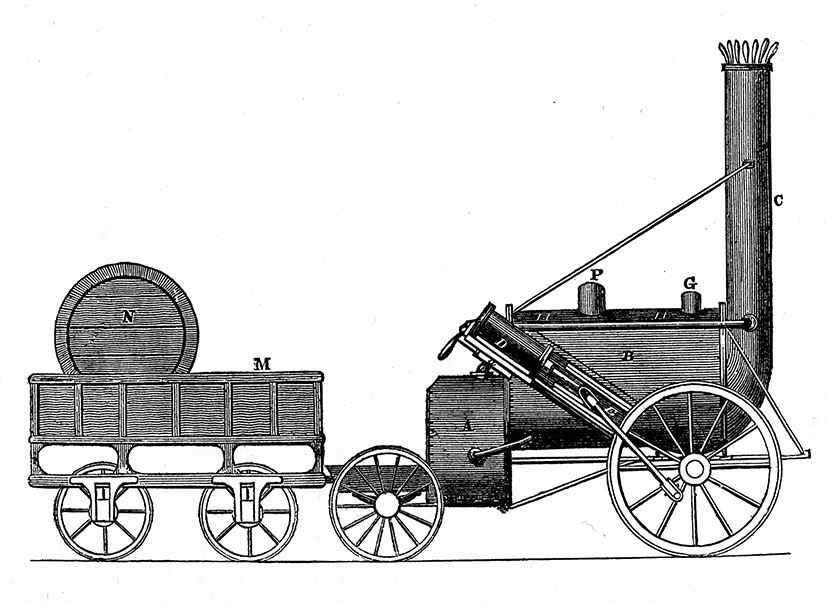
The earliest known contemporary illustration of the Rocket, from Issue 324 of the Mechanics’ Magazine, dated 24 October 1829
With no original drawings in existence, the various sketches, illustrations and paintings of the time have created some confusion over the actual appearance of Rocket in 1829, particularly with regard to the shape of the firebox. In terms of accuracy, a sketch featured in the October 1829 Mechanics’ Magazine gave a reasonable starting point for reference, with Jim Rees’ 2010 replica for the National Railway Museum being deemed the most faithful replica. An invaluable source of reference for the project was ‘The Engineering and History of Rocket’ by Michael R. Bailey and John P. Glitheroe which, if you are interested in the development and forensic investigation into the surviving locomotive, is a particularly fine read. The search for reference materials also involved visiting the Bowes Railway Museum at Springwell for surviving drawings from the building of the 1979 replica but the majority of help, unsurprisingly, came from the Railway Museum in York.
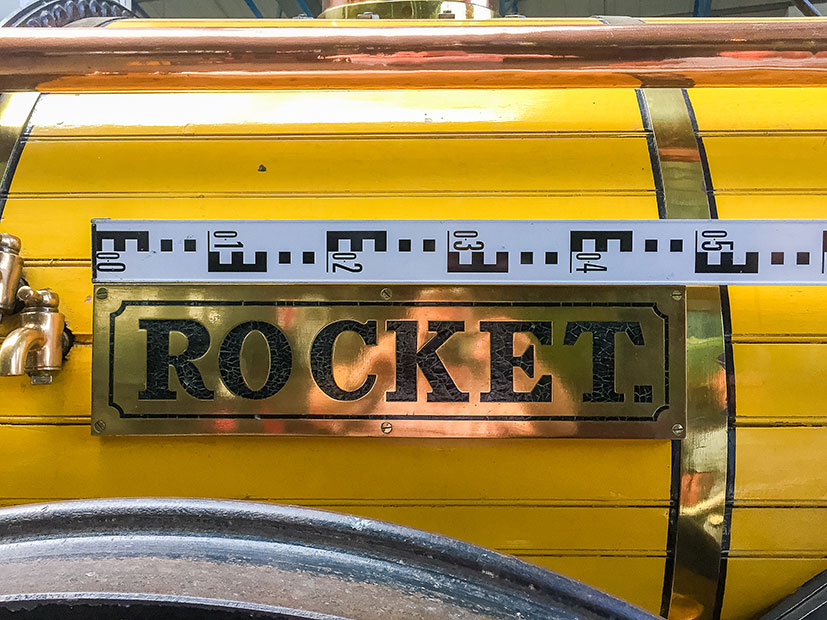
In July 2018 members of the Hornby Development team visited the Railway Museum in York to undertake a comprehensive survey of the static Rocket replica, visiting before the museum opened to the public, and this enabled the designer to get a proper sense of perspective on the locomotive, as well as checking some vital measurements. By October, the design was complete, not just of the locomotive and tender, but of the First Class coach as well and to round off the whole project, two sculptured crew members were included.
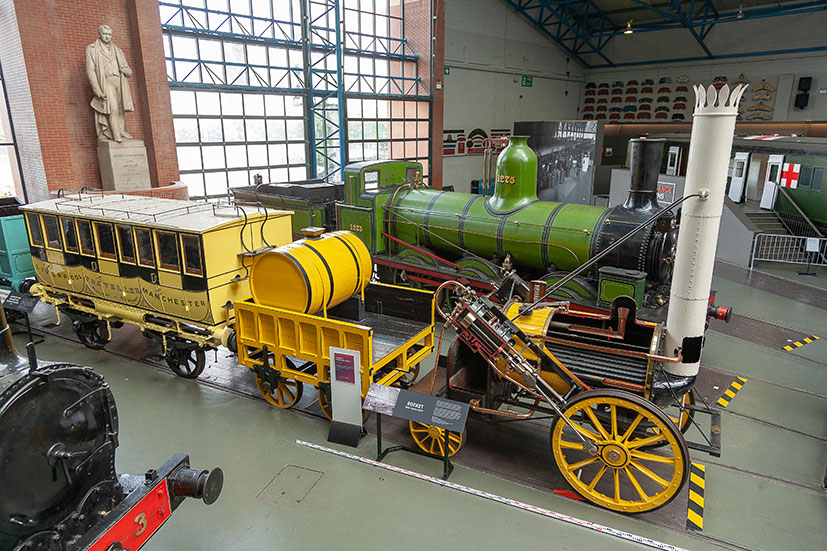
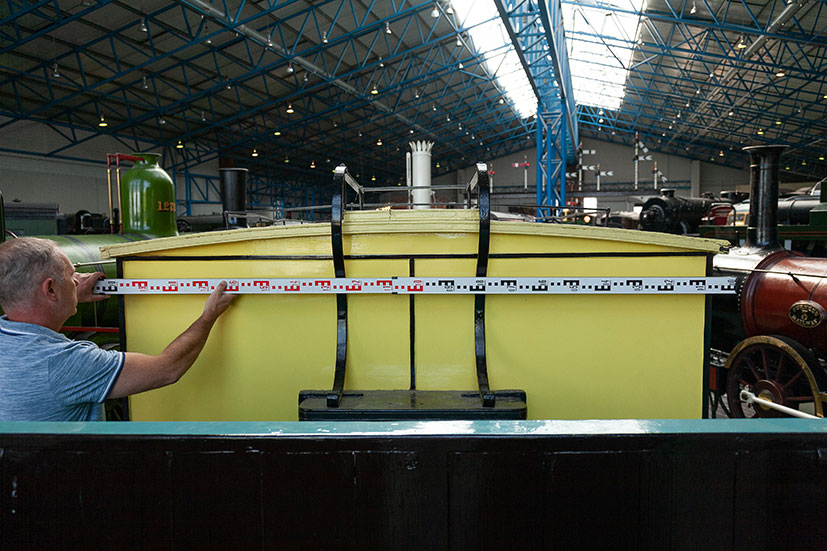
The quiet before the storm. The Hornby Development team arrived at the Railway Museum several hours before the museum opened to the public.
Every element of the Rocket’s design presented a challenge to the designer, “in a good way”, as he insists, with each element having to be designed from scratch. We wanted the ‘new’ Rocket to be as faithful to the original as possible and while certain compromises had to be made, the new version is a world away from the original Tri-ang model.
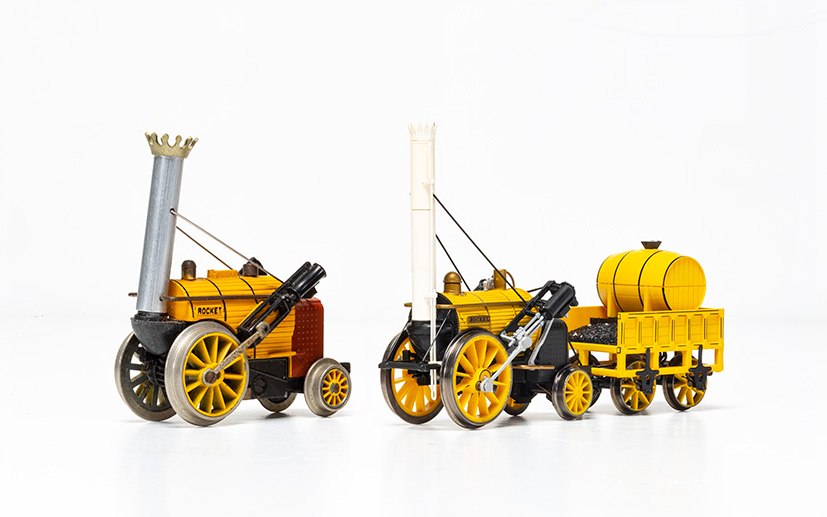
A comparison between the original Tri-ang model of Rocket and the new Hornby version highlights a number of visual improvements.
In trying to find a suitable small motor to fit the new model, new gears had to be developed to bring the scale speed down, as the smaller a motor is, the quicker it will run. To improve running, wheel pick-ups had to be fitted at different levels and a suitable location had to be found to fit the DCC decoder into.
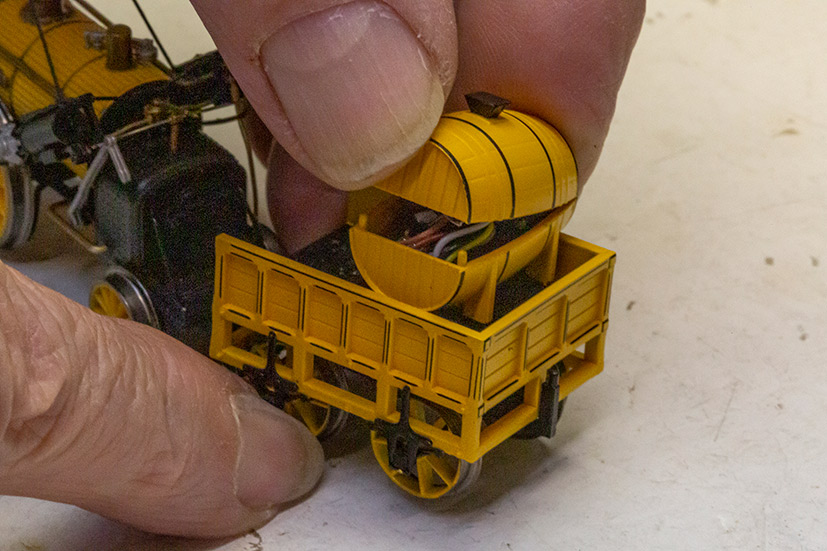

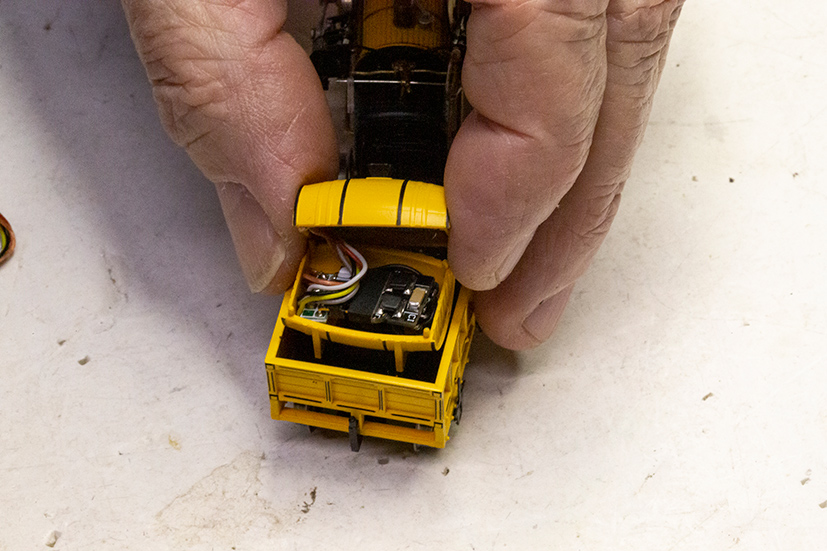
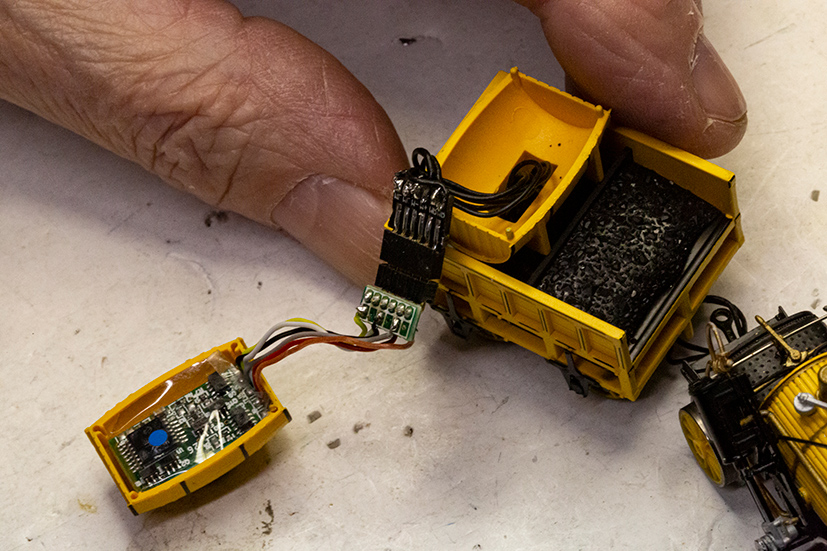
The 6-pin DCC decoder has been placed within the water barrel on the Rocket’s tender for ease of access.
Retaining weight was important, especially considering the loads that the model would have to pull and new chain link couplings were created to improve the look of the finished model. All in all, the Rocket was a one-off in every sense, but I am sure that you will agree that all the effort has been worthwhile, creating a new Hornby classic.
That concludes our first blog for 2020 and we are very much looking forward to running through all of our new developments over the coming weeks and months. The next edition will be with you on the 28th February, with further editions appearing at four weekly intervals on March 27, April 24, May 22, June 19, July 17, August 14, September 11, October 9, November 6 and December 4.
Before we leave you though, in the last edition of Engine Shed we highlighted a competition to win the very rare approval samples of R3781 Terrier 'Rolvenden' and R3693 Peckett B2 'Sherwood' and we are happy to announce that the winner of this competition, picked at random from the entries received, was Ian Hammond.
If you have any feedback from this month’s blog please do pass your comments on either on Facebook, Twitter or on our Official Forum.
Best wishes to you all,
The Engine Shed team
Return to Engine Shed homepage
© Hornby Hobbies Ltd. All rights reserved.