TT3036M BR - Class 37 - D6700
Product Info
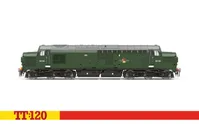
Add this green machine to your Class 37 TT:120 collection. This English Electric design features moulded plastic buffers and NEM tenstion lock couplings allowing you to add rolling stock with ease. Upgrade to HM7000 by adding an 18-pin decoder.
History
D6700 was the first member of the English Electric Type 3s (later Class 37) to be built and, as such, was secured for preservation upon its retirement. It is now part of the National Collection but is currently on loan at the Great Central Railway, where it is in operational condition.
It emerged from Vulcan Foundry at Newton-le-Willows with split-headcode panels in December 1960 and was initially allocated to Stratford depot in East London. Its BR career took it to Haymarket (Edinburgh), March, Thornaby and Gateshead. Originally in all-over BR green, it was repainted into BR blue and yellow ends in June 1969 and received its TOPS number 37119 in February 1974.
In March 1988, it was reclassified to sub-class 37/3 and among the changes made, its fuel capacity was increased, utilising the space from the redundant steam-heat boiler and it became No. 37350. After almost 39 years, it was withdrawn in December 1999 after seeing out its later career back ‘home’ at Stratford depot.
The model is presented in the livery it entered service in 1960, in all-over green – no yellow warning panels – and the BR ‘ferret and dartboard’ logo, the condition to which it has been restored in preservation.
Given the designation Class 37 under the TOPS classification system rolled out by British Railways in 1973, 309 examples of what had been known as English Electric Type 3s were built between 1960 and 1965.
These locomotives had two bogies, each with six powered wheels, referred to as Co-Co, and a power output of 1,750hp (1,305kW) from their turbocharged V12 diesel engines.
They were designed for freight work, but also for passenger duties on secondary routes, for which many of the class were fitted with steam-heat boilers to warm the passenger coaches. They had relatively low gearing, which was ideal for moving heavy freight trains, yet they were also capable of speeds of 90mph (140km/h) which was equally useful on passenger trains.
Originally numbered D6700-D6999 and D6600-D6608, under TOPS they became Nos. 37001-37308. Although it was an English Electric design and built at its Vulcan Foundry at Newton-le-Willows, many were also built by Robert Stephenson and Hawthorns in the north-east, the company having become part of English Electric in 1955.
The class 37s were extremely versatile machines and saw service across the whole of the UK, apart from on the Southern Region south of London. In the 1980s, they were selected as a standard Type 3 and many were given overhauls to extend their working lives into the 1990s.
Fitted with Electric Train Heating (ETH) several examples went to Scotland to work passenger services on the West Highland Line and also the Far North Line, while others were deployed on Welsh Marches trains, the Wherry Line in Norfolk, South Wales, the West Country and the Cumbrian Coast line.
Some were given replacement Mirrlees or Ruston engines for a proposed Class 38, but in the event were given the sub-classification 37/9. The locomotives’ relatively low-axle loading for their weight and power left it as the only main line type available in significant numbers for lines with weight restrictions.
Many are still in use to this day, used mainly on freight, maintenance/engineering trains and empty stock movement, with a growing number finding their way onto charter work with operators such as West Coast Railways. As of 2024, 65 examples were still registered for main line work, plus there are more than 30 that have been preserved in the UK.



Welcome to the HM7000 Control System
HM7000 is an innovative way of controlling and operating model railways. Combining Bluetooth® technology and app-based control, the HM7000 Control System has been designed to revolutionise the controlling of a model railway.
Learn more
- Bluetooth® Connectivity
- Free Sounds
- Quick CV Editing
- Multiple Control Options
- 40+ Profile Settings
- Other Options
Upgrade Paths
Previous Control Systems can be upgraded to HM7000, see below for the options and upgrade paths available.
-
Train Set > HM7000
Already have a locomotive but want to go digital? Click here to discover how.
-
HM6000 > HM7000
The HM6000 system is only a short step away from having HM7000. Click here to discover how.
-
HM|DC > HM7000
New to the hobby? HM7000 is just a short step away. Click here to discover how.
-
DCC > HM7000
Already operating a layout using DCC? HM7000 is just a short step away. Click here to discover how.
-
Conventional DCC Controller > HM7000
Locomotives fitted with either a Hornby HM7000 or conventional decoders can be operated using the HM|DCC Bluetooth® system - click here to learn how.
HM7000 Products
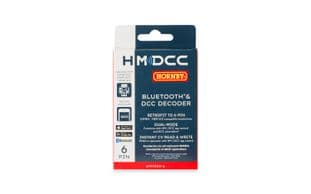
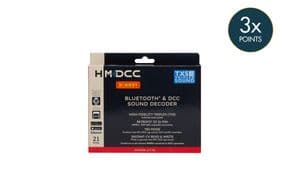
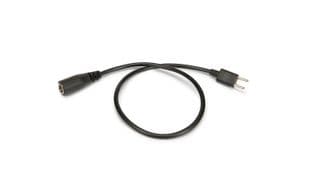
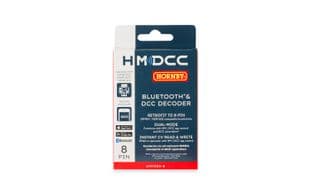
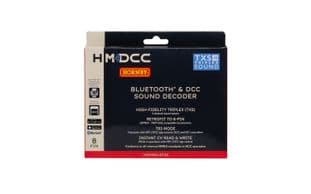
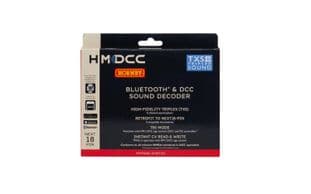
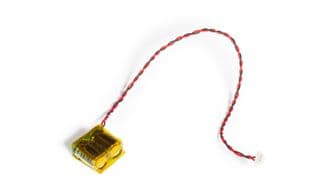
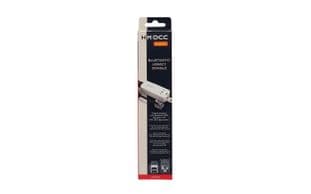
The following points must be considered below when purchasing. HM | DCC and the HM7000 decoders have been extensively tested up to a range of 45 metres in plastic bodied locomotives and up to 12 metres in die-cast bodied locomotives. HM | DCC and the HM7000 decoders have been extensively tested up to a max of 14 non-stationary, running locomotives. HM | DCC and the HM7000 decoders have been extensively tested on iOS devices dating as far back as 5 years from today's date. Any devices older than this cannot be commented on for proper function by Hornby Hobbies. Please ensure that the incompatibility list is considered prior to any purchase.
What's Inside
Recommended For You
Tech Specs
- Item Length - Without Packaging (cm)
- 15.5
- Item Height - Without Packaging (cm)
- 3.4
- Item Width - Without Packaging (cm)
- 2.2
- Item Weight - Without Packaging (kg)
- 0.17
- Item Scale
- 1:120 Scale
- DCC Status
- DCC Ready Next 18 pin socket
- Operator
- BR
- Designer
- English Electric
- Wheel Configuration
- Co-Co
- Minimum Curve (mm)
- Radius 2
- Buffer Type
- Moulded Plastic Buffers
- Coupling Type
- NEM Tension Lock
- Hornby Decoder Compatibility Primary
- HM7000-N18: Bluetooth® & DCC Decoder (Next18-pin)
Detailed scale model. Not suitable for children under 14 years. Please refer to safety notes in enclosed instruction leaflet. Colours and contents may differ from those illustrated. Please retain these details and the address for future reference.