Welcome to this week's Engine Shed. Firstly, a big thank you from all of us here at The Engine Shed for the feedback we've received so far on what we're doing with the blog, both via the Engine Shed Forum, social media and other modelling forums. We really value your feedback, especially suggestions of what you would like to see covered in the blog.
Which brings us nicely on to the main topic for this week's blog. Hornby Forum user AJ Models posted " I'd love to see some progress on the Class 71 please", so that's exactly what we'll be looking at in some more detail.
To recap, the Hornby Class 71 locomotive, due for delivery in 2016, was originally unveiled at The Warley National Model Railway Exhibition in November 2014 and is now well into its development process.
The British Rail Class 71 Electric Locomotive is a Bo-Bo configuration engine which was built at the British Rail Doncaster works between 1958 and 1960, for mixed-traffic service on Southern Region’s Kent Coast Main Line .
The Class 71 was only able to work on the third rail power system, which ultimately limited its operational scope for passenger and freight work. Due to safety problems when working in sidings, where coupling and uncoupling necessitated work near the third rail, a pantograph was also fitted to allow overhead power to be used in some yards. Despite this restriction the engines worked high profile routes, notably the Night Ferry and the Golden Arrow.
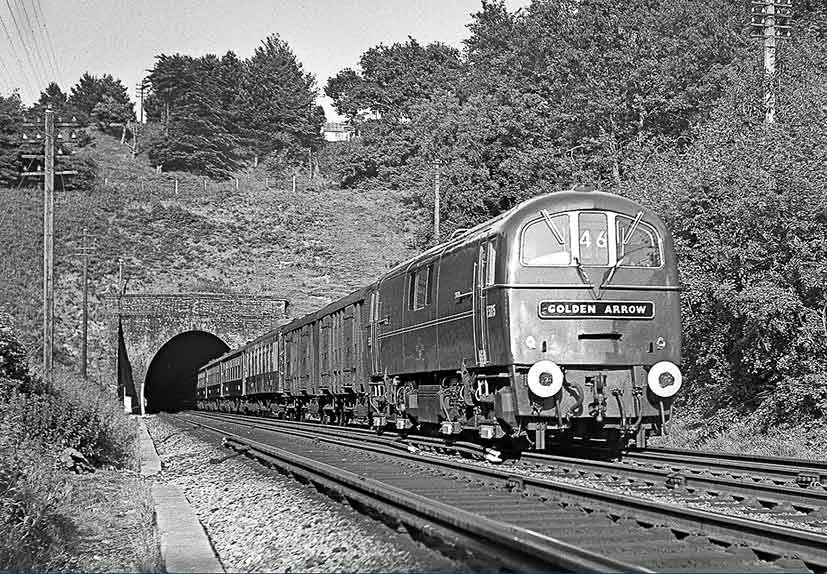 E5015 at Saltwood July 1960
The engines were relatively short lived, most of them being scrapped in fully working order, as Class 73 electro-diesels eventually made the Class 71 redundant. Because the Class 71 was limited to a third rail power supply, it was not able to operate inter-regional freights, or to operate freight trains at night when electric power was often switched off to facilitate engineering works. In addition, the increasing use of Electric Multiple Units for passenger work led to the eventual demise of the engines.
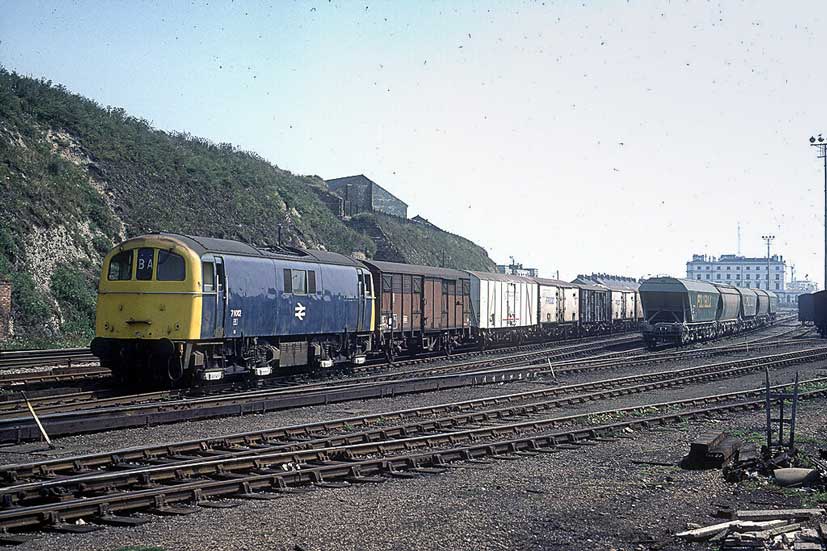
71002 at Dover 1975

Left to right E5010 at Victoria July 1963, E5018 March 1965, E5000 at Dover Priory June 1959
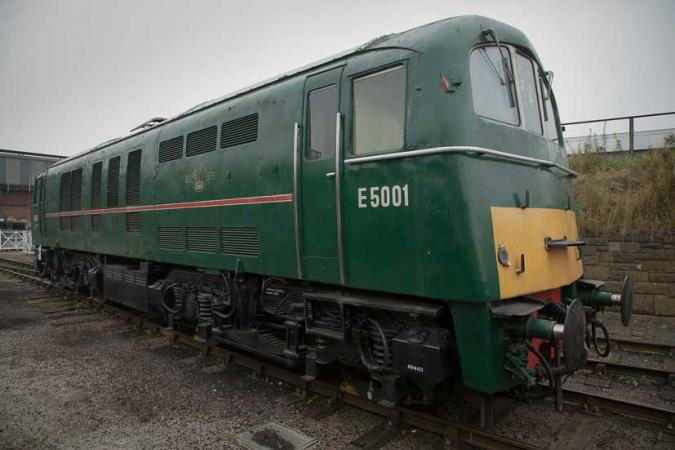
The Hornby Class 71 development project began back in August 2014 when our team were given access to the only preserved engine, number E5001 from the National Railway Museum, which is currently on loan to Barrow Hill.
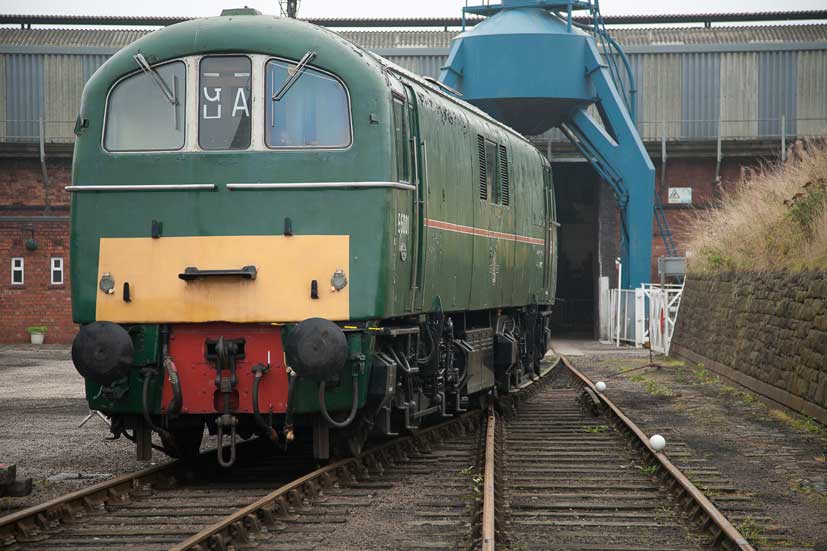

Images © Paul Isles
With the help of the Barrow Hill team, the engine was shunted out of the Roundhouse into a position where it was possible to scan, measure and photograph the Class 71 from all angles.
The Hornby team used a revolutionary 3D laser scanning system, LIDAR, to accurately map the actual locomotive to a level of detail far more accurate than traditional mapping methods alone. However, it was still necessary to refer to historical photographs, plans and reference material as the LIDAR scans produced a facsimile of the particular engine being scanned. Any differences from the 'standard' Class 71 engine, such as modifications, had to be taken into account to produce the final model design.

LIDAR Scanning
LIDAR scanning uses laser light to accurately map the surface of an object in three dimensions, resulting in a high-definition 3D computer image of the object. This image can then be fed into the Hornby CAD (Computer Aided Design) system, enabling us to produce incredibly detailed models directly mapped from a vehicle, rather than recreating the shape from other sources such as blueprints or photographs.
The laser scanner is placed around the asset in as many as 40-50 positions, from both the ground and a raised platform such as a scissor lift, in order to get the best coverage. The scanner rotates, sweeping the area with a laser, which is constantly taking measurements throughout the scan. As many as 5 million points are mapped in each sweep, producing a 3D image with detail as small as a fraction of a millimetre.
The next step is to align all of the separate scans, then clean out all unwanted material, such as the surrounding area, people and any errors caused by reflective and refractive surfaces such as glass and mirrors. Finally, this point cloud is then converted into a solid polygonal mesh object, ready for us to use as a template for the Hornby CAD system.
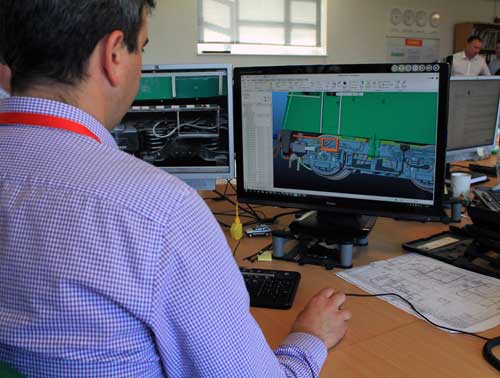
The masses of photography, data and measurements gathered on the research trip were then transferred over to the Hornby CAD system, back at HQ, where the painstaking process of cleaning up the laser scans and converting into an accurate CAD model began - a process that takes hundreds of hours.
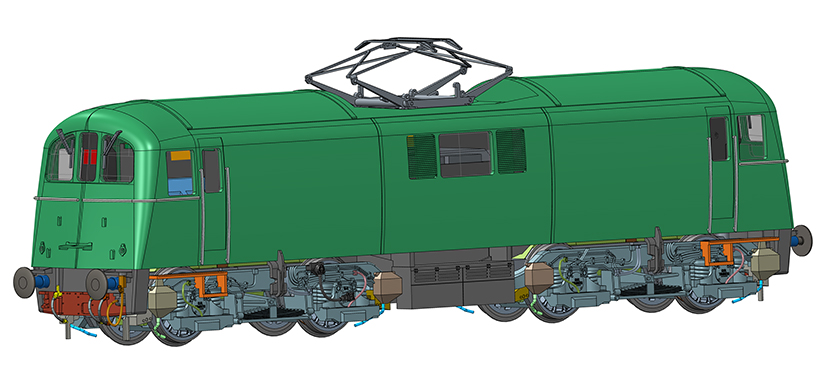
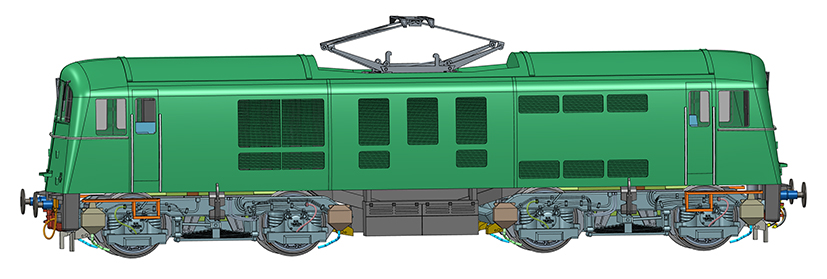
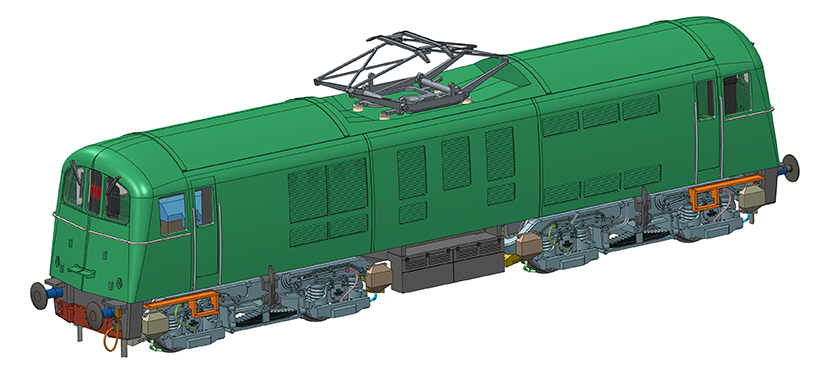
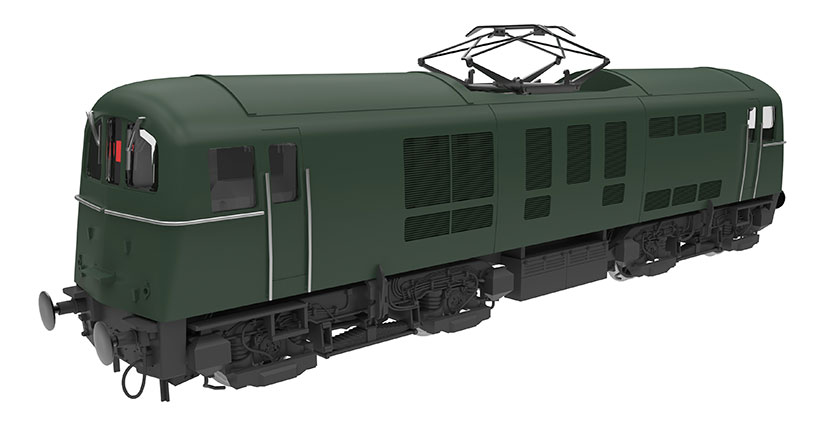
CAD images and a computer render of the Class 71
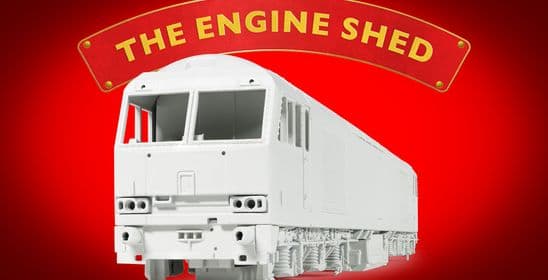
The CAD images were then used to develop a Rapid Prototype Model, or Stereo Sample, unveiled for the first time at Model Rail Scotland in February. This enabled us to check the overall shape of the engine, and to run it on our test track, before the lengthy (and expensive) process of producing the tooling to put the engine into production began.
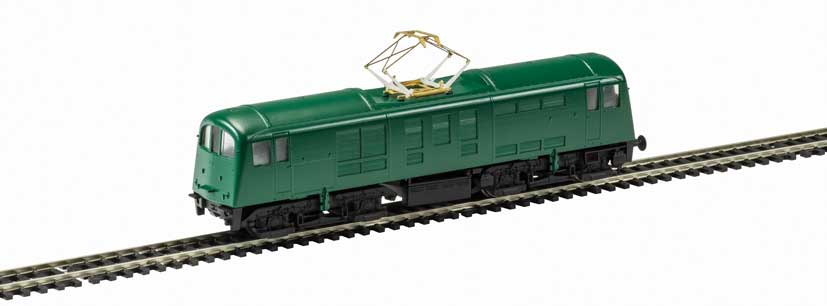


The above is obviously only a brief summary of the development process that the Class 71 has already been through, to itemise each process in detail would need its own website! We are now at the stage of machining the tooling for the new model, and can show you some photos received this week from the workshop in China.

The CNC (Computer Numerical Control) milling machine, and the Class 71 roof tool being machined

Class 71 Windscreen and front lighting tool, and Class 71 Roof tool being EDM machined (Electrical Discharge Machining)

Class 71 Bogie side detail being machined, and Class 71 wheel tool being EDM machined

Class 71 Sandboxes and Pipework tool
The next two months will see the First Shots Sample, due towards the end of May and the first Running Sample in June (see the previous Engine Shed for an explanation of pre-production sample stages). Keep checking The Engine Shed for further updates on what will undoubtedly be a highlight of the Hornby 2016 range.
That's it for this week. See you in a fortnight, when we'll be taking a look at the J50 Class First Shots sample that has just arrived at Hornby HQ.

Some parts from the J50 First Shots sample ready for assembly
Don't forget, you can reach us on Twitter with #HornbyEngineShed or on The Engine Shed Forum.
Until next time, thanks for reading and happy modelling!
The Engine Shed Team
© Hornby Hobbies Ltd. All rights reserved.