
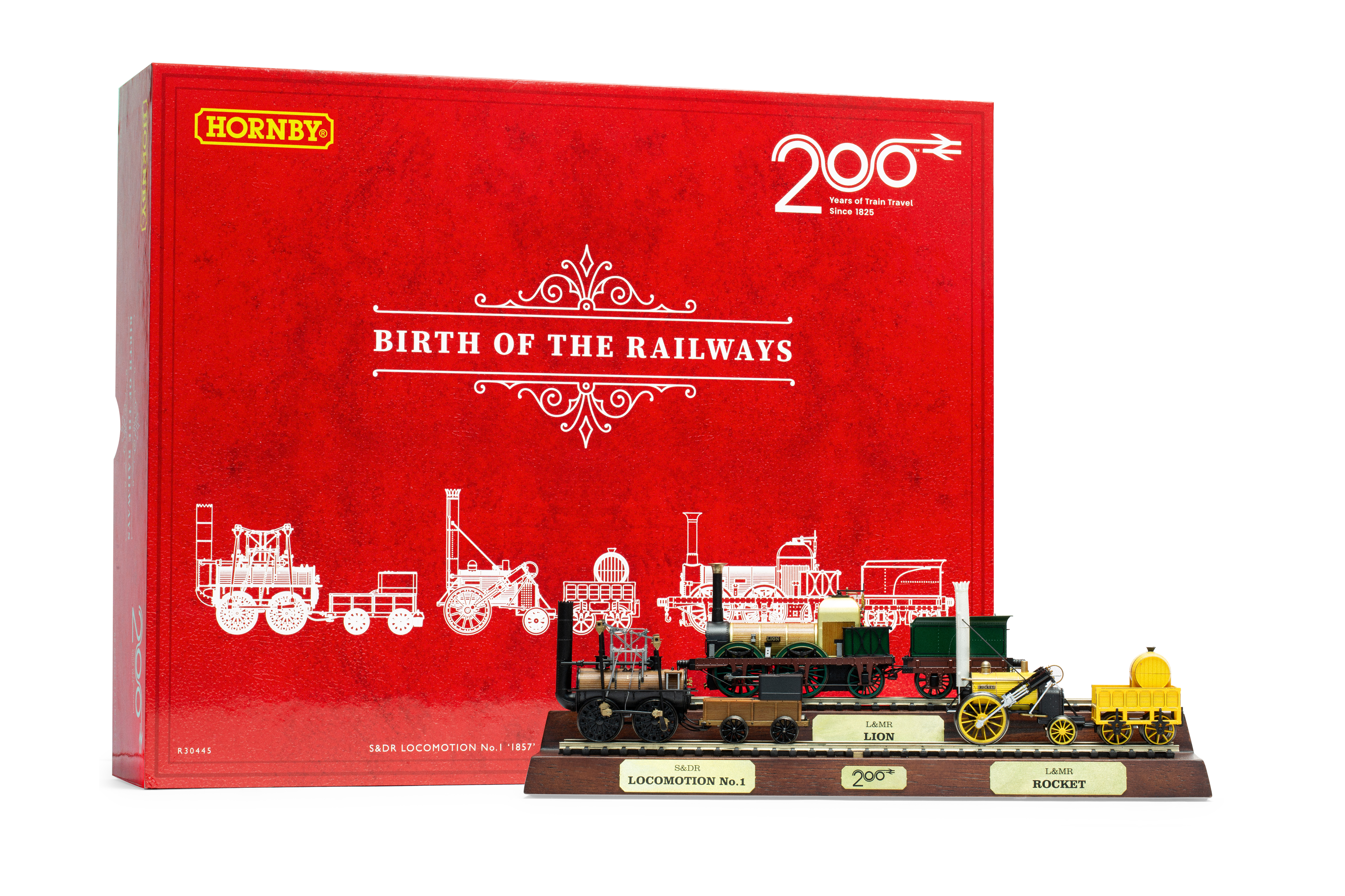
This year marks 200 years since the birth of the passenger railway, so now’s the perfect time to recognise the locomotives that inspired an industry.
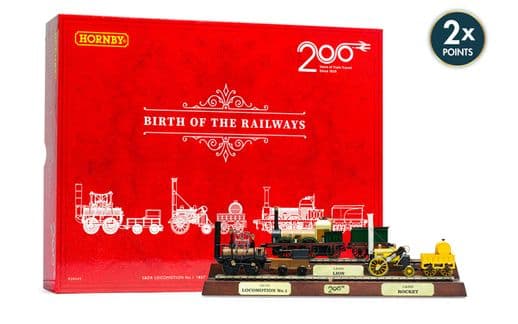
The Birth of the Railways Train Pack represents the formative years of steam-powered railways, with three locomotives built between 1825 and 1838, ushering in an age of steam. Locomotion No.1, Stephenson’s Rocket and No. 57 ‘Lion’ are all engineering masterpieces worthy of their place in railway history.
This train pack forms part of Hornby’s Railway 200 anniversary celebrations. You can find out more about the event and its significance here.
If you want to find out more about these magnificent steam locomotive models, read on!
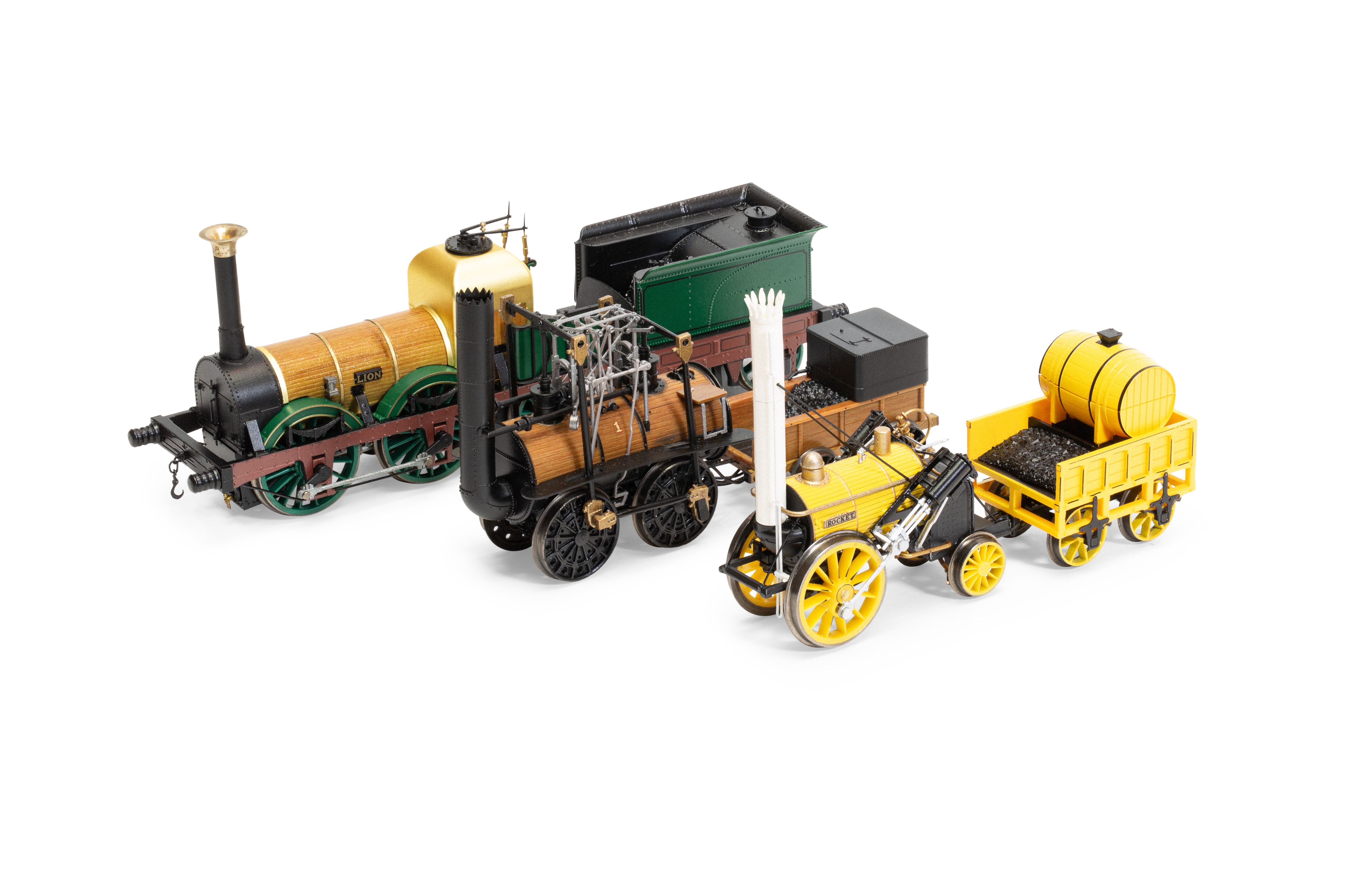
The story of the passenger railway system starts with Locomotion No.1. Designed by father and son duo, George and Robert Stephenson in 1825, it was built at their factory in Newcastle for the opening of the Stockton and Darlington Railway. It was the first locomotive to operate and haul a passenger train on a public railway, and 2025 marks the 200th anniversary of this event.
Leaving Darlington on 27th September 1825, it drew a crowd of around 40,000 people, showing you just how significant this event was in the minds of the public at the time. The train travelled 26 miles to Stockton, at a speed of 15mph, carrying 450 people to its destination station. The short, slow trip revolutionised the transport industry, and the railway network began to grow quickly!
With the experience they gained, Robert Stephenson & Co. entered a design for the 1829 Rainhill Trials. This event was held to find suitable motive power to run on the newly constructed Liverpool and Manchester Railway. Their entry, ‘Rocket’, was the only one to complete the trials, reaching speeds of 24mph. With this performance, ‘Rocket’ set the precedent for pioneering locomotive design, making it possibly the most famous early locomotive in the world.
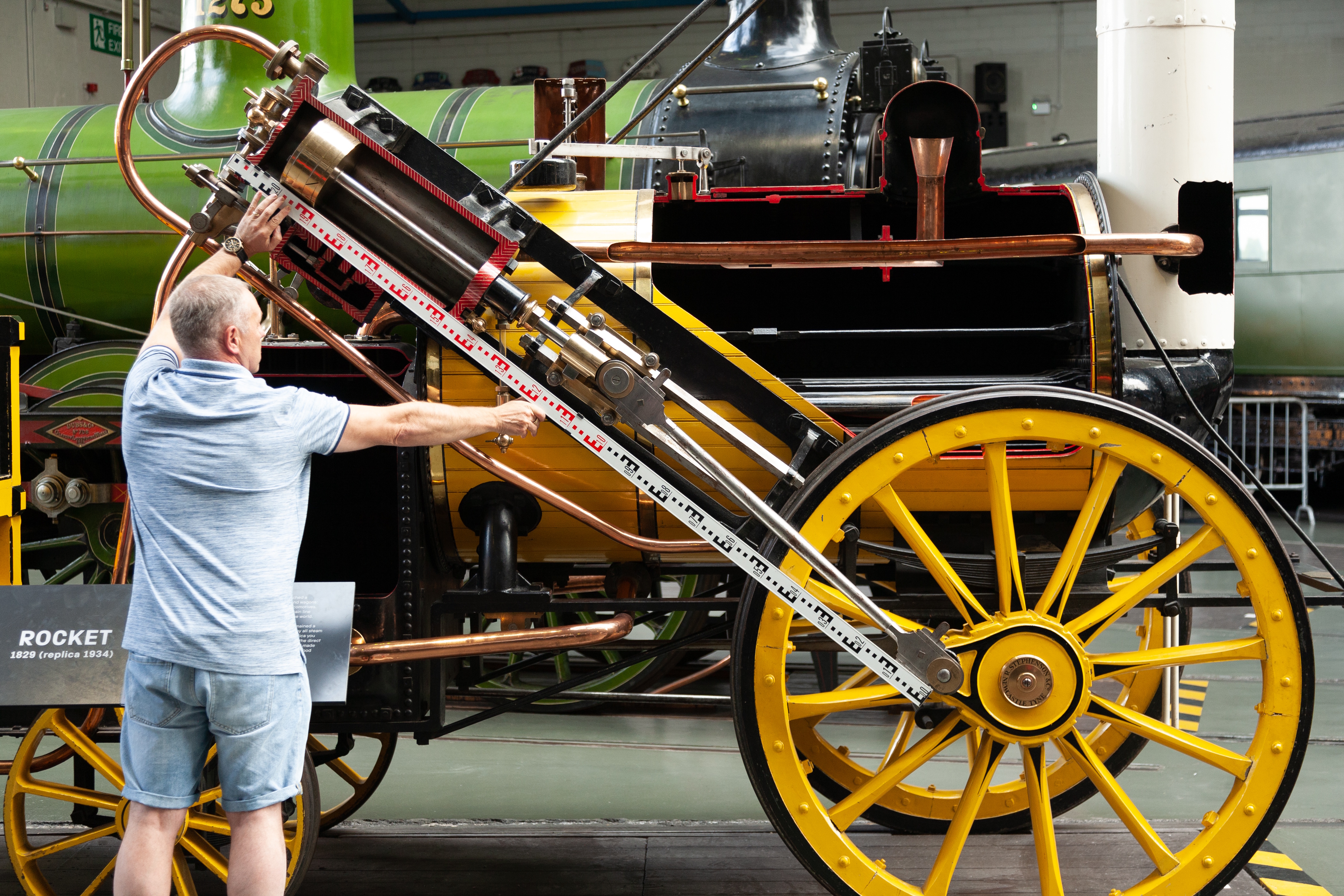
‘Rocket’ was the first locomotive to feature a multi-tube boiler, and it had a blast pipe that increased the amount of exhaust steam at the chimney base. This added a draught to the fire, generating more steam and increasing the speed of the engine. The design was developed over the years, forming the engineering principles which steam locomotives still rely on today.
By 1838, locomotive design had already moved on, and 0-4-2 No. 57 ‘Lion’ was one of a pair of ‘luggage’ locomotives, including sister engine “Tiger”, built to a Stephenson patent by Todd, Kitson & Laird of Leeds, also for the L&MR.
‘Lion’ now proudly resides at the Museum of Liverpool for visitors to get an up-close look at this iconic locomotive.
The Hornby research process is always very meticulous, with authenticity being the goal of every model. Due to the significance of these Railway 200-inspired models, it was important to ensure the models were an accurate replication of their real-life counterparts.
The biggest problem with the design process was getting access to the original machines. Although Locomotion No.1 is preserved, it was converted and restored while in use, so nobody has an exact reference of its initial design.
Our researchers found the same problem with Stephenson’s ‘Rocket’. So, these locomotives have been created based on the evidence from experts at the NRM Museums at Shildon and York.
Work on ‘Lion’ began during the COVID pandemic, preventing the design team from visiting the Museum of Liverpool, where the preserved locomotive is on display. Luckily, the team at the Old Locomotive Committee (OLCO) had extensive engineering drawings and photographs, providing invaluable insights into the locomotive.
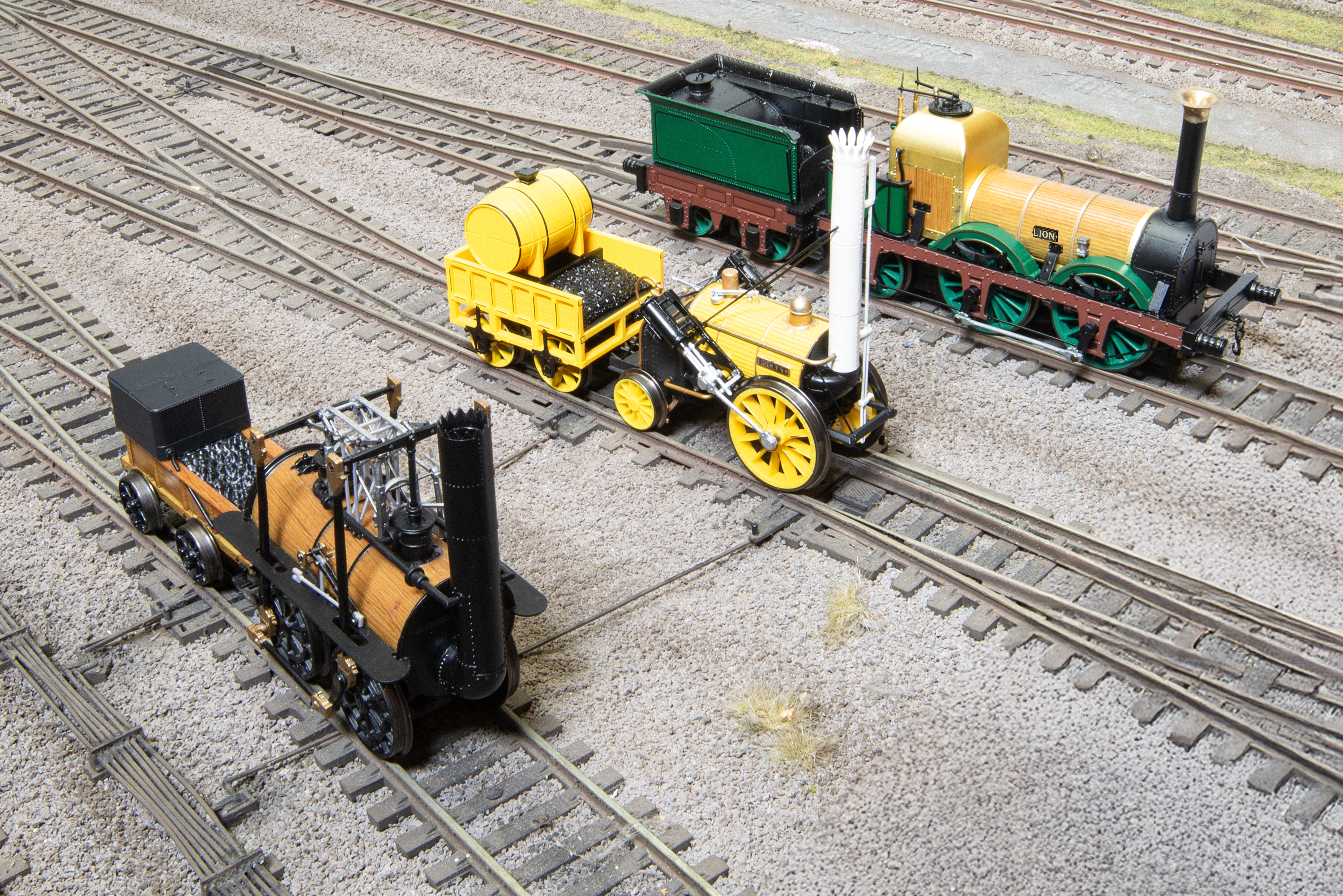
Having accurate information was only one part of the puzzle. The next challenge was to replicate the detail in 1:76.2 scale so that locomotives ran smoothly on a model railway. At the time, ‘Rocket’ was Hornby’s smallest working model ever produced for 00 gauge, and squeezing a motor and gearbox into such a tiny space was no easy feat. Smaller motors also generally have less power than larger motors, so there was a lot of focus on the gearbox to ensure it would work as well as other models.
The other issue with these tiny steam locomotive models was that they naturally weighed less than other models, reducing their grip on the tracks. So, making them heavier was essential. Stephenson’s Rocket, for example, includes a die-cast footplate and chassis to add that much-needed weight in the model. We think you’ll agree that our incredible engineers really pulled this off.
All this intricate work has made for some truly special models. On Locomotion No.1, for example, the level of detail is awe-inspiring, with a fully working parallel motion gear. The challenges our engineers faced with weight mean these designs are made of heavier metals such as brass, mild steel, zinc alloy and phosphor bronze to ensure they work as well as we wanted.
The R30445 Birth of the Railways - Train Pack (Railway 200) is a wonderful collector’s item or display piece, meaning you don’t even need a model railway setup to enjoy it. Of course, if you do want to run these iconic machines on your layout, each locomotive is a working model and can be fitted with a decoder for DCC control (check the individual model's instructions for details on compatible decoders).
Inside the train pack, you’ll find three steam locomotive models:
· R30388 S&DR ‘Locomotion No.1’
· Stephenson’s ‘Rocket’
· 0-4-2 No. 57 ‘Lion’
Elegantly displayed inside commemorative packaging, these models are most impressive when displayed on the accompanying wooden plinth. There’s also an accessories pack that includes coupling chains, magnetic couplings and driver and fireman figures for each engine.
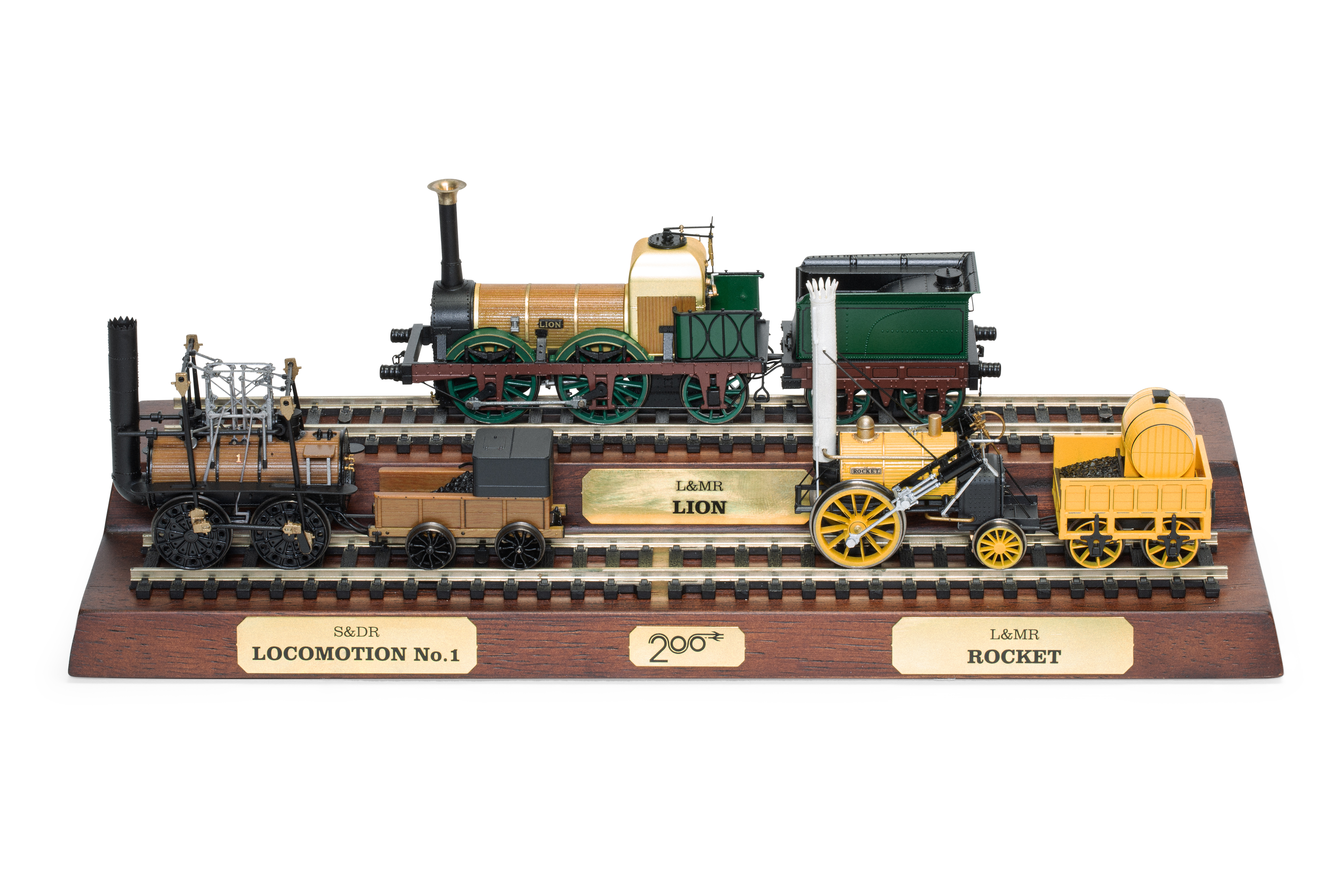
Every Hornby model is special, but The Birth of the Railways Train Pack offers a unique connection to railway heritage, covering three of the most important locomotives ever made and representing the first 13 years of railway history. If you are looking for a way to mark the Railway 200 anniversary, then this Train Pack is the perfect tribute to the early years of the modern railway.
Celebrating 200 years of rail travel, Hornby is proud to present the Birth of the Railways Train Pack in a special presentation box. Secure your Birth of the Railways Train Pack by pre-ordering today!
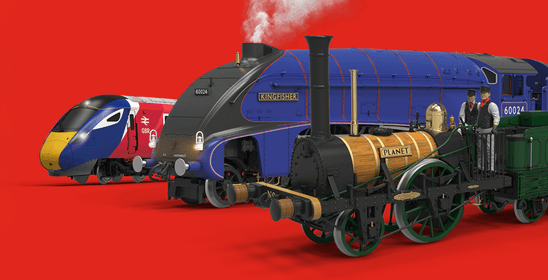
We’re celebrating two centuries of railway in style with a selection of Railway 200 models. Explore them all below.