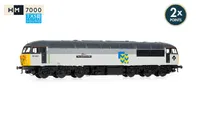
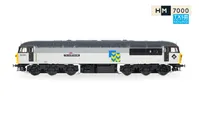
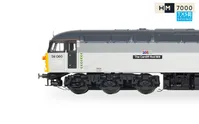
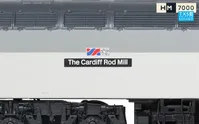
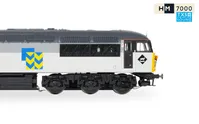
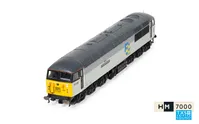
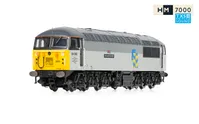
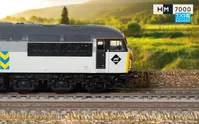
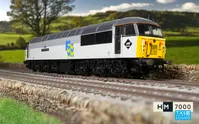
R30155TXS BR Railfreight, Class 56, Co-Co, 56060 'The Cardiff Rod Mill' - Era 8 (Sound Fitted)
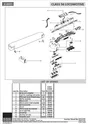


Please ensure that your smart device is able to download the HM | DCC app prior to the purchase of any HM7000 products.
Learn more
Product Info
The British Rail Class 56 Type 5 Co-Co diesel locomotive was first introduced in 1976 to cope with the increased requirement for heavy freight. British Rail awarded the contract to design and build these new engines to Brush Traction in Loughborough, who subsequently sub-contracted the construction to Electroputere in Romania, due to the lack of capacity in their own works.
The initial 30 locomotives to be delivered from Romania suffered from transit damage and construction deficiencies and had to be extensively rebuilt before entering service. With this in mind the decision was made to build the remaining 105 locomotives in England, British Rail Engineering Ltd manufacturing them at their Doncaster Works (nos. 56031 to 56115) and Crewe Works (nos. 56116 to 56135).
The design specification was based upon the Class 47 bodyshell, with the omission of redundant features such as the head code panel. Power came from a Ruston-Paxman unit that was similar to that fitted in the Class 50 locomotives, which provided the capability for heavy haul freight. Air brakes were fitted for the first time in a British Rail engine and the electrics were improved in a number of areas, resulting in a more robust power unit.
Nicknamed as Gridirons or "Grids", the Class 56 displaced the Class 20 and Class 47 locomotives and commonly undertook the transportation of iron ore, coal, aggregate and steel across the Eastern and London Midland Regions and on the Western Region for aggregate duties.
Strong and reliable performers, the locomotives were popular, but needed heavy maintenance, particularly when compared against the Class 66 locomotives that came to displace them in service. The introduction of the Class 60 locomotives saw a gradual reduction in the use of the Class 56 locomotives and with the arrival of the Class 66 locomotives, with their greater availability and lower maintenance, the Class 56 fleet were placed into storage between 1998 and 2004.
56060 'The Cardiff Rod Mill' entered service in June 1979, then un-named as the 60th member of the 135 strong class to be built. It was not one of the first 30 to be built, those built in Romania and therefore the locomotive was able to enter service without the need for a rebuild.
All of the class would be in service with BR, until privatisation when all of the class would enter the ownership of EWS. Following EWS service, the locomotives would pass to various private owners. 56060 is currently owned by GBRf, awaiting conversion into the rebuilt Class 69.



Welcome to the HM7000 Control System
HM7000 is an innovative way of controlling and operating model railways. Combining Bluetooth® technology and app-based control, the HM7000 Control System has been designed to revolutionise the controlling of a model railway.
Learn more
- Bluetooth® Connectivity
- Free Sounds
- Quick CV Editing
- Multiple Control Options
- 40+ Profile Settings
- Other Options
Upgrade Paths
Previous Control Systems can be upgraded to HM7000, see below for the options and upgrade paths available.
-
Train Set > HM7000
Already have a locomotive but want to go digital? Click here to discover how.
-
HM6000 > HM7000
The HM6000 system is only a short step away from having HM7000. Click here to discover how.
-
HM|DC > HM7000
New to the hobby? HM7000 is just a short step away. Click here to discover how.
-
DCC > HM7000
Already operating a layout using DCC? HM7000 is just a short step away. Click here to discover how.
-
Conventional DCC Controller > HM7000
Locomotives fitted with either a Hornby HM7000 or conventional decoders can be operated using the HM|DCC Bluetooth® system - click here to learn how.
HM7000 Products
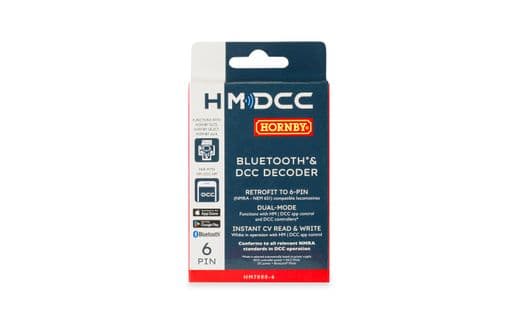
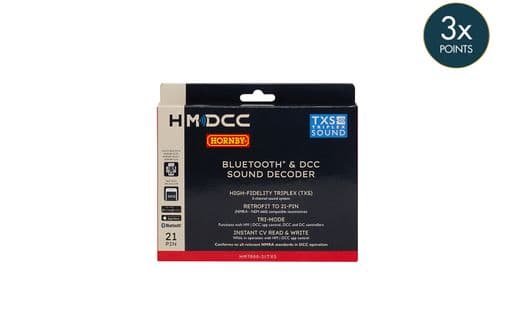
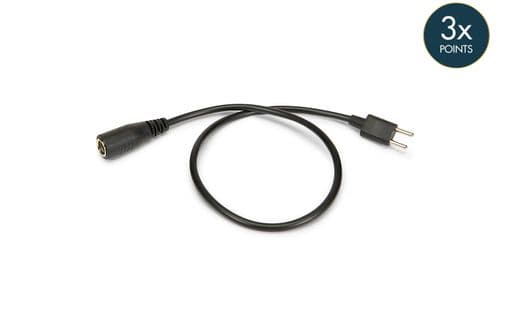
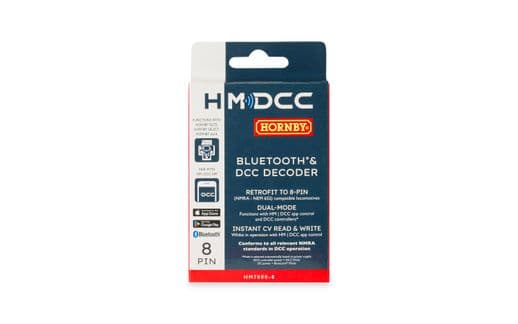
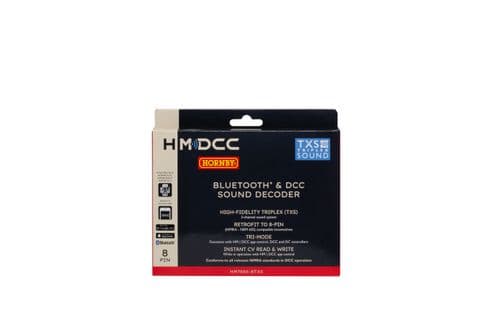
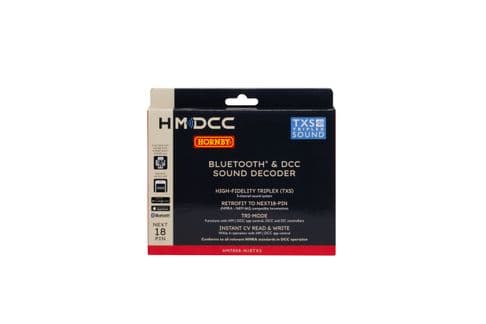
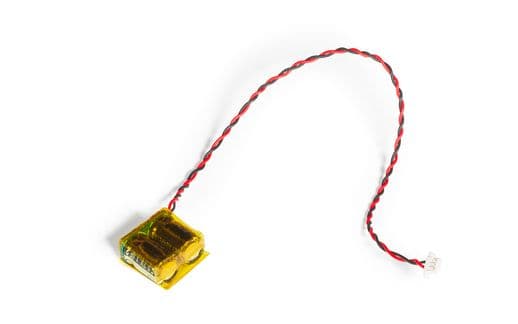
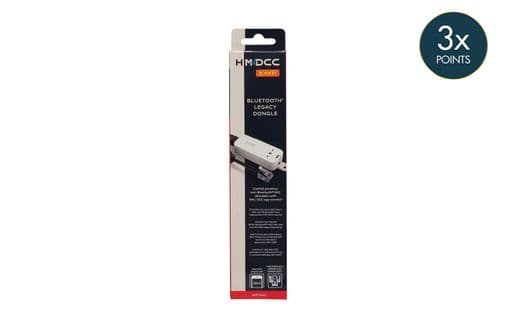
The following points must be considered below when purchasing. HM | DCC and the HM7000 decoders have been extensively tested up to a range of 45 metres in plastic bodied locomotives and up to 12 metres in die-cast bodied locomotives. HM | DCC and the HM7000 decoders have been extensively tested up to a max of 14 non-stationary, running locomotives. HM | DCC and the HM7000 decoders have been extensively tested on iOS devices dating as far back as 5 years from today's date. Any devices older than this cannot be commented on for proper function by Hornby Hobbies. Please ensure that the incompatibility list is considered prior to any purchase.
What's Inside
Recommended For You
Tech Specs
- Item Length - Without Packaging (cm)
- 25.4
- Item Height - Without Packaging (cm)
- 5
- Item Width - Without Packaging (cm)
- 3.5
- Item Weight - Without Packaging (kg)
- 0.6
- Item Scale
- 1:76 Scale 00 Gauge
- DCC Status
- HM7000 Fitted - With Sound
- Operator
- British Railway
- Designer
- BREL
- Wheel Configuration
- Co-Co
- Minimum Curve (mm)
- Radius 2
- Number of Parts
- 1
- Class
- Class 56 Class 56
- Buffer Type
- Sprung Metal Buffers
- Coupling Type
- NEM Tension Lock
Detailed scale model. Not suitable for children under 14 years. Please refer to safety notes in enclosed instruction leaflet. Colours and contents may differ from those illustrated. Please retain these details and the address for future reference.